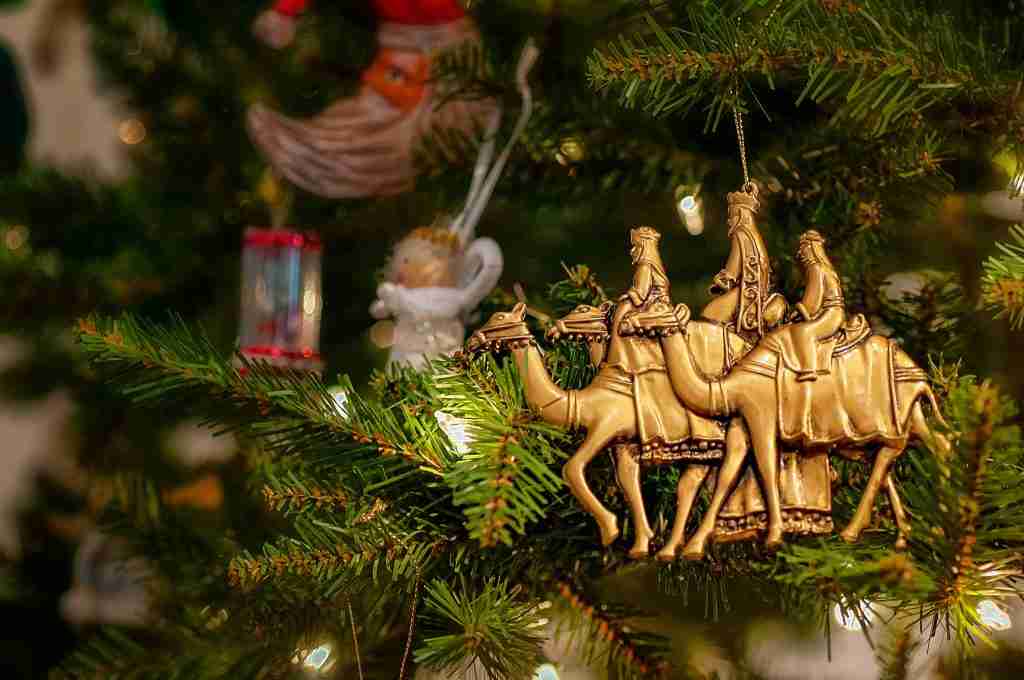
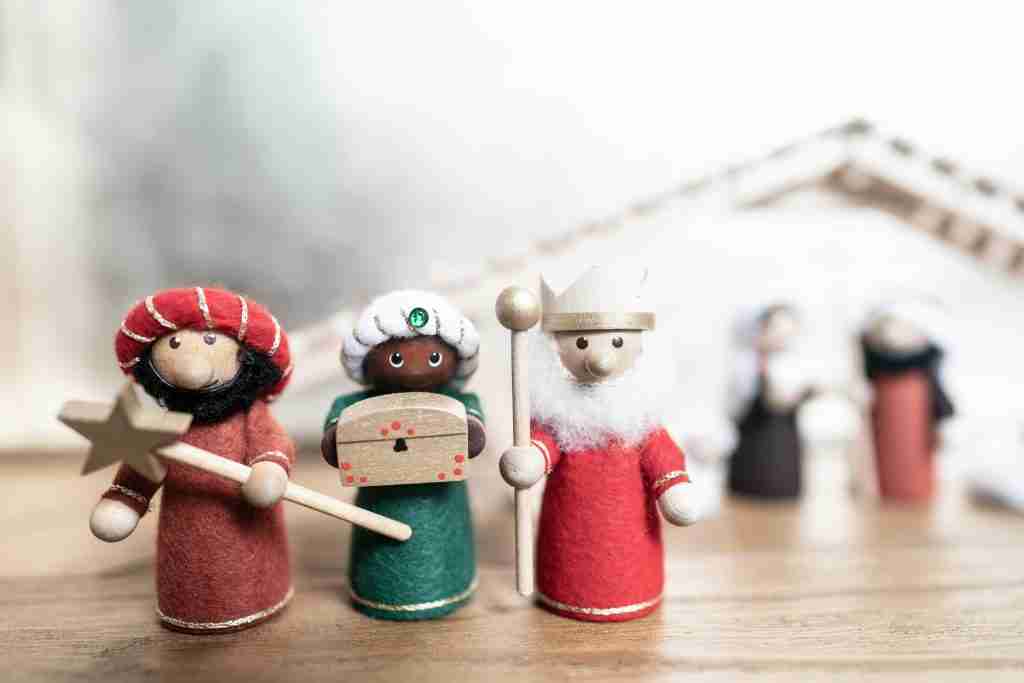
Nativity scenes will often have three figures standing behind Mary, Joseph & baby Jesus… In this post, we will discover who the wise men in the Bible were. We will look at where they came from and what their purpose is in the Christmas story.
The wise men in the Bible did not have names. It was added on later by people who added color to the picture in the Gospels… These given names were Gaspar, Melchior, and Balthasar.
We want to learn about the visit of the wise men to the scene of Christ’s birth. Let’s discover who the wealthy travelers from a distant land were. Let’s see why they traveled a great distance to lavish gifts on Jesus born in the manger.
Quick Assessment
Why does your prayer life keep falling flat?
It's usually one of four things — and each one needs a completely different strategy to break through. This 2-minute assessment tells you exactly which pattern is blocking you.
The New Testament has four Gospels – which are like eye-witness accounts about the life of Jesus. They are the books of Matthew, Mark, Luke, and John, named after their respective authors. The Gospels were written to prove that Jesus is the promised Savior of the world.
In the Gospel according to Matthew (and notably, only in this Gospel) chapter 2 verses 1-12 we read the following. Magi came from the East to the place where Jesus was born – in Bethlehem of Judea. The Magi saw a star rise announcing that a king had been born for the Jewish people. That is why they traveled in search of the young prince. Matthew quotes a line from the prophecy of Micah that confirms that the Savior would be born in Bethlehem too. The Magi had a strange interaction with King Herod, but they came out unscathed. They followed the star until it suddenly stopped above the place where the child was! When the Magi saw him with Mary, his mother, they bowed down in worship. They also presented to him three gifts of gold, frankincense, and myrrh.
Free Resource
Get Your FREE Prayer Guide Now
and join the Daily Way Devotional: Join 25,000+ Subscribers
The Gospel of Matthew tells us this story about wise men coming from the East. But note that Matthew never says the number of wise men. So, how did we decide on 3? Where did they come from? And who were they?
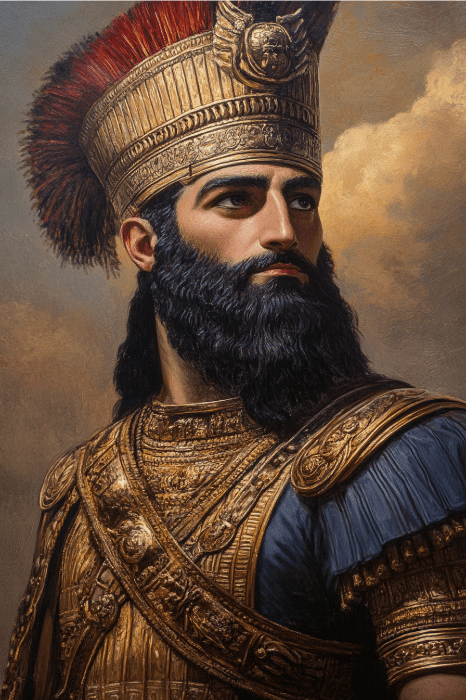
It’s hard to say exactly when the idea of 3 Magi come to the forefront. Some scholars speculated that the Magi were kings who had to come from ancient Persia. A few years later people thought the Magi’s visit represented the three known continents, Europe, Asia, and Africa. They even came up with names for them Gaspar (or Caspar), Melchior, and Balthasar. The most common idea is that the three gifts of the wise men led people to assume there were three of them.
Some scholars speculate that since the wise men came from the East, they might have been influenced by Daniel. In the book of Daniel, from the Old Testament, we read about how God gave a man a lot of insight and wisdom – so much so that he was able to understand King Nebuchadnezzar’s dream. When the other wise men, magi, and astrologers could not interpret the King’s dream he commanded that they’d be put to death. Luckily, Daniel comes in and gives the King the answer he was looking for.
The King’s response to Daniel’s interpretation is to fall face-down on the floor in front of him and to say “Surely your God is the God of gods and the Lord of kings and a revealer of mysteries, for you were able to reveal this mystery.” (verse 47) Then, the King placed Daniel in a high position and made him ruler over the entire province of Babylon and all its wise men.
What the scholars seem to be saying is that Daniel, an influential leader with unwavering faith, would have shared the prophecies and news of the coming Messiah with the wise men in Babylon (including astrologers and magi). The direction of Babylon from Jerusalem, is East. Daniel’s own prophecies predicted patterns by which the arrival of the Savior might have been worked out.
To modern Western Christians the account of the wise men might sound like the word magic, and we want to pull our noses up at things like that- especially astrological signs. But we need to know that wise men in ancient times saw the stars as important resources. Remember, people in many ancient cultures relied on the stars to count the years – in essence it was their calendar.
photographer-robert-thiemann-unsplash
What is the purpose of the Magi in the Christmas story?
A common misconception is that the biblical Magi were part of God’s people – Israel. But the interesting thing is, they were not. Even though Jesus Christ was the newborn king of the Jews – He was also the Savior of all people everywhere. Yes, even non-Jews (Gentiles)! Bible scholars now say that the story of the wise men traveling from a foreign land to meet newborn Jesus tells us something else: Since Jesus’ birth, Gentiles acknowledged his divinity.
Wisdom is an attribute that is honored highly throughout the Biblical tradition. There seems to be an idea that an average person can ask God for wisdom and God might grant this to them. Which means that, in the Bible, wisdom is primarily originating with God. Of many attributes and characteristics, we also see that God is described as wise. The Magi’s presence at the birth of Jesus indicates that wisdom still matters.
Psalm 104:24 “How many are your works, Lord! In wisdom you made them all; the earth is full of your creatures.”
The Magi were not the only wise people who we read about in the Bible. King Solomon is one such person who asked God for wisdom and it was granted. In the historical book of 1 Kings chapter 2 we read about Solomon having a dream shortly after he became king. In the dream, God says Solomon can ask for whatever he wants God to give to him. Instead of asking for wealth for himself or a long life Solomon’s concern was that he would be able to be a just and wise king. In humility, Solomon asks God to equip him so that he might be able to lead God’s people. In response to this openness and vulnerability, God says to Solomon: (vv 1-14)
“I will give you a wise and discerning heart, so that there will never have been anyone like you, nor will there ever be. Moreover, I will give you what you have not asked for—both wealth and honor—so that in your lifetime you will have no equal among kings. And if you walk in obedience to me and keep my decrees and commands as David your father did, I will give you a long life.”
Even today, many people still believe that Solomon was the wisest man to ever live. God gave him insight beyond that of any other person on Earth so that people traveled from afar to learn from him and spend time in such wisdom. There is a connection between Solomon and Jesus that can be found in 1 Kings 10. We read about how the queen of Sheba came to visit Solomon with camels carrying spices, gold, and precious stones.
The interpretation that most people have of the wise men in the manger is closely connected to this story. In both cases people from the East come on camels bringing gifts following relevation.
The story of the wise men in the Bible plays a small part of our larger Christmas celebrations, yet it can be something that confuses us. Some people have used this historical basis to try to work back to the exact time when Jesus was born. Christmas Day is probably one of the most important Christian holidays, but it turns out we don’t celebrate it on the right day.
The story of the wise men is fascinating. We need to remember to read it in balance with the rest of the Bible. God who sent a star to guide some Eastern wise men to the birth of Jesus is still the same God who created the Earth in Genesis. He is the same God who will come again in glory in Revelation.
Eljoh Hartzer is combining theology and art to nurture faith journeys across generations. She is a Masters-level Practical Theologian with the University of Stellenbosch. She is also a writer and editor in the niche of Christianity and children's content and she illustrates children's books. Eljoh resides in the Swartland area in the Western Cape province of South Africa.
You can follow Eljoh on LinkedIn or Instagram.