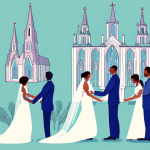
What are your ideas on homosexual marriage? Can Christians drink alcohol? What about abortion? Today we will explore topics and ideas that go against church teachings. As they grow more pervasive, we must recognize and address them with grace and truth. This article explores 16 ideas that challenge the teachings of the Church.
1.) Calling Priests “Father” Contradicts the Words of Jesus Christ
In Matthew 23:9, Jesus Christ says, “Call no man your father on earth, for you have one Father, who is in heaven.”
Quick Assessment
Why does your prayer life keep falling flat?
It's usually one of four things — and each one needs a completely different strategy to break through. This 2-minute assessment tells you exactly which pattern is blocking you.
However, understanding this passage in the context of the whole church’s teaching reveals a deeper meaning aligned with sacred tradition and divine revelation.
The term “father” in the Roman Catholic is a title of respect and spiritual guidance. It reflects the priest’s role in the Christian community.
Catholic theology teaches that priests, as human beings, participate in the fatherhood of God. They serve as spiritual leaders, administer the sacraments, and spread the Good News.
Free Resource
Get Your FREE Prayer Guide Now
and join the Daily Way Devotional: Join 25,000+ Subscribers
This practice is rooted in early church traditions. It can also be traced to the apostolic church.
For instance, St. Paul referred to himself as a spiritual feather to his converts in 1 Corinthians 4:15. This emphasized the nurturing relationship between church leaders and the faithful.
The Catechism of the Catholic Church explains this practice as a reflection of the dignity of the human person. This person is called to recognize legitimate authority within the Church of God.
Pope John Paul II and Pope Benedict XVI both highlighted the importance of priestly ministry in fostering the faith of the whole church.
Non-Catholic Christians often view this as a false teaching. This is especially true in post-Protestant Reformation. However, the Catholic tradition holds that addressing priests as “fathers” honors the sacred role they fulfill in building a just society. It also guides individual people toward the true church.
2.) Jesus Have Brothers and Sisters from Mary
This is one of the ideas that go against church teachings. That is, Jesus Christ had brothers and sisters born from the womb of Mary is a point of contention among Christians. Non-Catholic Christians often cite references in the New Testament, such as Mark 6:3.
The passage suggests that Jesus had biological siblings. However, the Roman Catholic Church teaches that Mary remained perpetually a virgin, as affirmed by the Catechism of the Catholic Church and upheld by church doctrine throughout history.
The terms “brothers” and “sisters” in Catholic theology are understood as a broader reference to close relatives or members of the Christian community. This interpretation aligns with the linguistic and cultural practices of the Old Testament and the early church.
For instance, St. Paul often referred to his fellow believers as “brothers” in Christ. It reflects spiritual, rather than biological relationships.
The perpetual virginity of Mary is a cornerstone of the Catholic Church. It was emphasized by church fathers such as Saint Augustine and reaffirmed by the Council of Trent.
This teaching underscores the divine nature of Jesus Christ and the unique role of Mary as the Mother of God. Pope John Paull and Pope Benedict XVI stressed this belief as integral to the dignity of the human persona and the sanctity of Mary’s mission within the true church.
These challenges of modern society and differing views, amplified by social media, question this teaching. Pope Francis reminds us that sacred tradition and the Word of God guide Roman Catholics to sound teaching and unity within the whole church.
3.) Abortion and Euthanasia
This is one of the controversial ideas that go against church teachings. The rejection of the sanctity of life through abortion and euthanasia is a direct contradiction to Catholic teaching and the fundamental dignity of the human person.
Life is sacred from conception to natural death. The reason for this is that it reflects the divine nature of God’s creation.
Pope John Paul II described this in his encyclical Evangelium Vitae as the “inviolable value of every human life.” This is a teaching rooted in both sacred tradition and natural law.
The Roman Catholic Church views abortion and euthanasia as grave moral evils because they violate the fundamental right to life. Church doctrine, drawing from the Word of God and the early church, teaches that human beings, created in the image of God, possess an inherent dignity that must be protected.
The Second Vatican Council reaffirmed this truth. It emphasizes the need for a just society that upholds life at all stages.
Church leaders have called for the Catholic faithful to respond to these challenges of modern society with clarity and compassion. The Church’s’ social teaching urges Roman Catholics to advocate for policies that protect the unborn and the terminally ill while promoting good works that affirm life’s value.
4.) Redefining Marriage
The redefinition of marriage and family is in direct opposition to Catholic teaching. It views these institutions as sacred and foundational to human dignity and societal stability.
The Catholic Church defines marriage as a covenant between one man and one woman. It’s established by God and elevated by Christ to a sacrament.
This union rooted in natural law and divine revelation reflects the creative love of the Holy Spirit. It’s also the bond between Christ and His Church.
Church doctrine emphasizes that the family, built on the marital union, is the “domestic church.” It’s a vital starting point for nurturing faith, transmitting the Good News, and fostering moral principles.
Efforts to redefine marriage, whether through same-sex union or the rejection of lifelong commitment, undermine this sacred tradition. It also rejects the idea of the fundamental right of children to be raised by a mother and a father.
Social media and other influencers often spread false teaching messages. They challenge Catholic social teaching. As a result, it creates confusion within the Christian community.
Roman Catholics are called to respond with compassion and clarity. They’re also called to affirm the Church’s teaching on marriage while respecting the human rights and intrinsic worth of all people.
The church seeks to guide individual people and society toward God’s plan for a just and loving word.
5.) Every Christian Has to Drink from the Communion Cup
The belief that every Christian must drink from the communion cup during the Eucharist is a misunderstanding of Catholic teaching. It’s also a misunderstanding of the sacred nature of this sacrament.
The Eucharist is the source and summit of Christian life. It offers the real presence of Jesus Christ under the appearance of bread and wine.
If you participate in the sacrament, it doesn’t always require that you drink from the chalice. Remember that receiving the consecrated host alone provides the fullness of Christ’s body, blood, soul, and divinity.
This is one of the one of the ideas that go against church teachings and Catholic theology. The early church also recognized that Christ was wholly present in either species. Thus, Roman Catholics are not obligated to drink from the chalice. This is especially true in circumstances where health concerns or logistical challenges arise.
Furthermore, the misconception may have started from different views in the Christian communities. That is, some non-Catholic Christians emphasize communal sharing of the cup.
This practice can be meaningful. However, it’s not required.
6.) All Christians are Saints
The idea that all Christians are saints is a misunderstanding. It’s one of the ideas that go against church teachings that overlooks the theological and spiritual nuances of sainthood within Christianity.
The New Testament occasionally refers to early Christians as “saints” in the sense of being set apart from God. But it doesn’t equate to the canonized sainthood recognized in many Christian traditions today.
Canonized saints are people who lived lives of extraordinary virtue, holiness, and dedication to God. They served as role models for the faithful. Furthermore, they demonstrated the heights of spiritual and moral excellence that Christians are called to aspire toward.
The process of canonization involves rigorous investigation into the person’s life, their works, and often the verification of miracles attributed to their intercession. It sets these individuals apart as exemplary witnesses to faith.
On the other hand, the broader concept of sainthood refers to all baptized Christians who strive to live in communion with God and follow His teachings. It also emphasizes the universal call to holiness but doesn’t suggest that every Christian achieves the profound level of spiritual heroism embodied by canonized saints.
This idea can lead to confusion about the depth of commitment and transformation needed to reflect God’s grade fully.
Indeed, we, as Christians, are invited to pursue holiness, true sainthood requires intentional effort, perseverance, and extraordinary sacrifice. We can better appreciate the lives of saints as sources of inspiration and encouragement on their spiritual journeys.
7.) Science is Incompatible with Faith
The idea that science and faith are incompatible is a misconception. Unfortunately, it has persisted through history. It challenges the holistic understanding of truth while disregarding the Church’s longstanding embrace of scientific inquiry.
Faith and science are complementary. They’re not opposites. Each addresses different dimensions of existence.
For instance, faith seeks to answer the ultimate questions about purpose, morality, and the divine. Science, on the other hand, explores the mechanism of the natural world.
It’s important to note that the Church has contributed significantly to scientific advancements. Gregor Mendel, the father of genetics, for one, wasn’t only a scientist but he was also a clergyman. Georges Lemaitre, who proposed the Big Bang Theory, was also a clergyman and a scientist.
Science by its nature is limited to empirical observation. It can’t address metaphysical meaning and ethical direction. Thus, if you reject one in favor of the other, it diminishes the richness of human understanding.
Furthermore, the Church teaches that reason and faith work in harmony. Fides et Ratio and other documents emphasize this relationship. It encourages believers to explore scientific discoveries while remaining grounded in their spiritual beliefs. This integration of faith and reason reflects a balanced approach to understanding the world and our place in it.
8.) The Bishops Must Be Married
The idea contradicts the longstanding tradition and teaching of many Christian denominations. This is particularly true in the Catholic Church.
This is one of the ideas that go against church teachings that originates from a misinterpretation of biblical passages and a misunderstanding of the role of bishops in the church.
St. Paul wrote in the New Testament that a bishop must be “the husband of one wife” – 1 Timothy 3:2 It’s a statement that some interpret as a requirement for marriage.
However, the passage is more accurately understood as a call to moral integrity. It emphasizes that bishops must live virtuous lives. That is free from scandal.
Early Church tradition reveals that many bishops were celibate. The reason for this is that they dedicate their lives fully to God and their pastoral duties.
Celibacy has been a hallmark of the episcopacy in the Catholic Church. It reflects a spiritual commitment to serve God and the Church with undivided attention.
This discipline highlights the bishop’s role as a spiritual father to the faithful. It also mirrors Christ’s own celibate life.
The Church views celibacy as a sacrificial offering. It’s not a denial of the goodness of marriage. Rather, it allows bishops to focus on their vocation.
However, some Christian traditions, like certain branches of Protestantism and Orthodox, allow married men to become bishops. But the Catholic Church maintains this discipline as a sign of devotion and spiritual leadership.
The requirement for celibacy stresses the role of the bishop. That is, he’s the shepherd fully dedicated to guiding the flock in faith and holiness.
9.) Latin Mass Was Banned
This one misrepresents the Church’s teaching and approach to liturgical diversity. The forms of the Second Vatican Council sought to encourage greater participation in the liturgy by letting Mass in the vernacular.
However, the traditional Latin Mass or the Tridentine Mass remains a cherished part of the Church’s liturgical heritage.
The Second Vatican Council introduced the Novus Ordo Mass. That is, it’s celebrated in the language of the people. The goal is to foster deeper engagement among the faithful.
However, it doesn’t mean that it abolished the Latin Mass.
Over the years, the Church made provisions for its continued celebration under certain guidelines. In 2007, Pope Benedict XVI’s Summorum Pontificum reaffirmed the Church’s commitment to preserving the Latin Mass. It grants priests broader permission to celebrate it and recognize its spiritual value.
Pope Francis also issued Tradtionis Custodies in 2021. It emphasizes the unity of the Church and calls for greater regulation of the Latin Mass.
The document seeks to ensure that the celebration of the Latin Mass. It aligns with the broader mission of the Church. It doesn’t foster division.
Although there were some restrictions, the Latin Mass wasn’t prohibited. It continues to hold a significant place in the Church.
10.) Baptism Must Be Full Immersion in Water
The idea that baptism must be performed through full immersion in water is a misunderstanding of Christian teaching. Immersion is a valid and meaningful form of baptism.
However, the idea that it’s the only acceptable method contradicts the broader understanding of the sacrament as recognized by many Christian traditions. And this includes the Catholic Church.
The Church teaches that baptism is the sacrament of initiation into the Christian faith. It signifies purification, rebirth, and incorporation into the Body of Christ.
Indeed, the New Testament describes instances of baptism by immersion. However, it doesn’t mandate it as the sole method.
Early Christian practices also included baptism by pouring or sprinkling water. But there were instances where immersion was impractical.
The Catholic Church recognizes three valid forms of baptism – immersion, pouring, and sprinkling. The Church drew these forms from Scripture and Sacred Tradition.
No matter what form it is, the essential thing is to use water and the invocation of the Holy Trinity. That is, “I baptize you in the name of the Father of the Son, and the Holy Spirit.”
This flexibility ensures the sacrament is accessible to all, no matter the circumstance.
Insisting on full immersion as the only valid method risks excluding individuals who can’t undergo such baptism because of age, health, and other factors.
It also undermines the sacrament’s spiritual essence by focusing excessively on its physical form. The Church emphasizes the universality and inclusivity of this foundational sacrament.
11.) Denying the Reality of Sin and Hell
This is one of the ideas that go against church teachings and opposes foundational Christian teachings. It undermines the Church’s mission to guide believers toward repentance, reconciliation, and salvation.
Remember that the Church teaches that sin is a deliberate turning away from God and His will. It harms not just the individual but also the broader community.
Scripture consistently emphasizes the gravity of sin, from the fall of Adam and Eve to the New Testament’s call to repentance.
Denying that sin doesn’t exist diminishes the significance of Christ’s sacrifices. Remember that He sacrificed His life to redeem humanity from sin and its consequences.
On the other hand, the denial of hell as a real state of separation from god contradicts both Scripture and Tradition. Jesus Himself spoke about hell in the Gospels.
He used the terms, Gehenna and eternal fire to warn about the consequences of unrepented sin.
Hell isn’t a punishment imposed by a vengeful God. Rather, it’s the natural result of a soul rejecting God’s love and mercy.
This denial often stems from a desire to focus solely on God’s love but disregards His justice. However, the Church teaches us that God’s mercy is inseparable from His justice.
Thus, recognizing the reality of sin and hell isn’t meant to inspire fear. Rather, it’s to encourage conversion and reliance on God’s grace.
We’re reminded of our need for God’s mercy. The importance of living a life oriented toward Him. This truth inspires hope, calling us to embrace Christ’s redemptive love and eternal communion with God.
12.) Cultural Trends Over Biblical Teachings
Prioritizing cultural trends over Biblical teachings is a growing challenge. It damages the foundation of the Christian faith.
This approach often arises from the desire to conform to societal norms or avoid conflict. However, it contradicts the mission of the Church. That is to proclaim God’s unchanging truth.
The Bible provides a timeless moral compass rooted in God’s divine will. When you prioritize cultural trends over Scripture, it’s diluting this truth. It leads to moral relativism.
For example, issues such as redefining marriage or moral permissiveness, often emerge from cultural movements that clash with biblical teachings. The church acknowledges the need to engage with society.
However, it does so with the intent to transform it through the light of the Gospel and not to conform to it.
This trend often arises from a misunderstanding of Christian love and inclusion. Jesus exemplified compassion and reached out to those on the margins. But He never compromised the truth of God’s word.
Following Christ’s example, the Church calls believers to uphold biblical teachings with both clarity and charity. This is true even when they challenge prevailing cultural narratives.
If you prioritize cultural trends over biblical teachings, you’ll only confuse yourself. It also leads to division and weakening of the faith. The Church invites Christians to approach modern issues through the lens of Scripture and Tradition.
The Church remains a beacon of truth. It’s also a witness to the transformative power of the Gospel in every age.
13.) The Pope Can Change What’s in the Bible
The belief that the Pope has the authority to change what’s in the Bible is a misunderstanding of his role and the nature of Sacred Scripture in the Church. The Bible is the inspired Word of God.
It’s composed of the Old and New Testaments written by human authors but under the guidance of the Holy Spirit.
Its contents are divinely revealed and unchangeable truths.
The Pope holds a position of spiritual leadership within the Catholic Church, and also the Bishop of Rome and successor to St. Peter. His role includes safeguarding and interpreting Scripture and Tradition.
As you can see, it doesn’t alter the revelations of the Word of God. The Pope, according to Catholic teaching, exercises this authority in communion with the bishops and under the guidance of the Holy Spirit. This is to ensure fidelity to the Gospel.
This is one of the ideas that go against church teachings and not knowing about the Pope’s authority to clarify or develop Church teachings. For instance, papal encyclicals, apostolic exhortations, or ecumenical council decrees help illuminate the biblical truths in the context of contemporary issues.
However, they don’t change the Scripture itself. The Bible remains constant as the foundational text of the Christian faith.
The Early Church discerned the canon of Scripture under the guidance of the Holy Spirit. It is recognized at councils like those of Hippo and Carthage.
This canon hasn’t changed since then. The Pope’s role to ensure that this divine revelation is faithfully transmitted has not been modified.
The notion that the Pope can change the Bible sabotages the Church’s teachings on the immutability of Scripture, as well as the integrity of divine revelation.
The Church upholds Scripture as the unchanging foundation of faith. It’s entrusted to the whole Christian community for study, prayer, and living by God’s will.
14.) Church Attendance is Unnecessary
The idea that church attendance is unnecessary contradicts the fundamental teachings of Christianity about community worship and spiritual growth. Many think that this idea is accepted and believe that personal prayer and a private relationship with God are enough.
However, this perspective overlooks the essential role of the Church as a gathering of believers united in Christ.
Communal worship has been central to the faith, even from the earliest days of Christianity. The New Testament emphasizes the importance of assembling as highlighted in Hebrews 10:25.
“Do not neglect to meet together, as it is the habit of some, but encourage one another.”
Regular participation in church services fosters spiritual growth. It provides support from fellow believers. It also strengthens one’s relationship with God through the sacraments, especially the Eucharist.
Church attendance also reflects obedience to God’s command to honor the Sabbath. It’s not merely a ritual but an opportunity to worship God in the community. Here, you can hear His word and receive grace through shared prayer and sacraments.
Dismissing it as unnecessary isolates you as a believer. It also weakens your connection to the Body of Christ.
The Church exists not just as a place of worship. Rather, as a family that nurtures faith, provides guidance, and offers service opportunities.
Rejecting this communal aspect reduces faith to an individualistic practice. It also ignores the call to live in unity with others.
Thus, regular church attendance isn’t just a duty. Rather, it’s also a profound way to experience God’s presence and grow in the Christian journey.
15.) Worshipping Idols, Images and Icons Violates the 2nd Commandment
The claim that worshipping idols, images, and icons violates the Second Commandment from a literal interpretation of Exodus 20:4-5. That is, it forbids the making and worshipping of graven images.
This is one of the ideas that go against church teachings that overlooks the Catholic understanding of how images and icons function within the context of worship.
The Second Commandment clearly prohibits the worship of idols or false gods. It emphasizes that only God is worthy of worship.
But the Catholic Church doesn’t condone the worship of images, statues, or icons. Rather, these items serve as visual aids to help believers focus on the divine. They also help remember the saints who are seen as examples of faithful lives.
Icons and statues are venerated but not worshipped. In Catholic theology, veneration is distinct from worship, which is due to God alone.
Catholics believe that images and cons are a way to honor the figures they represent, like Jesus Christ, the Virgin Mary, or the saints.
The Church teaches that these images will help us believers to connect more deeply with the sacred mysteries of faith.
The Second Council of Nicaea 787 AD affirmed the use of religious images, stating that while images aren’t to be worshipped, they can be venerated. They, after all, represent real persons who, by God’s grace, are part of the heavenly community.
Furthermore, Jesus Christ provided a visible image of God to humanity through His incarnation. The use of religious images in the Church isn’t seen as a violation of the Second Commandment. Rather, it is a way to honor the mystery of the incarnation and bring us closer to the divine.
Thus, the Church’s use of icons and images aligns with the deeper spiritual truths of Catholic doctrine. It doesn’t contradict the commandment.
16.) Peter Had a Wife
Often, this idea is used to challenge some aspects of Catholic Church teaching. This is particularly true regarding clerical celibacy.
Based on a passage in the Gospel of Matthew 8:14-15, the idea is that Jesus heals Peter’s mother-in-law. It’s misunderstood to imply that Peter himself was married.
This is one of the ideas that go against church teachings but doesn’t conflict with the Church’s teaching on celibacy and Peter’s role in the early Church.
It’s important to note that Peter’s marital status isn’t central to the teachings of the Catholic faith. The reference to his mother-in-law suggests that he had a wife at one point.
However, it doesn’t provide any further details about his family life. The Church doesn’t deny that Peter had a wife before he fully dedicated himself to the mission of Christ.
The focus isn’t on the marital status of Peter but on his role as the first pope. Then, he was the rock upon which Jesus built His Church. The Church teaches that his celibacy and dedication to Christ’s ministry exemplify the higher calling of serving the church and following Jesus’ example of celibacy. This is especially true after becoming a disciple.
Furthermore, the Catholic Church upholds the tradition of celibacy for priests as a way of imitating Christ, who was also a celibate. It’s a sign of total dedication to God’s service.
The fact that Peter had a wife before his vocation doesn’t contradict the Church’s teaching on celibacy for clergy today. The practice is a discipline and not a doctrine.
Foundation of Our Faith
As you reflect on these ideas that challenge the teachings of the Church, it’s vital to remember that the foundation of our faith is built on the truth of God’s Word. Whether they arise from cultural trends, misunderstandings, or misconceptions, these ideas don’t change the unchanging truths revealed in Scripture.
We must equip ourselves with solid biblical knowledge and a deep understanding of Church doctrine. Through Bible studies and catechism, we can educate ourselves to help us discern truth from error.
In addition to education, we should also be compassionate when approaching others with these ideas. Doing so creates opportunities for fruitful discussions that can lead to transformation.
Prayer is vital in our efforts to combat false teachings. We align ourselves with God’s will and are empowered to respond with grades.
The role of the community can’t be overstated. We, believers, must stay strong in our faith.
Prayer is also vital in our efforts to combat these false teachings. Let’s seek wisdom and guidance from the Holy Spirit as we align ourselves with God’s will.
The most effective way to challenge these ideas that go against Church teachings is to live as an example. By embodying Christ-like behavior and living in alignment with God’s truth, we can become a witness to the power of the Gospel. When we stand firm in our faith, we protect ourselves and become a beacon of light in a world that needs the truth of the Church’s teachings.
Jane is a Roman Catholic on a journey of re-learning about God and deepening her understanding of the Bible. She has over a decade of experience as a copywriter. Her goal is to blend her passion for writing with her spiritual journey. She writes content that doesn’t just uplift but also connects with people who wish to seek a deeper understanding of God’s word. Follow Jane on LinkedIn or Instagram.