Affiliate Disclosure: Godsverse may earn a small commission when you purchase through links on this page — at no extra cost to you. We only recommend products we’d actually use in a church setting.
A visitor walks into your sanctuary for the first time. After the service, a greeter hands them a connection card and says, “Just fill this out so we can follow up.” They do. But then what?
The problem most churches face: they can’t follow up if they don’t capture the information. Connection cards do one thing well — they get visitors to tell you who they are and what they need.
In this guide, we’ve tested six options: from affordable bulk packs to printable templates you customize. We’ll show you what fields actually matter, how to use QR codes, and how to integrate connection cards with your church management system.
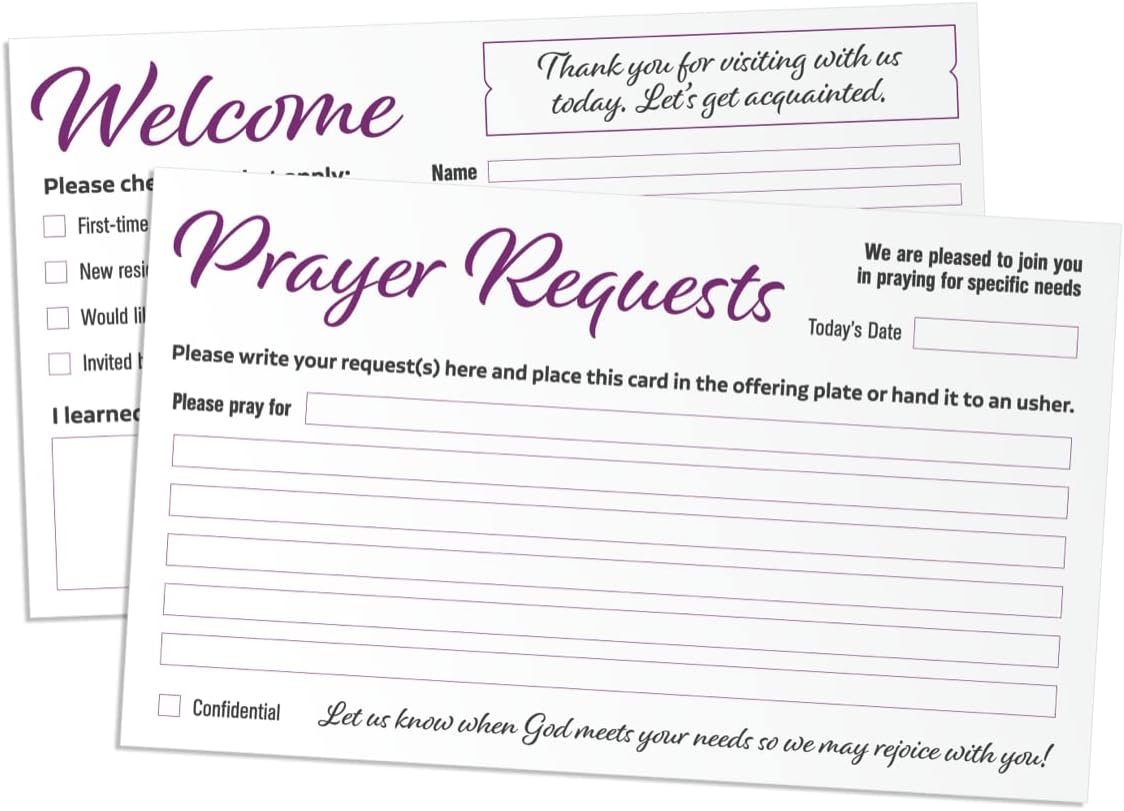
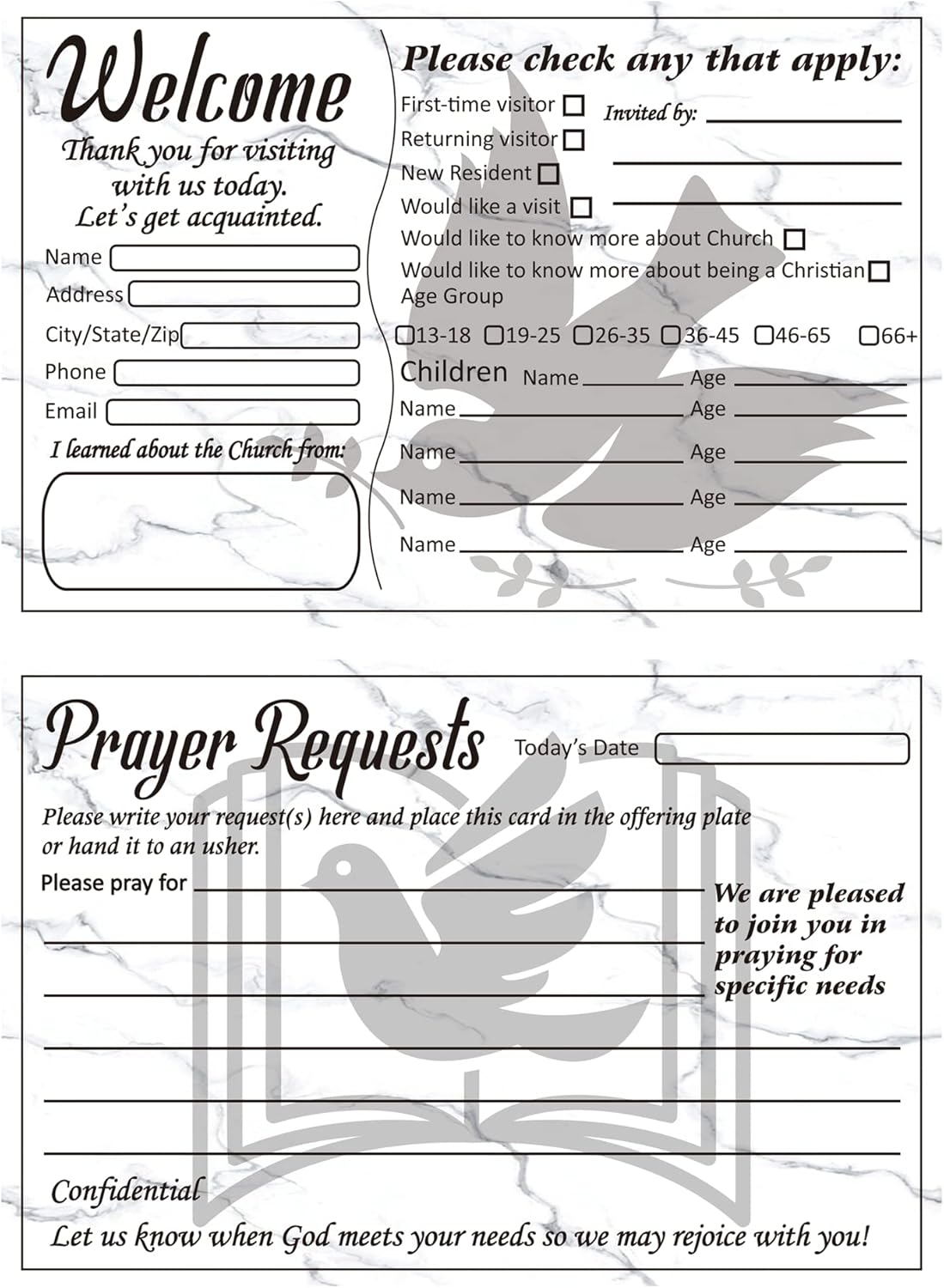
The Laila and Lainey pack is the sweet spot for most churches. You get 220 cards for the price of smaller packs, and the quality is solid. The 3×5 inch size fits in a bulletin insert or slip into a program. Fields include name, phone, email, prayer request, and next steps.
Churches with 100-300 attendees will get three to six months of cards here. No wasted inventory.
Pros
220 cards is the right volume for medium churches
3×5 fits program inserts without adjustment
100 GSM cardstock feels professional
All essential fields included
Pre-printed in black and white (no color cost)
Cons
No space for prayer requests (limited writing area)
Design is basic; no church branding
Once they’re gone, you reorder (not custom printable)
There’s a distinction worth making between a digital card and a physical one. Traditional connect cards — paper, pew-inserted, tear-off — still work well for older demographics and contexts where phones aren’t out during the service. A digital connection card (accessed via QR code on the bulletin or screen) works better for younger church attendees and makes data collection seamless. The best strategy for most church members is to offer both formats and let the visitor choose.
What makes genuine connections happen isn’t the card itself — it’s the connection card process behind it. When first-time visitor cards get collected and followed up within 48 hours, retention rates improve dramatically. Church connect cards that ask for a phone number enable a quick text follow-up the same day. Whether it’s a free church template printed in-house or a custom printed design, the most important thing is that your team actually uses the information collected.
There’s a distinction worth making between a digital card and a physical one. Traditional connect cards — paper, pew-inserted, tear-off — still work well for older demographics and contexts where phones aren’t out during the service. A digital connection card (accessed via QR code on the bulletin or screen) works better for younger church attendees and makes data collection seamless. The best strategy for most church members is to offer both formats and let the visitor choose.
What makes genuine connections happen isn’t the card itself — it’s the connection card process behind it. When first-time visitor cards get collected and followed up within 48 hours, retention rates improve dramatically. Church connect cards that ask for a phone number enable a quick text follow-up the same day. Whether it’s a free church template printed in-house or a custom printed design, the most important thing is that your team actually uses the information collected.
The best entry-level option for smaller congregations. Printed in the USA on quality cardstock, the Church Welcome Cards 100 Pack keeps costs low without looking cheap. Standard fields — name, phone, email, prayer request — are pre-printed and easy to fill in during service. Great as a trial option before committing to a larger order.
Pros
Printed in the USA — reliable quality and delivery
Budget-friendly at ~$10 for 100 cards
3.5×5.5 inch size — fits naturally in bulletins
Pre-printed with all essential contact and prayer fields
Good choice for churches under 100 weekly attendees
Cons
100 cards will run out quickly for mid-sized churches
No area for next steps or ministry interest checkboxes
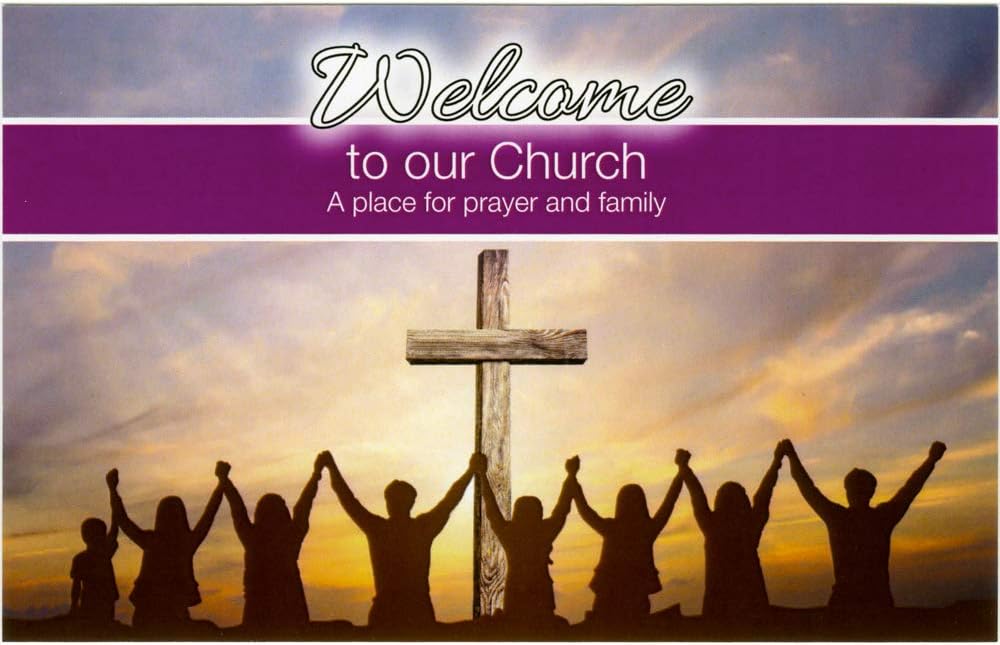
The larger 4×6 format gives your visitors more room to write — and gives your church more space to print key information: service times, address, social media handles, and a welcome message on the back. Two-sided printing and a professional pre-printed design make these feel premium. For churches that want a first-touch card visitors will actually keep, this size delivers.
Pros
4×6 format offers significantly more writing room
Two-sided design — more info, better presentation
Pre-printed: no setup or design work required
Professional feel — visitors are more likely to hold onto these
Good for churches that want to include service schedule and directions
Cons
Won’t fit in standard bulletin inserts or small welcome packets
Smaller pack quantity per order than standard card options
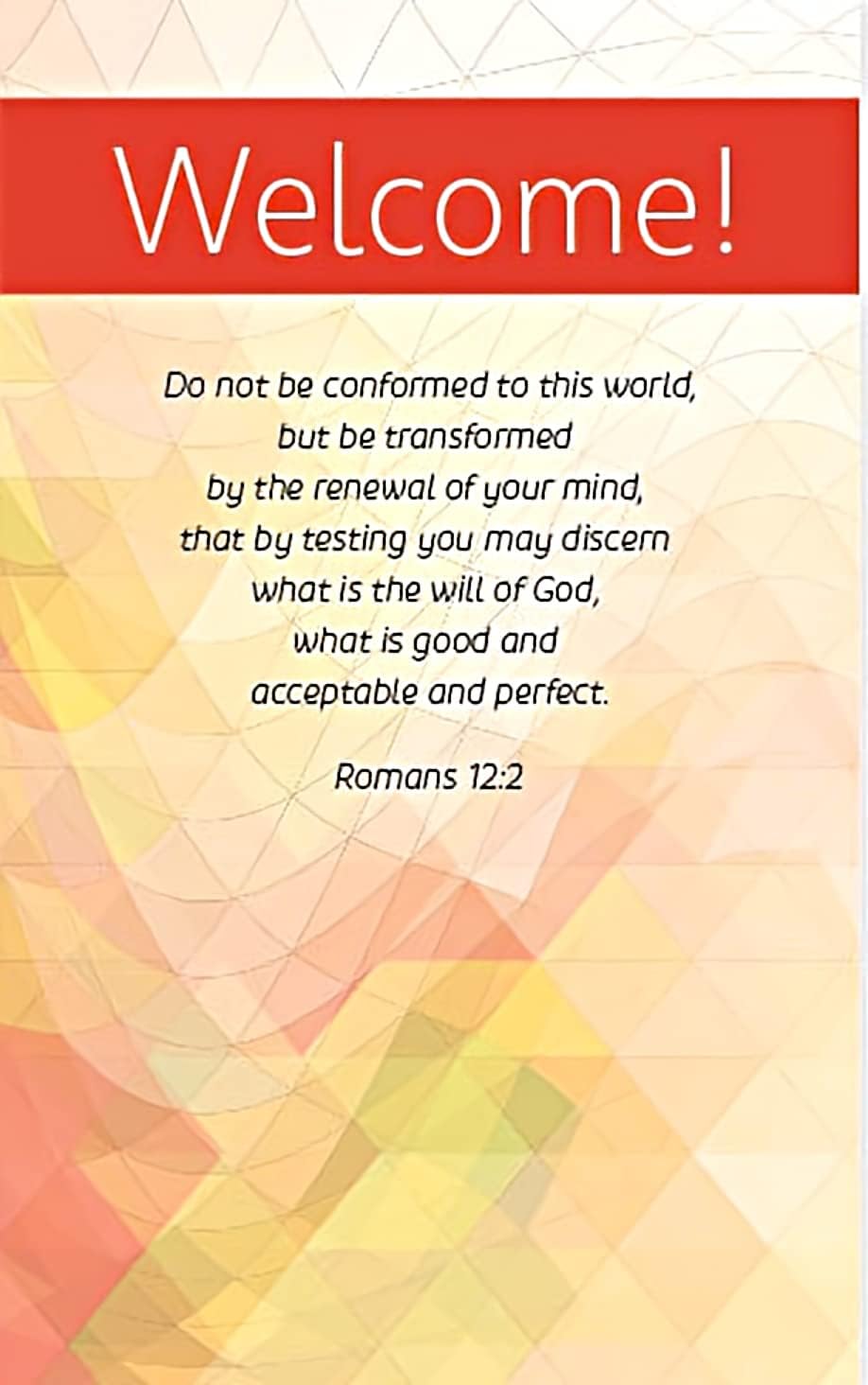
Some churches want their connection card to do double duty — collect information and communicate theology at the same time. These cards have a Romans 12:2 verse pre-printed on each one. At ~$9 for 50 cards, they’re affordable enough to refresh frequently. Faith-centered design without being cluttered, and the scripture sets a tone for the follow-up conversation that follows.
Pros
Scripture verse pre-printed — communicates church values immediately
Faith-centered design differentiates from generic options
Very affordable at ~$9 per pack
Clean layout that doesn’t feel cluttered
Works well for both evangelical and liturgical traditions
Cons
Only 50 cards per pack — higher reorder frequency
Fixed scripture may not match every church’s emphasis
No room for church contact information on the front
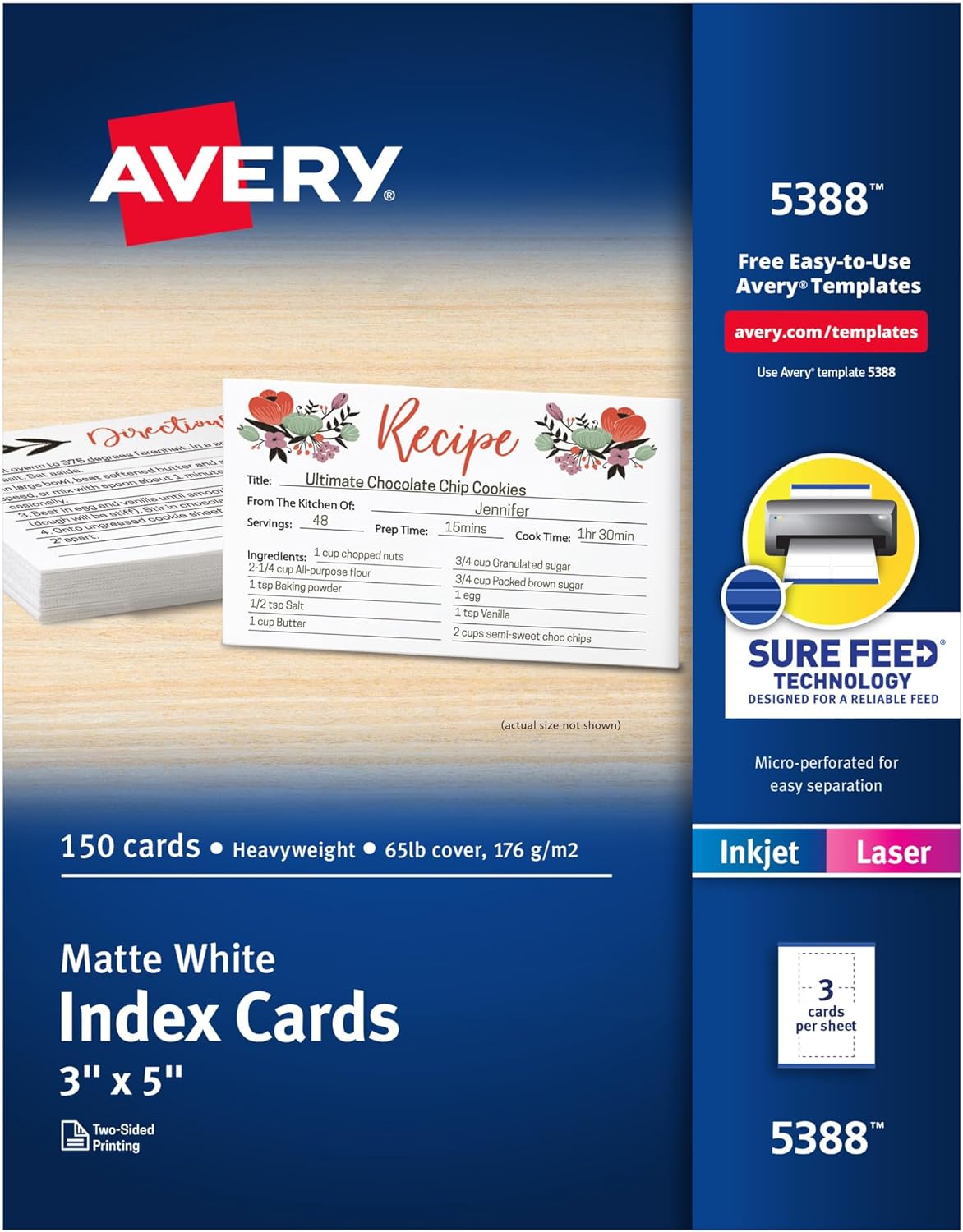
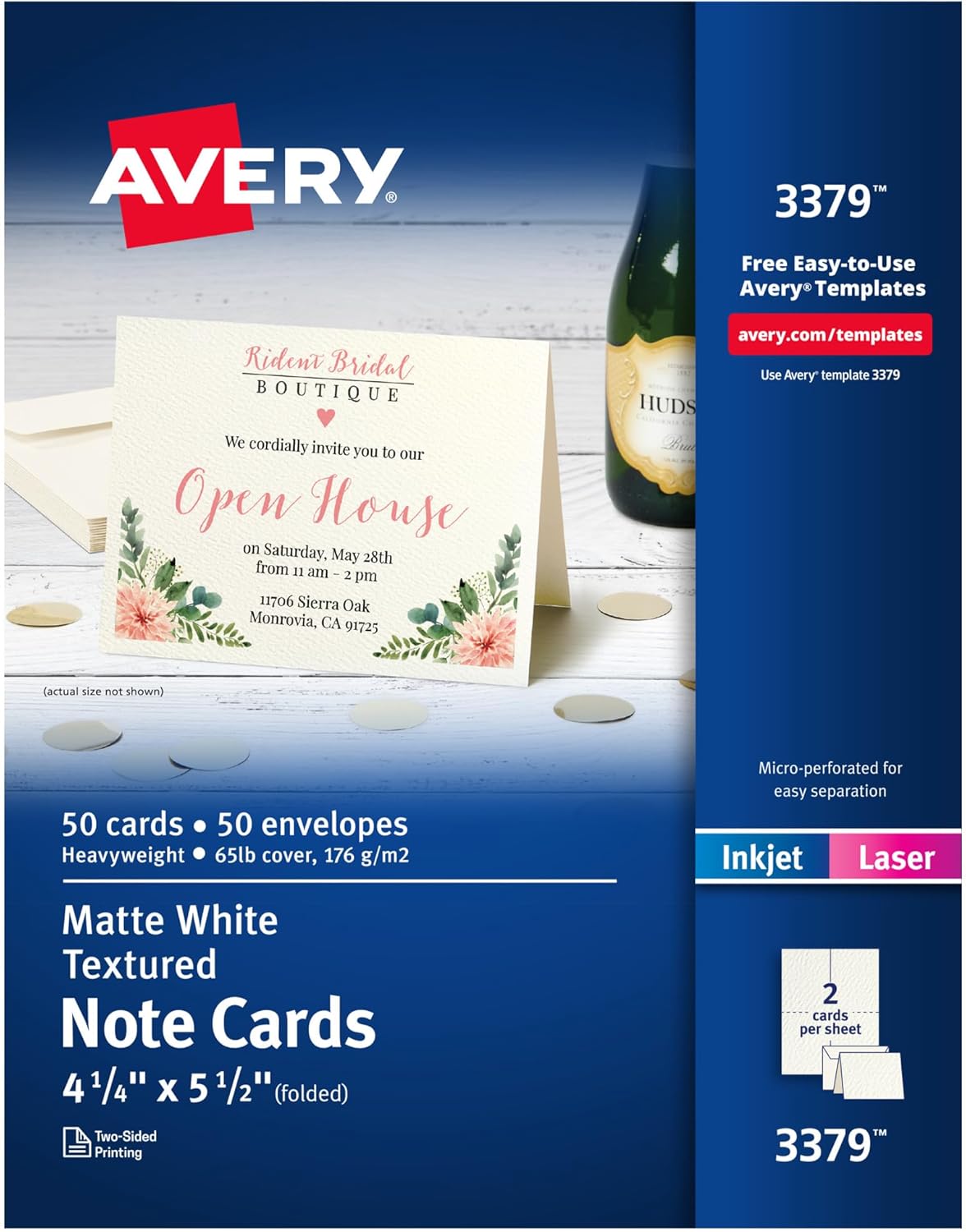
If your church needs a custom church connection card with your logo, pastor photo, and service-specific fields, Avery blank printable cards give you exactly that. Print from home or the church office. The blank 4×6 sheets accept inkjet printing and yield clean results. Churches that update their connection card quarterly — adding sermon series, seasonal events, or new service times — benefit most from this format.
Pros
Fully customizable — your church logo, colors, and fields
Blank format means you control every element of the design
Works with standard inkjet printers
Great for churches with design resources or Canva access
Can be updated for each sermon series or seasonal campaign
Some churches use business card-sized connection cards instead of standard form cards. They’re easier to carry, fit in a wallet, and serve as a persistent reminder of the church. The Avery Clean Edge cards give you 200 blank business cards with a professional laser-cut edge and laser printer compatibility. Print your church name, website, QR code for digital follow-up, and a simple message. A creative use case: QR code on the front links to your online connection form.
Pros
Business card size — easy to carry and distribute
200 cards per pack for high-volume use
Clean-edge finish gives a professional appearance
Compatible with laser printers for sharp results
Great for QR code-based digital connection card workflows
Cons
Small format — limited space for fields or long messages
Requires a laser printer for best results
Not ideal as a standalone connection card without a QR code strategy
Buying Guide: How to Choose
Connection Card vs. Welcome Card
Here’s the confusion most churches have: a connection card is what a visitor fills out. A welcome card is what you give them afterward. This guide covers connection cards — the information-capture tool.
Keep it short. The more blanks, the fewer people fill it out. Include:
First and last name
Phone number
Email address
Prayer request (one line)
Next steps (checkbox: “New to group,” “Want to serve,” “Small group info”)
Don’t ask for: birthdate, address, children’s names, membership preference, dietary restrictions. You can ask that later after they say yes to next steps.
Digital vs. Physical Cards
Many churches now use a hybrid: physical cards at the door, but a QR code linking to a Google Form. This saves printing and captures data instantly.
The QR approach works if: your church has WiFi, most visitors have smartphones, you can quickly text a follow-up.
Physical cards work if: you want a tangible touchpoint, follow-up takes 48+ hours anyway, older attendees prefer pen and paper.
Integration with ChMS
If you use Planning Center, Breeze, or Church Community Builder, you can manually enter card data or use a Google Form with Zapier to auto-sync visitors to your system. This takes less time than you think and saves the clipboard step.
The details on your card matter. Effective cards collect name, email, phone, and visit frequency — but the best also include a digital form link via QR code for those who prefer online. Limit extra form fields to what you’ll actually follow up on. Collect contact information including a cell phone for same-day text follow-up. Include space for praise reports alongside prayer requests — people are more likely to fill out a card that feels like a two-way conversation. Capturing whether a family member also attended helps the children’s ministry follow up separately from the adult outreach team.
Connection cards serve different groups differently. For first time guests, the card is the first step in a follow-up sequence — ideally triggered within 24 hours. Including a mobile number field (clearly optional) opens the door to a same-day text, which consistently outperforms email for that first touchpoint. For members submitting prayer requests or updates, the card feeds directly into pastoral care workflows. A well-designed registration form on the reverse side can capture family information, ministry interest, and prayer needs in a single card — reducing the number of follow-up steps for your team while making the process feel personal rather than bureaucratic.
Designing an effective information card is one of the most practical ways to create a meaningful connection with both new visitors and long-term members. The simple form principle applies here: ask for first name, last name, email, and contact details — then stop. Every additional field costs you completions. Cards collected from church events go into a single information center — ideally a shared system your leadership team can access to coordinate follow-up. Making this process work consistently takes hard work in the setup phase, but once running it delivers a positive impact on retention. Connecting with specific information from their card — mentioning something they wrote about themselves — is the great way to make someone feel seen by the whole church family. Some churches now supplement physical cards with social media follow-up for guests who prefer digital connection.
Frequently Asked Questions
What cardstock weight matters?
Aim for 100+ GSM. Anything less feels flimsy. Most pre-printed cards are 100-110 GSM, which is professional-grade.
How many cards do we need?
Average: 1-2 new first-time visitors per week per 100 people in your congregation. A 200-person church averages 4 visitors per week. Over 52 weeks, that’s 208 cards. Buy 220 to be safe.
Can we add our church logo?
Yes, with custom printing (Avery printable cards or a professional print shop). Pre-printed packs are generic. If branding matters, spend $15 more on Avery printable stock and design your own.
What’s the best way to follow up?
Email within 24 hours. Phone call within 48 hours. If they said yes to small groups, include a small group leader’s name and contact. Keep it warm — it’s a welcome, not a sales call.
Do we display them or hand them out?
Hand them out during greeting time. “Can you fill this out while we pray?” is more effective than a basket on a table. A greeter asking for it lifts your follow-up rate by 40%.
Can we use these for existing members too?
Yes. Many churches ask regular attendees to update info (new phone, address change, prayer request). Twice a year works well.
George Hendricks is the founder and managing editor of Godsverse.org. He has written and published over 200 skit reviews, church resource guides, and Bible study articles. With a background in data-driven content strategy and digital publishing, George built Godsverse into one of the most comprehensive collections of church skit reviews and printable scripts online. When he's not writing, he's researching what churches actually need and figuring out how to deliver it.