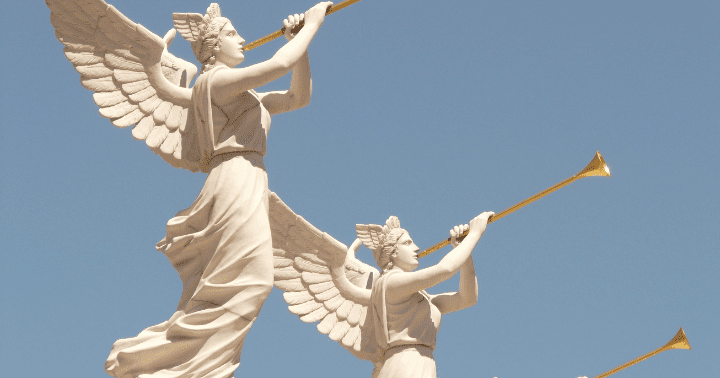
Most of us think of angels as sweet, gentle humanlike figures with illustrious wings. Unfortunately, descriptions of angels in the Bible are nothing like what most of us have imagined. Biblically accurate angels can sometimes be cryptic and fearsome beings.
If you wish to know how the Bible describes angels, stick around. This post tackles 11 Bible verses that will give you an accurate image of an angel.
Description of Angels in the Bible in Human Form
1.) Genesis 18:2
One of the most illustrative descriptions of angels in the Bible in human form is in Genesis 18:2. This is where three men visited Abraham while he was resting near the oaks of Mamre.
Quick Assessment
Why does your prayer life keep falling flat?
It's usually one of four things — and each one needs a completely different strategy to break through. This 2-minute assessment tells you exactly which pattern is blocking you.
“Abraham looked up and saw three men standing nearby. When he saw them, he hurried from the entrance of his tent to meet them and bowed low to the ground.”
Later, these three figures were the Angel of the Lord and the two angels of God. They delivered the message of Isaac’s forthcoming birth and the impending judgment of Sodom and Gomorrah.
The Bible described these beings as “men.” There was no flame of fire, loud trumpet call, or voice of many angels. It was just a quiet visit by three strangers who looked like human beings.
This passage emphasizes that angels are celestial beings but they can assume a true physical body if necessary. They are messengers of God who took on the appearance of men. Doing so avoided astonishing Abraham with supernatural signs. Instead, they appeared to relate to him directly.
Free Resource
Get Your FREE Prayer Guide Now
and join the Daily Way Devotional: Join 25,000+ Subscribers
It only means that sometimes the presence of God is nearer than we realize even in forms we don’t expect.
We learn in this story that angels aren’t accompanied by miraculous signs, such as the flaming sword guarding the Tree of Life. It also didn’t say about the terrifying image of the book of Revelation.
Rather, the passage reveals that some holy angels appear as men. They remind us that in the spiritual realm, their appearance may be different. For instance, they could be intentionally veiled.
“Do not forget to show hospitality to strangers, for by so doing some people have shown hospitality to angels without knowing it.”
This verse serves as a moral exhortation and a theological insight into the duties of angels and descriptions of angels in the Bible. It shows that angelic beings can easily blend in with humans. In that way, their divine nature remains completely hidden.
These angels appear entirely human. They’re different from the living creatures from Isaiah’s vision surrounding God’s throne or the mighty angel with a loud voice as described in Revelation.
The concept aligns with Jewish angelology. It recognizes various types of angels. Each one has distinct roles and appearances.
When we talk about angels, most of us will think about the archangel Michael. He was the great prince that the book of Daniel mentioned. He led legions of angels in heavenly battles.
But it turned out that other angels fulfill more subtle missions. Their purpose was not for warfare or judgment. Rather, they were present to deliver guidance, comfort, or test human character.
In the New Testament passage, the author highlights the reality. That is, some spirit beings are capable of entering our world, even though they’re divine and exist in the heavenly dimensions. They walk among us.
It reminds us that heaven and earth are just close. The Holy Spirit, God’s people, and holy angels work together for divine purposes.
The idea of “entertaining angels” also relates to the concept of guardian angels. It’s a belief that started in passages like Matthew 18:10. This is where Jesus refers to angels watching over children.
There are debates about the literalness of this idea in the Christian church. However, it reinforces the understanding that the angel of God can operate invisibly yet personally in the lives of individuals.
These passages present a powerful truth and accurate descriptions of angels in the Bible. One is that God’s messengers can take on a human face. They can appear in radiant glory or as humble travelers. Their presence always fulfills a divine mission.
This challenges the image of angels portrayed in art and culture. Angels don’t always have the face of a man, with wings or halos.
Rather, they can look like anyone. It can be your neighbor, a passerby, or a guest at your door. This reality elevates the call to worship God, serve others, and walk in hospitality and humility.
The names of angels we’re familiar with are Archangel Gabriel and Michael the Archangel. They’re mostly associated with great moments like the birth of Jesus. Or we can remember spiritual warfare while Michael disputing over the boy of Moses.
Countless good angels serve in quieter roles, however. They appear in ways that reflect God’s intention to guide and protect, instead of frightening or dazzling everyone.
Extra-biblical texts and apocryphal writings often expand on this idea. They depict angels with human faces and non-human traits. They add layers to the rich descriptions of angels in the Bible.
One of the descriptions of angels in the Bible and the most dramatic angelic appearances occurs at the empty tomb of Jesus Christ. This verse describes the angel as follows:
“His appearance was like lightning, and his clothing white as snow.”
This description offers a stark contrast to the human-like forms we see in earlier scriptures. The angel at the tomb is more than a man.
His face is bright, fierce, and impossible to ignore. Furthermore, his garments are as white as snow which symbolizes purity, holiness, and the presence of divine authority.
He didn’t come quietly or subtly as a heavenly messenger. Instead, he arrived with power accompanied by a great earthquake as he rolled back to the stone from the tomb’s entrance.
This dramatic entry didn’t only reveal the resurrection of Jesus but it also affirmed the glory of God and the supernatural forces at work in the world.
His appearance was so powerful that even the Roman guards, trained to face danger without flinching shook and became like dead men.
In this passage, the Bible reminds us that angelic beings aren’t soft or sentimental as the modern image of angels often describes. This angel is radiant, terrifying, and full of heavenly energy.
He’s not a comforting figure. Rather, he’s a divine being bursting with power. He stood at a moment in salvation history, which is the resurrection of Christ Jesus.
This is one of the descriptions of angels in the Bible that involve holy angels serving in the heavenly host. It reinforces the idea that angels may sometimes take on a human form. But their true forms are glorious reflections of their proximity to the throne of God.
The angel described here bears witness to the awesome reality of the spiritual realm.
A similar encounter with an angel is in Daniel 10:5-6. This Old Testament passage contains one of the most detailed descriptions of angels in the Bible. Daniel writes:
“I looked up and there before me was a man dressed in linen, with a belt of fine gold from Uphaz around his waist. His body was like topaz, his face like lightning, his eyes like flaming torches, his arms and legs like the gleam of burnished bronze, and his voice like the sound of a multitude.”
This vision happened when Daniel mourned and fasted. The heavenly being he saw was radiant. He was overpowering to the point that the people around him fled in terror, despite the fact that they couldn’t see the figure themselves.
The description suggests more than a mere angel of the Lord. It could be an appearance of a high-ranking angel. It could be Archangel Gabriel or Archangel Michael. The book of Daniel mentioned them.
This vision was so powerful because of the glorious appearance of the angel but the overwhelming power that radiates from him. His face mirrors the angel in Matthew 28:3.
His eyes suggest penetrating vision and divine insight. His limbs gleam like metal and his voice thunders like the voice of many angels or the roar of a loud trumpet call. The Book of Revelation used these terms to describe divine manifestations.
Daniel’s reaction tells us about the nature of these heavenly beings. He fainted and was physically drained because of the encounter. It took spiritual strength and angelic support for Daniel to stand in the presence of such a being.
This was the same description that Daniel wrote about the angel who spoke of being delayed by the prince of Persia for twenty-one days, until Michael, who was one of the chief princes, came to help.
It was a brief insight that revealed the invisible battle waged in the spiritual realm with good angels like Michael fighting on behalf of God’s people.
Majesty and Authority
The descriptions of angels in the Bible angels in these passages reflect another class of angels. The angels here were heavenly glory. They appeared with purpose. In that case, they weren’t just messengers of God. Rather, they were signs of God’s majesty and judgment.
They also served at the right hand of divine power. Their presence often signals dramatic changes in the spiritual order.
The Holy Spirit works alongside these spiritual beings. It allows such visions to occur to faithful prophets and disciples. This only affirms the sacred authority of the message being delivered.
The angel at the tomb wasn’t just any angel. Rather, he was part of the heavenly host. He testified to the greatest event in history.
The angel in Daniel 10 not only encourages the prophet but prepares him to receive visions about the end of heaven and earth and the final victory over evil angels and fallen angels.
These angels aren’t passive figures. They carry flaming swords. Speak with voices that shake the earth and appear brighter than the sun.
Furthermore, these are mighty angels mentioned in Revelation. The sons of God from Genesis and even the morning stars who sang at the beginning God created the world.
Radiance – Divine Glory
It’s also vital to understand that the radiance of these angels reflects the glory of the One who sends them. Angels stand in the presence of God and their appearance bears the mark of His holiness.
When they appear in lightning, fire, and brilliance, they echo the scenes from Mount Sinai, where God’s glory descended in smoke and thunder. Angels in the book of Revelation appeared as heavenly beings crying, “Holy, holy, holy” before the Lord of Hosts.
The apostle John in Revelation 22:8-9 attempted to worship an angel who showed him divine visions. This angel corrected him saying, “Do not do it! I am a fellow servant with you … Worship God!”
Even in their glory, angels of God never seek worship. Their main purpose is to direct attention back to the Lord God Almighty.
Angels with Wings
When we picture angels, we often imagine winged humans in white robes floating gently in the sky. But these Bible verses challenge that notion.
5.) Isaiah 6:2
“Above him were seraphim, each with six wings: With two wings they covered their faces, with two they covered their feet, and with two they were flying.”
The Seraphim are among the most mysterious angelic beings in the Bible. Their name comes from the Hebrew word seraph. It means “burning ones.” This implies a fiery, radiant essence.
Their form is anything but human. These angels weren’t like the angel of the Lord who appeared to Abraham or the heavenly messenger at the empty tomb. Instead, the Seraphim are wholly otherworldly in appearance.
These spirit beings have six wings. It’s a number that carries symbolic weight in biblical literature.
The purpose of their wings is telling. Two wings cover their faces. They signify reverence and humility in the overwhelming presence of God.
Even these exalted beings can’t bear to look directly at God’s glory.
Two wings cover their feet. They symbolize modesty and submission. The last two wings are used for flight that demonstrate readiness to serve and obey God’s commands without delay.
The Seraphim don’t simply exist in heaven as decoration. Rather, they play a significant role in the worship and proclamation of God’s holiness.
Isiah 6:3 states:
“Holy, holy, holy is the Lord Almighty; the whole earth is full of his glory.”
This scene takes place in a vision of the throne of God, with smoke filling the temple and the fountains shaking at the sound of their voices. Their loud voice proclaims the unmatched majesty of the Lord of Hosts. This reminds us that these aren’t gentle guardians. Rather, they’re fiery proclaimers of divine holiness.
The vision was so impactful that it caused Isaiah to cry out in fear and confession. It shows how these beings wield overwhelming spiritual power simply through their praise and presence, even though they’re not described with weapons like some mighty angels.
6.) Ezekiel 1:6-11
Ezekiel’s vision of the Cherubim is one of the most complex and symbol-laded descriptions of angels in the Bible. These beings defy every expectation of what a typical angel should look like. The passage describes creatures with four faces. That is, they have the face of a man, a lion, an ox, and an eagle.
Then, they have four wings. The two wings stretched upward while the other two covered their bodies.
Their legs were like calf’s hooves. They sparkled like burnished bronze. Their movement was straight and unbending. They didn’t turn as they moved.
Lastly, they were accompanied by wheels full of eyes and glowing fire.
It’s clear here that we’re dealing with beings who operate in a different dimension of existence. They’re representatives of a divine realm that transcends human logic and appearance.
These living creatures are identified as Cherubim. It’s a type of angelic being that plays a significant role in guarding sacred spaces. They carry the glory of God.
The Cherubim first appeared in the Old Testament. Genesis 4:24 states that God placed them east of the Garden of Eden to guard the Tree of Life with a flaming sword.
Their role was to protect. They guarded Eden or formed part of the throne of God. Furthermore, they were described as a chariot in Ezekiel’s vision.
The four faces represent different aspects of creation and divine authority. The human face signifies reason and intelligence – the lion, kingliness, and strength.
These faces also mirror the Gospel’s portrayal of Jesus – Son of Man, Son of God, Servant, and King. This is a connection highlighted in Christian Church teachings.
This type of angel is non-human. It reinforces the reality that in the spiritual realm, there are different types of angels. They don’t look like human beings. Furthermore, they don’t serve the same functions.
The Cherubim aren’t just messengers. They’re throne-bearers, protectors, and reflectors of God’s multifaceted glory.
Winged Beings
The presence of wings on Seraphim and Cherubim isn’t just visual. Rather, it communicates function, divine origin, and authority. Wings signify speed in carrying out God’s commands. With wings, these beings could move between heaven and earth.
The winged beings as described by Isaiah and Ezekiel surrounded the throne of God. This indicates their importance in worship and governance in heaven.
They’re not isolated spirits. Instead, they’re part of a heavenly host. Each has a main purpose in the divine order.
These biblical angels serve as a counter to later extra-biblical texts and folklore that softened their image. In contrast to guardian angels or the more artistic angels of life, the Cherubim and Seraphim aren’t sweet or sentimental. Instead, they’re radiant, terrifying, and full of power.
Angels as Powerful Warriors
Angels aren’t only angelic beings. They’re also pictured as powerful warriors that are part of heavenly armies. In that case, they are fierce and majestic.
7.) 2 Kings 6:17
“And Elisha prayed, ‘Open his eyes, Lord, so that he may see.’ Then the Lord opened the servant’s eyes, and he looked and saw the hills full of horses and chariots of fire all around Elisha.”
This verse provides a dramatic peek behind the scenes into the invisible spiritual reality. The armies of Aram surrounded the prophet Elisha and his servant.
To the human eye, they were hopelessly outnumbered. However, Elisha knew the truth. He prayed for God to open the eyes of his servant.
What the servant saw was nothing short of astounding. He saw an entire army of angels. They were described as “horses and chariots of fire.” These armies covered the hills around them.
The vision is vital for several reasons. For one, it underscores the military might of heaven. In this passage, angels aren’t delicate figures in white robes. Instead, they are heavenly warriors. They’re part of what’s referred to as the host of heaven or angelic armies.
The term chariots of fire symbolizes speed, strength, and divine energy. These aren’t physical chariots pulled by horses. Rather, they’re spiritual manifestations of God’s power that can intervene in human affairs.
This passage also emphasizes the protection of God’s people. Elisha wasn’t truly outnumbered. The enemy’s army was indeed intimidating. But the angelic host outpowered them.
The key here was spiritual vision. The servant couldn’t see what was really there. When his eyes were opened, though, he discovered that God’s forces had already secured their safety.
This is mirrored elsewhere in the Bible.
Psalm 34:7 states:
“The angel of the Lord encamps around those who fear Him and He delivers them.”
Angels are depicted as guardians and warriors. They’re dispatched not only to fight battles but also to ensure the victory and peace of those who trust in God.
The army of heaven in 2 Kings 6 isn’t described in individual detail. We don’t know what these angels looked like. They may have wings, shining armor, or flaming swords.
However, the emphasis is on their collective power and divine purpose. The image of fire suggests that they’re not of this world. Their role isn’t just symbolic. It’s literal, tangible, and powerfully real.
They’re agents of deliverance standing ready to act on God’s command.
8.) Revelation 10:1
“Then I saw another mighty angel coming down from heaven. He was robed in a cloud, with a rainbow above his head; his face was like the sun, and his legs were like fiery pillars.”
This passage zooms in on a single, mighty angel. The image here is no less staggering. The Book of Revelation introduces us to a majestic figure descending from heaven. It’s not an ordinary angel. His appearance is cosmic and larger than life.
This angel is robed in a cloud that signifies divine majesty and mystery. Throughout Scripture, clouds accompany the presence of God during the transfiguration and in the ascension of Jesus.
The rainbow over his head calls back to God’s covenant with Noah. In the context of Revelation may also represent the blending of justice and grace.
Furthermore, the face like the sun mirrors the description of Jesus in Revelation 1:16. That is, His face shines like the sun in all its brilliance. It conveys overwhelming light, holiness, and divine authority.
Lastly, the legs are like fiery pillars that symbolize judgment, strength, and unshakable purpose. Fire represents God’s power to refine, to consume, and to lead.
The grandeur of this angel separates him from many of the more traditional messengers. Some scholars believe that this could be Christ Himself depicted in angelic form. Others, however, suggest that he is a high-ranking archangel.
Regardless of the interpretation, this angel embodies supernatural power and divine authority. His feet being like pillars of fire may connect him to the pillar of fire that guided Israel in the wilderness.
Angels with Weapons
9.) 1 Chronicles 21:16
“David looked up and saw the angel of the Lord standing between heaven and earth, with a drawn sword in his hand extended over Jerusalem. Then, David and the elders clothed in sackcloth, fell facedown.”
This scene unfolds after King David sins by conducting a census of Israel without divine instruction. Because of that, David gives a choice between three punishments.
One is three years of famine. Second is three months of fleeing enemies. Lastly, three days of plague.
David chooses the plague. God sends a destroying angel across the land.
The angel here is described with a drawn sword stretched over Jerusalem. It’s a terrifying image of divine judgment, the position highlights that this isn’t an ordinary being. Rather, this angel operates in spiritual and earthly realms. He was standing as a mediator of God’s power and wrath.
10.) Revelation 15:6
“Out of the temple came the seven angels with the seven plagues. They were dressed in clean, shining linen and wore golden sashes around their chests.”
Seven angels emerge from the heavenly temple in the visions of Revelation. Each one carries a plague. The final judgments that will be poured out on the earth.
These angels are clothed in pure, bright linen, with golden sashes. This emphasizes their holiness, purity, and authority.
The appearance of these angels is majestic and orderly despite being bringers of terrifying events. Their white linen reflects righteousness and divine commission. The golden sashes recall the garments of priests or royalty.
This balance of purity and judgment reveals an essential truth about divine justice. It’s never random or vengeful. It’s always righteous and deserved.
These angels aren’t rogue agents. They’re sanctified executors of God’s plan. Their appearance conveys that judgment itself is holy when it comes from the throne of God.
They act in reverent obedience, showing that even when destruction is carried out, it’s done in the context of divine order.
Angel of the Lord
11.) Exodus 3:2
“There the angel of the Lord appeared to him in flames of fire from within a bush. Moses saw that though the bush was on fire it did not burn up.
One of the most mysterious and debated figures in the Bible is the Angel of the Lord. Moses encounters a burning bush and it’s the Angel of the Lord who appears in the flames.
It becomes evident that this angel speaks as God Himself, saying, “I am God of your father, the God of Abraham, Isaac, and Jacob.” Exodus 3:6
It leads many scholars and theologians to conclude that the Angel of the Lord isn’t just a created being. Rather, it’s a manifestation of God. The passage doesn’t treat the angel as separate from God. Rather, it’s seen here that God speaks through a visible form.
The burning bush symbolizes the holy mystery of God. The fire represents purity, divine presence, and power. The bush not being consumed shows God’s mercy and patience.
Far More Than Gentle Messengers
As seen in these passages, descriptions of angels in the Bible are far more than gentle messengers. They’re complex beings who serve specific roles in God’s divine plan.
Jane is a Roman Catholic on a journey of re-learning about God and deepening her understanding of the Bible. She has over a decade of experience as a copywriter. Her goal is to blend her passion for writing with her spiritual journey. She writes content that doesn’t just uplift but also connects with people who wish to seek a deeper understanding of God’s word. Follow Jane on LinkedIn or Instagram.