Thrones in the Bible could represent authority, divine rule, and sovereignty. Furthermore, they’re often linked to kingship and governance. This article will explore the 17 Bible verses that include “thrones” and explain their meanings in the Biblical context.
1.) Psalm 47:8
“God reigns over the nations; God is seated on His holy throne.”
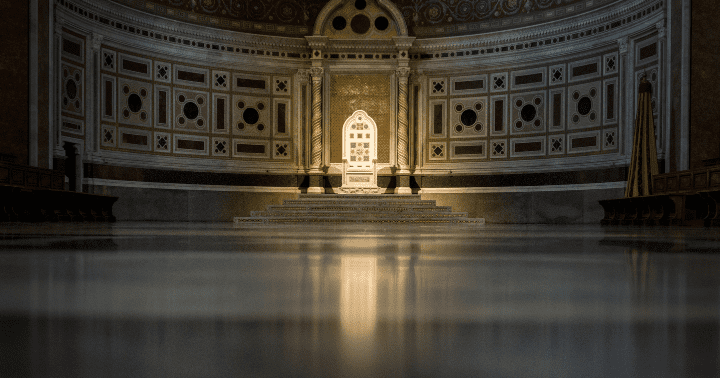
It proclaims the universal reign of the Lord God Almighty. God’s throne isn’t a local or tribal seat of power. Rather, it’s a heavenly throne. It’s exalted above the tribes of Israel and the land of Egypt.
The thrones in the Bible in this context stands as a symbol of supreme power. It’s a holy throne untouched by corruption or earthly instability.
Quick Assessment
Why does your prayer life keep falling flat?
It's usually one of four things — and each one needs a completely different strategy to break through. This 2-minute assessment tells you exactly which pattern is blocking you.
Furthermore, the throne in this verse isn’t occupied by a human military chief. Rather, it’s occupied by Jehovah’s throne in heaven,
The Book of Revelation echoes this Old Testament proclamation with images of the twenty-four elders surrounding the midst of the throne. They cast their golden crowns before Him who sits on it.
“So Solomon sat on the throne of his father David, and his rule was firmly established.”
This marks the fulfillment of a royal transition. The throne of his father David becomes Solomon’s throne. It’s a divinely sanctioned royal seat that signals God’s approval.
The throne of the kingdom isn’t just a political inheritance. Rather, it’s part of God’s promise to David’s house. In that case, the throne of Israel is now entrusted to Solomon — the servant of David’s son. This fulfilled prophetic declarations.
On another note, Solomon’s accession to the royal throne also introduces us to Solomon’s throne. This was a unique seat of splendor, surrounded by 12 lions. They signify might and judgment.
His rule signifies more than political power. Rather, it’s God’s covenant in motion that’s anchored in the word of the Lord.
The frequent occurrence of such expressions about thrones in the Old Testament indicates their expanded use in the New Testament. This is particularly true in the Book of Revelation, where Jesus Christ, the Son of Man, sits at the right hand of the throne of God.
“I saw the Lord, high and exalted, and seated on a throne…”
Isiah’s vision is one of overwhelming majesty. The train of His robe fills the holy temple, and the first living creature calls out in worship.
This throne of glory is surrounded by seraphim, and the throne of the Lord is revealed as an elevated seat from which holiness radiates.
The prophet Isaiah had this vision in the year that King Uzziah died. It signaled a shift from earthly kingship to a direct encounter with divine sovereignty.
It’s a reminder that while kings like Uzziah may come and go, God’s heavenly throne is eternal.
The holy spirit inspires the prophet in this moment. It revealed the glory of the Son of God before He was even born into the world.
In Isaiah’s vision, the throne isn’t just a form of chair. Rather, it’s the throne of His glory. It’s a place that predicts the great white throne judgment mentioned later in John’s vision in Revelation.
There’s a subtle reference to the coming high priest – Jesus. This high priest would become the perfecter of faith and take His seat at the right hand of the Father.
4.) Daniel 7:9
“Thrones were set in place, and the ancient of days took His seat…”
Daniel’s powerful vision here involves, not just one throne, but thrones in the Bible. This indicates a divine council or heavenly court.
The Ancient of Days is a title signifying eternal wisdom and age. It takes His elevated seat and the scene erupts in splendor.
The hair on His head is white like pure wool, and the throne is ablaze with the fiery flame.
This throne of judgment is a reminder of the final judgment seen in the great white throne of Revelation.
Around Jesus Christ are thrones angels, white robes, and a loud voice like thunder. The image connects this Old Testament vision with the NT portrayal of Jesus Christ as the Son of Man, coming on clouds of glory.
This passage underscores the symbol of dignity and the exercise of regal power that accompanies God’s judgment. This vision of the burning fire and the river of the water of life flowing from His presence connects Daniels’s vision to John’s vision in Revelation. That is, where the throne of His kingdom is also a source of life and purity.
“The Lord has established His throne in the heavens, and His kingdom rules over all.”
We see the permanence of God’s reign in this verse. The glorious throne isn’t a metaphor. Rather, it’s the seat of sovereign power from which the entire universe is governed.
The throne here isn’t like the throne of David or any earthly throne. Rather, this throne of the Lord is fixed in the heavens. It’s unshakable and eternal.
This verse also reminds us that God’s throne isn’t bound by geography or time. Rather, it exists outside the father’s house of any earthly lineage. It transcends even the twelve tribes of Israel. Most importantly, the spirits of God, the living creatures, and the angel Gabriel all serve in worship around this throne.
In Revelation, we see those in white garments. They sing a new song before the front of the throne. Their worship points back to this Psalmic declaration of God’s rule. The throne is the ultimate symbol of supreme power. It deserves much incense and ceaseless praise.
Old Testament About Thrones in the Bible
The Old Testament richly establishes the throne as a divine image of authority, holiness, and eternal rule. The verses mentioned above portray both the notion of royalty and the inescapable majesty of God’s throne.
Now, let’s take a look at the Bible verses in the New Testament that include “thrones.”
Thrones in the Bible – The New Testament
Thrones aren’t merely symbols of power in the New Testament. Rather, they’re profound revelations of spiritual authority, divine judgment, heavenly worship, and the victorious reign of Jesus Christ.
The image of the throne of God is carried from the Old Testament. It’s expanded through John’s vision in the Book of Revelation, where thrones, crowns, and heavenly creatures become central symbols of the kingdom of God.
In the Old Testament, the thrones highlighted the throne of David, the royal throne of Israel, and the Ancient of Days seated on His throne of glory. The New Testament, on the other hand, reveals these as shadows pointing toward the exalted reality of God’s throne in heaven and Christ’s position at the right hand of the throne of God.
6.) Matthew 19:28
“… you also will sit on twelve thrones, judging the twelve tribes of Israel.”
This promise by Jesus Christ to His disciples is deeply rooted in the notion of royalty and authority in the coming kingdom. Each of the 12 disciples was granted a royal seat. They all share in Christ’s authority to judge the twelve tribes of Israel.
The image connects to the frequent occurrence of such expressions in apocalyptic literature where thrones symbolize participation in divine rule.
These 12 thrones aren’t merely figurative. Rather, they reflect real delegated authority under the kingship of Christ who reigns from His heavenly throne.
Their future role in judgment mirrors the responsibility given to Old Testament figures like King Solomon, who ruled from the throne of his father David.
This vision also echoes the twenty-four thrones seen in Revelation. It could be a representation of the patriarchs and apostles. Those faithful to God from both the Old and New Covenants. They were clothed in white robes, wearing golden crowns, and worshipping in the midst of the throne room of heaven.
7.) Hebrews 4:16
“Let us then approach God’s throne of grace with confidence…”
This is a unique and personal image of the throne of the Lord. This throne of grace isn’t marked by fear or judgment. Rather, it’s marked by mercy and accessibility.
Through the finished work of Jesus Christ, who is now seated at the right hand of the throne of the Majesty, we’re invited to come boldly.
Access to God’s presence in the Old Testament was limited. The reason for this is that only the high priest could enter the holy temple and approach the ark of the covenant. This covenant symbolizes God’s throne. And entering the temple was only allowed once a year.
However, in the New Testament, the veil is torn. We’re called to step into the very presence of God during their time of need.
This verse clearly speaks of confidence and relationship. Through the perfecter of faith, our faithful witness, we no longer need a military chief to go before us. Rather, we already have the Son of God. He intercedes from His elevated seat. He granted us direct access to the sovereign power of the Father.
8.) Revelation 3:21
“To the one who is victorious, I will give the right to sit with me on my throne…”
This is a powerful promise to the overcomer. It shows the intimate reward of unity with Christ. If you’re a victorious believer, you’re not just forgiven. Rather, you’re elevated to rule with Christ.
To sit on His throne is to share in His dominion, glory, and inheritance. It’s a symbol of dignity and authority.
This verse fulfills the prophetic vision of Daniel. In this vision, he saw the Son of Man receiving a kingdom from the Ancient of Days.
Those who remain faithful are granted a seat next to Christ on His glorious throne. It’s a picture of royal robes, crowns of gold, and a heavenly court filled with praise.
John’s vision later in Revelation expands on this. It shows those who overcame standing in white garments, singing a new song, and worshipping before the front of the throne. These are the redeemed believers who can now sit in places of honor in the heavenly throne room.
9.) Revelation 4:2-3
“At once I was in the Spirit, and there before me was a throne in heaven with someone sitting on it…”
This is one of the most awe-inspiring scenes in the Bible. John’s vision unveils the splendor and majesty of God’s throne in heaven.
It’s important to note that it’s not just an elevated seat. Rather, it’s a seat at the center of all reality. It’s surrounded by a rainbow, shining like jasper and carnelian, and encircled by twenty-four elders, living creatures, and flashes of lightning.
The first voice calls John “to come up here. He enters the throne room where much incense, spirits of God, and a sea of glass are part of the vision.
In the midst of the throne, the first living creature like a flying eagle joins in constant worship.
This throne signifies absolute and unchanging rule. It’s the dwelling place of the Lord. The throne isn’t like a place of earthly kings. It’s a place where God sits.
10.) Revelation 20:11
“Then I saw a great white throne and Him who was seated on it…”
This moment represents the final reckoning. It’s also known as the great white throne judgment. All creatures flee from the presence of the One who sits upon it. It’s the throne of final authority. It’s the fulfillment of all prophecy.
The setting for the eternal separation of the righteous from the wicked.
It’s important to note that this isn’t similar to the earlier throne of grace. Rather, it’s the throne of judgment. That is, books are opened, including the Book of Life. The dead are judged based on what they have done.
It’s the same throne of His glory that Jesus mentioned when He said the Son of Man would come in His glory and sit on His throne. This separates sheep from goats.
All stand before the throne of His kingdom. The word of the Lord is final. The New Jerusalem awaits those found written in the book. The river of the water of life flows from the throne itself. It prepares us for the eternal home of the redeemed.
Powerful Symbols of Worship, Victory, and Judgement
The throne in the New Testament is presented as a powerful symbol of relationship, worship, victory, and judgment. The passages mentioned above reveal the last and eternal significance of the throne in Christian theology.
God invited us into His kingdom where we’re no longer strangers. Rather, we’re co-heirs. Enthroned beside the King. We’re clothed in white garments and crowned with golden crowns.
The use of a chair in Scripture becomes a declaration of divine rulership. It’s a place of intercession and a seat of eternal justice.
Indeed, the throne here is the bridge between heaven and earth, past and future, mercy and judgment. It’s forever occupied by the Son of God. He reigns at the right hand of the throne of God.
What is the Symbolism of the Thrones in the Scriptures?
As mentioned, the thrones in the Bible aren’t just an elevated seat or piece of royal furniture. Throughout the scripture, the throne is a powerful symbol of supreme power, divine judgment, eternal reign, and heavenly worship.
The OT and NT alike are filled with prophetic visions and revelations that utilize thrones to represent God’s majesty, the authority of Jesus Christ, and the destiny of the faithful.
A Throne of Sapphire
The prophet Ezekiel sees a divine likeness of a throne above the living creatures. Upon it was a majestic figure of God Himself. This sapphire throne of glory was radiant. It’s surrounded by brightness and fire. It establishes the powerful image of divine kingship.
The fiery flame, burning fire, and the train of his robe that fills the heavenly temple create an image of sovereign majesty unlike anything earthly.
The throne in this passage represents not only the heavenly throne of God. Rather, it points to the pre-incarnate Son of God, whose likeness as a man appears seated above. This prophecy anticipates the coming of Jesus Christ, the Son of Man.
The Throne Will Last Forever
Psalm 45 is a royal psalm that starts as a wedding song for the king. However, it swiftly transformed into a prophetic declaration about the eternal reign of the Messiah. The psalmist is speaking beyond any human monarch. It hints instead to a throne of the kingdom that will endure forever.
It’s not merely King Solomon’s throne or the throne of David. Rather, the throne of the Lord is established from all eternity.
The throne here stands as a symbol of dignity and the notion of royalty that characterizes the divine Messiah.
Deeper Spiritual Reality
The thrones in the Bible as presented above are expressions of God’s glory, authority, and justice. They’re not just a place of rulers. Rather, they’re centers of divine activity, worship, and relationship.
Jane is a Roman Catholic on a journey of re-learning about God and deepening her understanding of the Bible. She has over a decade of experience as a copywriter. Her goal is to blend her passion for writing with her spiritual journey. She writes content that doesn’t just uplift but also connects with people who wish to seek a deeper understanding of God’s word. Follow Jane on LinkedIn or Instagram.