You knew it was over before they said the words. You just sat there afterward, phone in hand, staring at a screen that suddenly felt foreign. The future you’d been building in your head — gone.
Breakups hit different. They’re not just the end of a relationship — they’re the collapse of a whole imagined life. And when you’re in the middle of that kind of pain, hearing “God has a plan” can feel hollow if you don’t know where to find him in it.
These 55 Bible verses for a breakup won’t make it hurt less overnight. But they will show you where God is — specifically — in each stage of what you’re going through right now.
Quick Assessment
Why does your prayer life keep falling flat?
It's usually one of four things — and each one needs a completely different strategy to break through. This 2-minute assessment tells you exactly which pattern is blocking you.
I’ve watched close friends walk through devastating breakups. TikTok will tell you to “glow up.” Your family members will tell you time heals everything. But when you’re scrolling at midnight, none of that actually helps. What helped the people I’ve watched go through this wasn’t a random list of 63 verses. What helped was knowing which verse to reach for when the anger hit, which one to pray when the loneliness crept in at 2 AM, and which one to hold onto when they started wondering if God had forgotten them. That’s what this guide is built to do.
The best Bible verses for a breakup include Psalm 34:18 (“The LORD is close to the brokenhearted”), Isaiah 43:18-19 (“I am doing a new thing”), and Romans 8:28 (“all things work together for good”). But the right verse depends on where you are in the healing process — use the roadmap below to find the verses that match your exact emotional state right now.
The Breakup Healing Roadmap — Find Your Stage
Most breakup verse lists are organized by theme: “hope,” “comfort,” “forgiveness.” That’s fine for browsing, but when you’re in the middle of it you don’t want a theme — you want someone to see where you actually are and meet you there.
This guide is organized by emotional stage. You might be in one of these right now. You might cycle through three of them in a single afternoon. Either way, this is your map — and each stage has a direct jump link to the verses that speak to it.
Stage 1: When It First Hits — 7 Verses for Raw Pain
Right after a breakup, nothing makes sense. You’re not in grief yet — you’re in shock. This is the stage where you can’t focus, food tastes wrong, and you replay every conversation trying to find the moment it went wrong.
God’s word doesn’t tell you to snap out of it. It meets you exactly here.
Psalm 34:18 (NIV)
“The LORD is close to the brokenhearted and saves those who are crushed in spirit.”
This verse doesn’t say God is watching you from a distance — it says he is close. The Hebrew word here means to draw near, to be present. He is not far from you right now.
Psalm 147:3 (NIV)
“He heals the brokenhearted and binds up their wounds.”
This is active, present-tense language. Not “he will eventually heal” — he heals. The God who holds the stars in place is also the one who bandages a broken heart.
2 Corinthians 1:3-4 (NIV)
“Praise be to the God and Father of our Lord Jesus Christ, the Father of compassion and the God of all comfort, who comforts us in all our troubles, so that we can comfort those in any trouble with the comfort we ourselves receive from God.”
God doesn’t just offer comfort — he is the source of it. And notice the purpose: the comfort he gives you through this will become the comfort you offer someone else someday.
Psalm 56:8 (NLT)
“You keep track of all my sorrows. You have collected all my tears in your bottle. You have recorded each one in your book.”
Your tears are not lost. They’re not dramatic. They’re not embarrassing. God has been tracking every one of them — and according to this psalm, he considers them worth keeping.
Matthew 5:4 (NIV)
“Blessed are those who mourn, for they will be comforted.”
Jesus doesn’t say “blessed are those who hold it together.” He says blessed are the ones who let themselves grieve. Mourning is not weakness. It’s the doorway to comfort.
Psalm 34:17 (NIV)
“The righteous cry out, and the LORD hears them; he delivers them from all their troubles.”
The phrase “righteous cry” here doesn’t mean a polished prayer. It means what you actually said — maybe out loud, maybe just in your head, maybe in tears. God hears those cries.
Isaiah 41:10 (NIV)
“So do not fear, for I am with you; do not be dismayed, for I am your God. I will strengthen you and help you; I will uphold you with my righteous right hand.”
Three active promises in one verse: I will strengthen, I will help, I will uphold. The image of God’s “righteous right hand” holding you is not metaphor — it’s the anchor underneath you right now.
Stage 2: When the Hurt Turns to Anger — 6 Verses for Bitterness and Betrayal
At some point the numbness cracks and anger rushes in to fill it. Maybe they cheated. Maybe they strung you along. Maybe you feel completely blindsided and you have every right to be furious.
The Bible doesn’t tell you that anger is wrong. It tells you what to do with it.
Ephesians 4:26-27 (NIV)
“In your anger do not sin: Do not let the sun go down while you are still angry, and do not give the devil a foothold.”
Notice God doesn’t say “don’t be angry.” He says “in your anger, don’t sin.” Anger is an emotion. What you do with it is a choice. Unresolved anger over time becomes a foothold — and that foothold costs you more than the breakup did.
Romans 12:19 (NIV)
“Do not take revenge, my dear friends, but leave room for God’s wrath, for it is written: ‘It is mine to avenge; I will repay,’ says the Lord.”
The hardest thing to believe when you’ve been hurt is that justice isn’t your job. This verse doesn’t say the wrong done to you doesn’t matter — it says God takes it seriously. Seriously enough to handle it himself.
Psalm 37:8 (NIV)
“Refrain from anger and turn from wrath; do not fret — it leads only to evil.”
Fretting — replaying the betrayal, composing texts you never send, checking their social media — keeps the wound open. This isn’t passive forgiveness. It’s an active choice to stop picking at something that needs to heal.
Matthew 5:44 (NIV)
“But I tell you, love your enemies and pray for those who persecute you.”
This might be the hardest verse in Scripture to apply to a breakup. Praying for someone who hurt you doesn’t mean excusing what they did. It means releasing your grip on it. That prayer is as much for you as it is for them.
Hebrews 12:15 (NIV)
“See to it that no one falls short of the grace of God and that no bitter root grows up to cause trouble and defile many.”
Bitterness doesn’t just hurt you — it spreads. It affects how you treat the next person you date, how you view relationships, how you talk about the ex. A bitter root, left alone, eventually poisons the whole garden.
Colossians 3:13 (NIV)
“Bear with each other and forgive one another if any of you has a grievance against someone. Forgive as the Lord forgave you.”
Forgiveness in a breakup context doesn’t mean reconciling or pretending the hurt didn’t happen. It means you stop letting their choices have power over your present. You release them — not for their sake, but for yours.
If jealousy is mixed in with the anger — you’ve seen them with someone else, or you found out they moved on faster than you — our collection of Bible verses for jealousy has verses that speak directly to that particular sting.
Stage 3: When You Can’t Stop Blaming Yourself — 7 Verses for Shame and Self-Blame
At some point the anger turns inward. You start cataloging your failures. Maybe you pushed too hard. Maybe you weren’t enough. Maybe you missed all the warning signs. Maybe this is just what happens to people like you.
This stage is particularly brutal because it’s the one where the enemy gets the most traction. And God’s word speaks directly against it.
Romans 8:1 (NIV)
“Therefore, there is now no condemnation for those who are in Christ Jesus.”
The word “now” matters here. Not “no condemnation once you get it together.” Now. The verdict on your worth was settled before this breakup. It doesn’t change because a relationship ended.
Isaiah 54:4 (NIV)
“Do not be afraid; you will not be put to shame. Do not fear disgrace; you will not be humiliated.”
God addresses shame and disgrace directly — which means he knows they’re real feelings, not overreactions. He’s not dismissing what you feel. He’s speaking truth over it.
Psalm 51:10 (NIV)
“Create in me a pure heart, O God, and renew a steadfast spirit within me.”
This is the right prayer after a painful ending — not “make them come back” but “renew me.” This psalm was David writing after catastrophic personal failure. If anyone understood shame and the need for renewal, it was him.
1 John 3:1 (NIV)
“See what great love the Father has lavished on us, that we should be called children of God! And that is what we are!”
“Lavished” — not rationed, not earned, not conditional. Your identity as a child of God was not diminished by this breakup. You are not less valuable. You are not less loved. That’s not motivation — that’s theology.
Zephaniah 3:17 (NIV)
“The LORD your God is with you, the Mighty Warrior who saves. He will take great delight in you; in his love he will no longer rebuke you, but will rejoice over you with singing.”
God rejoicing over you with singing is one of the most striking images in Scripture. Not tolerating you. Not waiting for you to fix yourself. Rejoicing — the way a parent bursts with joy over a child they love completely.
Psalm 103:12 (NIV)
“As far as the east is from the west, so far has he removed our transgressions from us.”
If you made real mistakes in the relationship — things you genuinely regret — this is the verse for you. God doesn’t hold your failures at arm’s length waiting for you to earn your way back. He removes them. Completely. Permanently.
Lamentations 3:22-23 (NIV)
“Because of the LORD’s great love we are not consumed, for his compassions never fail. They are new every morning; great is your faithfulness.”
The steadfast love of God resets every morning. This verse was written by Jeremiah sitting in the rubble of Jerusalem. If he could find new mercy in the morning in that situation, you can find it in yours.
Stage 4: When the Loneliness Hits at 2 AM — 7 Verses for Emptiness
Nobody talks enough about this stage. It’s not dramatic like anger or heavy like shame. It’s just quiet. You reach for your phone and remember you can’t text them anymore. You watch something funny and have no one to send it to. Family members ask how you’re doing and you don’t know how to answer.
Loneliness after a breakup is its own kind of grief. These verses were written for exactly that feeling.
Deuteronomy 31:6 (NIV)
“Be strong and courageous. Do not be afraid or terrified because of them, for the LORD your God goes with you; he will never leave you nor forsake you.”
“Never leave you nor forsake you” — this is a promise that can’t be broken by a conversation, a text, or a changed relationship status. The one who holds you has no leaving in him.
John 14:18 (NIV)
“I will not leave you as orphans; I will come to you.”
Jesus said this to his disciples hours before the crucifixion — people who were about to lose him in the most traumatic way possible. His promise was direct: I will come to you. Not “figure it out.” Come to you.
Psalm 68:6 (NIV)
“God sets the lonely in families, he leads out the prisoners with singing.”
This verse is easy to overlook but it’s remarkable. God’s response to loneliness isn’t “endure it” — it’s to place lonely people inside community. If you’re isolated after your breakup, that might be less a punishment and more a setup for what he’s preparing.
Psalm 73:26 (NIV)
“My flesh and my heart may fail, but God is the strength of my heart and my portion forever.”
“Portion” in Hebrew culture was your inheritance — what you were left with at the end of the day. When everything else has been subtracted, God is still what remains. The strength of your heart. The deepest part of your portion.
Isaiah 43:2 (NIV)
“When you pass through the waters, I will be with you; and when you pass through the rivers, they will not sweep over you. When you walk through the fire, you will not be burned; the flames will not set you ablaze.”
Three images of overwhelming circumstances — and God’s presence in all of them. Not “I’ll pull you out of the water.” He says “I will be with you in it.” The presence of God doesn’t remove the hard thing. It changes what the hard thing can do to you.
Psalm 46:1 (NIV)
“God is our refuge and strength, an ever-present help in trouble.”
“Ever-present” — not sometimes present, not present once you’ve prayed correctly or processed enough. Right now, in the difficult times, in the 2 AM loneliness: present. A very present help.
Psalm 27:10 (NIV)
“Though my father and mother forsake me, the LORD will receive me.”
David used the most painful abandonment imaginable — even your own parents — and said God still receives you. Even when the people closest to you have let you go, he receives you. That’s not consolation. That’s a promise.
If you’re struggling to trust God through this painful season, our collection of Bible verses on trusting God in difficult times goes deeper into what Scripture says about faith when life falls apart.
Stage 5: Was This Even God’s Will? — 7 Verses for Spiritual Confusion
This is the question almost every Christian asks after a breakup and almost nobody talks about directly: Did God want this to happen? Was this relationship a mistake from the beginning? Did I miss his plan?
I’ve sat across the table from close friends asking these exact questions. And I’ve found that most breakup verse lists skip this stage entirely — which leaves people feeling more confused and more alone in it. So let’s deal with it directly.
Sean Perron and Spencer Harmon, who wrote and taught extensively on breakups from a biblical counseling perspective (along with Heath Lambert), make a point that’s worth holding onto: not every relationship that ends was a mistake. Sometimes a dating relationship ending is God’s good and faithful provision — not his absence.
Proverbs 3:5-6 (NIV)
“Trust in the LORD with all your heart and lean not on your own understanding; in all your ways submit to him, and he will make your paths straight.”
“Lean not on your own understanding” — this is the hardest instruction to follow in the middle of a breakup. Your understanding says: this was a disaster. God’s word says: submit the path to me. “Make your paths straight” doesn’t mean comfortable. It means directed toward something good.
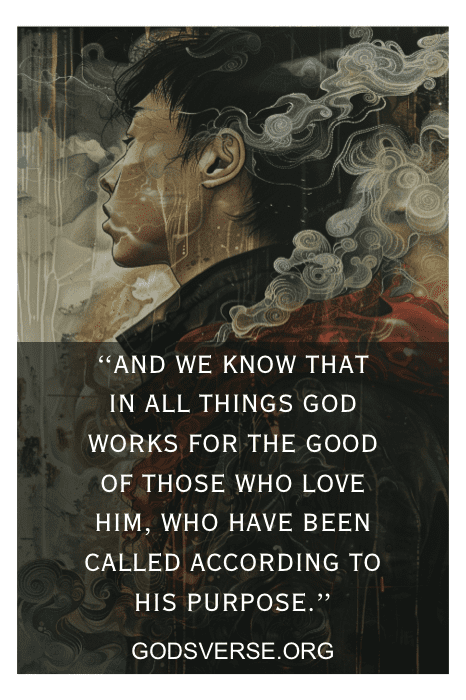
Romans 8:28 (NIV)
“And we know that in all things God works for the good of those who love him, who have been called according to his purpose.”
This verse is sometimes quoted in a way that dismisses pain. That’s not what it says. It says God works in all things — not that all things are good, but that God is active inside them. Including this ending. Including the confusion you feel right now.
Jeremiah 29:11 (NIV)
“For I know the plans I have for you,” declares the LORD, “plans to prosper you and not to harm you, plans to give you hope and a future.”
This verse was written to a people who had just lost everything — their city, their temple, their families. God didn’t say “my plan was for you to keep what you had.” He said: I know my plans. They are for a future and a hope. That future wasn’t destroyed when this relationship ended.
Isaiah 55:8-9 (NIV)
“For my thoughts are not your thoughts, neither are your ways my ways,” declares the LORD. “As the heavens are higher than the earth, so are my ways higher than your ways and my thoughts than your thoughts.”
This isn’t a dismissal — “you just don’t understand.” It’s a call to humility. The same God who does not make mistakes, who knit you together, who numbered your days — he sees what you cannot see from where you’re standing right now.
James 1:5 (NIV)
“If any of you lacks wisdom, you should ask God, who gives generously to all without finding fault, and it will be given to you.”
If you’re genuinely asking “did I sin? Did I misread this? What should I have done differently?” — that prayer is answered in this verse. God gives wisdom generously and without fault-finding. You can ask him honestly, and he will answer.
Psalm 32:8 (NIV)
“I will instruct you and teach you in the way you should go; I will counsel you with my loving eye on you.”
The phrase “loving eye on you” is worth sitting with. God’s guidance in your life isn’t cold and mechanical. It comes with a watching love — the attentive, tender gaze of a Father who knows you completely.
Romans 5:3-5 (NIV)
“We also glory in our sufferings, because we know that suffering produces perseverance; perseverance, character; and character, hope. And hope does not put us to shame, because God’s love has been poured out into our hearts through the Holy Spirit, who has been given to us.”
This is the answer to “was this God’s will?” — not “yes” or “no,” but: God is doing something inside the suffering. The Holy Spirit is present in this. And the end of the chain isn’t trauma. It’s hope.
Stage 6: Letting Go of What You Hoped For — 7 Verses for Release
There’s a specific grief in letting go of a future you’d already imagined. Not just the person — the life you thought you were building. The family. The holidays. The person you thought you’d become with them.
These Bible verses for letting go don’t tell you to forget what mattered. They point you toward what’s ahead.
For a deeper look at Scripture on releasing what you can’t hold onto, our collection of Bible verses to help you let go and move on covers this theme in depth — including verses about releasing people, releasing grief, and releasing outcomes to God.
Isaiah 43:18-19 (NIV)
“Forget the former things; do not dwell on the past. See, I am doing a new thing! Now it springs up; do you not perceive it? I am making a way in the wilderness and streams in the wasteland.”
God doesn’t say “forget the past” as a command to deny your grief. He says “stop dwelling” there, because the thing he’s building is already springing up. You might not see it yet. He says: perceive it. Look for it. It’s already here.
Philippians 4:6-7 (NIV)
“Do not be anxious about anything, but in every situation, by prayer and petition, with thanksgiving, present your requests to God. And the peace of God, which transcends all understanding, will guard your hearts and your minds in Christ Jesus.”
The peace of God here is described as a guard — something that stands watch at the door of your heart and mind. It doesn’t come from understanding how it all works out. It comes from giving it over.
Philippians 3:13-14 (NIV)
“But one thing I do: Forgetting what is behind and straining toward what is ahead, I press on toward the goal to win the prize for which God has called me heavenward in Christ Jesus.”
Paul wrote these words from prison. He understood something about leaving things behind. “Straining toward what is ahead” is active, forward-leaning language. Not passive resignation — intentional movement toward something God has already placed in front of you.
Psalm 37:4-5 (NIV)
“Take delight in the LORD, and he will give you the desires of your heart. Commit your way to the LORD; trust in him and he will do this.”
Letting go doesn’t mean surrendering the desire for love and companionship. It means committing the path to God — trusting that the God who put those desires in you knows what to do with them better than you do right now.
Matthew 11:28-30 (NIV)
“Come to me, all you who are weary and burdened, and I will give you rest. Take my yoke upon you and learn from me, for I am gentle and humble in heart, and you will find rest for your souls. For my yoke is easy and my burden is light.”
Carrying a past relationship is heavy. Carrying the grief, the “what ifs,” the anger, the shame — it is a burden Jesus specifically calls you to release. Not onto a shelf where you check it occasionally. Into his hands. He says: come.
Psalm 30:5 (NIV)
“For his anger lasts only a moment, but his favor lasts a lifetime; weeping may stay for the night, but rejoicing comes in the morning.”
The night doesn’t last forever. This isn’t toxic positivity — it’s a theological statement about the nature of seasons. Your grief is real. It is also not the final word.
1 Peter 5:7 (NIV)
“Cast all your anxiety on him because he cares for you.”
“Cast” is a fishing term — an intentional, decisive throw. Not a gradual loosening. Not a slow hand-off. A throw. God can handle it. And the reason he can is not just his power — it’s his care.
Stage 7: Stepping Into What’s Next — 7 Verses for Starting Over
This stage doesn’t announce itself. You don’t wake up one morning and say “I’m healed.” You just start noticing that you can breathe again. The future starts to feel like something other than loss.
These verses are for that moment — and for the ones that follow it.
2 Corinthians 5:17 (NIV)
“Therefore, if anyone is in Christ, the new creation has come: The old has gone, the new is here!”
This is not a consolation prize. It’s an identity claim. In Christ you are a new creation — not just healed from the old thing, but genuinely new. The past relationship does not define the new creation standing here.
Joel 2:25 (NIV)
“I will repay you for the years the locusts have eaten.”
If you feel like you wasted time — years of your life, your best years, years you can’t get back — this verse is for you. God doesn’t just restore what’s left. He repays what was lost. The years. Not just the pain.
Jeremiah 31:13 (NIV)
“I will turn their mourning into gladness; I will give them comfort and joy instead of sorrow.”
This is a reversal promise — not a patch over the sorrow, but a replacement. Gladness in the place where mourning was. Joy in the place of sorrow. That is God’s plan for the end of this story.
Revelation 21:5 (NIV)
“He who was seated on the throne said, ‘I am making everything new!’ Then he said, ‘Write this down, for these words are trustworthy and true.'”
God himself said “write this down” — which tells you how much he wants you to hold onto it. He is the God who makes things new. Not just cosmetically retouched. New.
Psalm 126:5-6 (NIV)
“Those who sow with tears will reap with songs of joy. Those who go out weeping, carrying seed to sow, will return with songs of joy, carrying sheaves with them.”
You didn’t waste this. The tears you sowed are seeds. The harvest hasn’t come yet — but it is coming. You go out weeping. You return with songs of joy. That’s the arc of this season.
Isaiah 40:31 (NIV)
“But those who hope in the LORD will renew their strength. They will soar on wings like eagles; they will run and not grow weary, they will walk and not be faint.”
The sequence here matters: soar, then run, then walk. The mountain-top spiritual high often comes first, and then the long steady walk follows. Both are renewal. Don’t mistake the quiet days for backsliding — walking and not fainting is still a gift.
Ephesians 3:20-21 (NIV)
“Now to him who is able to do immeasurably more than all we ask or imagine, according to his power that is at work within us, to him be glory in the church and in Christ Jesus throughout all generations, forever and ever! Amen.”
“Immeasurably more than all we ask or imagine.” The future God has for you is bigger than the future you lost. Not just bigger — immeasurably bigger. That is not a nice thought. That is a declaration about the God who holds your future.
A Real Moment
I have a friend who ended a four-year relationship in her late twenties. She had a ring half-picked out. She knew his family. She’d been to every one of his siblings’ weddings. After the breakup, she spent about a year completely convinced she had missed God’s plan — that she had somehow gotten the timing wrong or made the wrong call.
What I watched happen over the next three years wasn’t what she expected. She didn’t just “move on.” She became someone different. More grounded. More clear about who she was outside of a relationship. More capable of real intimacy when she finally did find her husband.
She says now — and this is her words, not mine — that the breakup was the most painful thing God ever allowed in her life and one of the most faithful things he ever did for her. She couldn’t have said that at the time. But she can say it now.
What the Bible Does NOT Say About Breakups
Some verses get misapplied around breakups in ways that cause real harm. Here are four things God’s word does not actually say — even if you’ve heard them said with Scripture attached.
Not What It Says
The Bible does not say God will fix everything if you just pray hard enough. Prayer is vital. But God’s answer isn’t always restoration. Sometimes his answer is the peace to move forward. Philippians 4:7 promises the peace of God — not the removal of the situation.
Not What It Says
The Bible does not say you must stay friends with your ex. Forgiveness doesn’t require continued relationship. You can forgive someone completely and still maintain appropriate distance while healing. Grace and boundaries are not opposites.
Not What It Says
The Bible does not say your pain means you lack faith. Jesus wept (John 11:35). David wrote an entire book of laments. Paul described carrying “the burden for all the churches.” Grief is not spiritual failure. It is the honest response to real loss.
Not What It Says
The Bible does not say a broken relationship means you are broken. Your value was never measured by your relationship status. Romans 8:38-39 says nothing — not height, depth, present, future, or anything else in all of creation — can separate you from the love of God. A breakup is on that list.
If the relationship involved patterns of sin — lust, jealousy, unhealthy attachment — our resources on biblical self-control and Scripture on lust are worth reading as you process what happened.
7-Day Breakup Survival Plan
One verse a day. One prayer. Seven days. Print this out or bookmark it and come back each morning. You don’t have to be okay. You just have to show up.
Day
Today’s Verse
One-Line Prayer
Day 1
Psalm 34:18 — The LORD is close to the brokenhearted.
“Lord, I believe you are close. I need to feel it.”
Day 2
Romans 8:1 — No condemnation in Christ Jesus.
“Lord, I release the shame I’m carrying today.”
Day 3
Romans 12:19 — Leave room for God’s justice.
“Lord, I’m choosing not to repay. That’s yours.”
Day 4
Psalm 73:26 — God is the strength of my heart.
“Lord, be my portion today when nothing else is.”
Day 5
Proverbs 3:5-6 — Lean not on your own understanding.
“Lord, I don’t understand this. I’m trusting you anyway.”
Day 6
Isaiah 43:19 — I am doing a new thing.
“Lord, help me see the new thing you’re doing.”
Day 7
2 Corinthians 5:17 — The new creation has come.
“Lord, I’m stepping into who you’ve made me to be.”
A Prayer for a Broken Heart
Prayer
Lord,
I’m not going to pretend this doesn’t hurt. It does. And I know you already know that — you keep track of every tear, and you are close to the brokenhearted. I’m asking you to be close right now.
Heal what’s broken in me. Not just the grief over this relationship — but any root of shame, any place where I’ve believed I’m not enough, any pattern that was drawing me toward the wrong things. Make me new, the way only you can.
I release this person to you. I release the future I imagined. I release the anger I’m carrying, the questions I can’t answer, the understanding I don’t have. You see what I cannot see. Your ways are higher. I am choosing to trust that.
Give me your peace — the kind that doesn’t make sense, the kind that guards my heart. Show me the new thing you are doing. And remind me, on the hard days, that you are not finished with me.
In Christ Jesus, Amen.
When You Need More Than Verses
When to Get Help
If you’re struggling to function — not sleeping, not eating, unable to go to work or school, having thoughts of self-harm — please don’t try to Scripture your way through it alone. That’s not weakness. That’s wisdom.
988 Suicide & Crisis Lifeline: Call or text 988 (available 24/7) Crisis Text Line: Text HOME to 741741 AACC Find-a-Counselor:aacc.net — for finding a licensed Christian counselor CCEF:ccef.org — biblical counseling resources and referrals
You don’t have to do this alone. In fact, God’s word specifically says he puts lonely people in community (Psalm 68:6). Reaching out is part of the plan.
Frequently Asked Questions
What does the Bible say about healing after a breakup?
The Bible is direct about heartbreak: God is close to the brokenhearted (Psalm 34:18), he heals wounds (Psalm 147:3), and he actively works for good even in painful circumstances (Romans 8:28). The Bible also promises that mourning is temporary — “weeping may stay for the night, but rejoicing comes in the morning” (Psalm 30:5). Healing after a breakup isn’t instant, but Scripture consistently points to a God who is present in the process.
Is breaking up a sin?
Ending a dating relationship is not a sin. The Bible gives extensive guidance on marriage and divorce, but dating relationships do not carry the same covenantal weight as marriage. Sin may be involved in how a breakup happens — dishonesty, cruelty, using someone — but the decision to end a relationship that isn’t working is not inherently sinful. If you’re dealing with something more like infidelity or adultery in the relationship, Scripture has specific guidance there.
How do you move on from a past relationship biblically?
Biblically, moving on involves three things: releasing the person and the past to God (1 Peter 5:7, Philippians 3:13-14), processing the grief honestly rather than suppressing it (Matthew 5:4), and reorienting your identity toward Christ rather than toward the relationship (2 Corinthians 5:17). It also involves community — isolation after a breakup tends to make things worse, and God’s design is for people to be placed inside family and community (Psalm 68:6). If you need guidance on letting go specifically, our collection of Bible verses for letting go and moving on covers this in depth.
What Bible verse is good for a broken heart?
The most direct verse for a broken heart is Psalm 34:18: “The LORD is close to the brokenhearted and saves those who are crushed in spirit.” Other powerful verses include Psalm 147:3 (“He heals the brokenhearted”), Isaiah 41:10 (God’s promise to uphold you), and Psalm 73:26 (“God is the strength of my heart and my portion forever”). The best verse depends on what part of the pain is loudest — use the Healing Roadmap at the top of this article to find the verse that fits where you are right now.
Does God care about dating relationships and breakups?
Yes. The Bible doesn’t use the word “dating,” but it speaks extensively about love, relationships, the human longing for companionship, and how God sees and responds to pain. The same God who “sets the lonely in families” (Psalm 68:6) and collects your tears in a bottle (Psalm 56:8) is actively attentive to the grief of a broken relationship. He is not indifferent to what you’re going through.
How long does it take to heal from a breakup according to the Bible?
The Bible doesn’t give timelines. What it does say is that seasons change — “weeping may stay for the night, but rejoicing comes in the morning” (Psalm 30:5). It also says God can “repay the years the locusts have eaten” (Joel 2:25) — which means even a long, difficult season of grief doesn’t have to be wasted. Don’t set expectations based on what others seem to experience. Healing is not a competition.
Should I pray for my ex after a breakup?
Matthew 5:44 — “love your enemies and pray for those who persecute you” — gives a direct answer: yes. This doesn’t mean praying for them to come back or praying for reconciliation. It can be as simple as “Lord, bless them.” Praying for someone you’re hurt by releases something in you. It’s less about changing their situation and more about keeping your own heart free from bitterness.
What does the Bible say about being single after a breakup?
Paul addresses singleness in 1 Corinthians 7 and describes it as a gift — a season with particular freedom for devotion to God. That’s not always easy to hear when you’ve just come out of a relationship, but the Bible’s view of singleness isn’t as a waiting room. It’s a full state of being with real purpose. The desire for relationship is also acknowledged throughout Scripture — Genesis 2:18 says “it is not good for man to be alone.” Both the desire and the season of singleness are held together in God’s word without contradiction.
George Hendricks is the founder and managing editor of Godsverse.org. He has written and published over 200 skit reviews, church resource guides, and Bible study articles. With a background in data-driven content strategy and digital publishing, George built Godsverse into one of the most comprehensive collections of church skit reviews and printable scripts online. When he's not writing, he's researching what churches actually need and figuring out how to deliver it.