Jesus used the parable of the mustard seed to explain the dynamics of God’s kingdom and to exhort believers. This post will explore its meaning and lessons as they apply to our lives today.
In Matthew chapter 13, Jesus used a series of parables to highlight important aspects of the kingdom of heaven. They are:
Quick Assessment
Why does your prayer life keep falling flat?
It's usually one of four things — and each one needs a completely different strategy to break through. This 2-minute assessment tells you exactly which pattern is blocking you.
The parable of the tares/ weeds (vs. 24-30, 36-43).
The parable of the mustard seed (vs. 31-32)
The parable of the leaven/ yeast (vs. 33)
The parable of the hidden treasure (vs. 44)
The parable of the pearl (vs. 45-46)
The parable of the net (vs. 47-51)
The parable of household treasures (vs. 52)
Jesus told the first four to the crowds as a warning of Satan’s diabolic plot to destroy the church. Later, when the crowds had left, the disciples asked Jesus to explain the first parable—the parable of the sower. Jesus explained it to them and proceeded to give four more parables. While the previous parables discussed the external characteristics of the church, the last four delved into the inner characteristics of the church of Jesus Christ.
All the synoptic gospels capture Jesus giving the parable of the mustard seed. We will reference the texts, starting with Matthew’s account.
He told them another parable: “The kingdom of heaven is like a mustard seed, which a man took and planted in his field.Though it is the smallest of all seeds, yet when it grows, it is the largest of garden plants and becomes a tree, so that the birds come and perch in its branches.” (Matthew 31:31-32)
And he said, “With what can we compare the kingdom of God, or what parable shall we use for it?It is like a grain of mustard seed, which, when sown on the ground, is the smallest of all the seeds on earth,yet when it is sown it grows up and becomes larger than all the garden plants and puts out large branches, so that the birds of the air can make nests in its shade.” (Mark 4:30-32)
He said therefore, “What is the kingdom of God like? And to what shall I compare it?It is like a grain of mustard seed that a man took and sowed in his garden, and it grew and became a tree, and the birds of the air made nests in its branches.” (Luke 13:18-19)
The mustard seed parable may seem like a simple story that outlived its relevance in ancient Israel. However, if you take a closer look, it is heavy with meaning and very applicable to 21st-century believers.
Free Resource
Get Your FREE Prayer Guide Now
and join the Daily Way Devotional: Join 25,000+ Subscribers
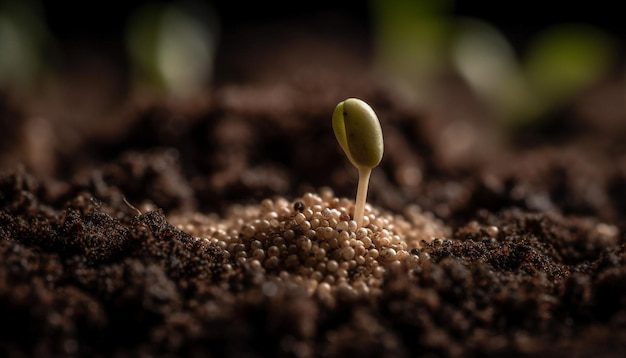
The meaning of the parable of the mustard seed lies in understanding what the little mustard seed is. Jesus used the mustard seed to illustrate an important point -the smallest seeds grow into the largest garden plant.
Is the tiny mustard seed the smallest seed or the mustard plant the largest known garden plant?
A grain of mustard seed measuring 1-2 mm in diameter might not be the smallest known seed, as there are smaller seeds, but it is a small seed. The mustard tree, known to grow into a tall, 20-foot-wide tree, is a large tree by ordinary measures but is not the biggest of garden plants.
Does that mean the Bible contradicts reality? No. Far from it.
Jesus’ teaching here applies hyperbole to bring out the contrast and effect well. Jesus’ statements in this parable are proverbial, not scientific.
The main point is that this small tree grows into a big tree. Jesus emphasizes exponential growth. It is incredible how a tiny seed can grow into a great tree with large branches on which birds of the air perch. For this, some people have christened it the parable of the growing seed.
That said, some Bible scholars posit that the mention of the tree in this brief parable was an extension of the Old Testament image of the great empire as mentioned in the texts below:
On the mountain heights of Israel I will plant it; it will produce branches and bear fruit and become a splendid cedar. Birds of every kind will nest in it; they will find shelter in the shade of its branches. 24 All the trees of the forest will know that I, the Lord, bring down the tall tree and make the low tree grow tall. I dry up the green tree and make the dry tree flourish. “‘I the Lord have spoken, and I will do it.’” (Ezekiel 17:23-24)
“‘Who can be compared with you in majesty?Consider Assyria, once a cedar in Lebanon, with beautiful branches overshadowing the forest; it towered on high, its top above the thick foliage.The waters nourished it, deep springs made it grow tall; their streams flowed all around its base and sent their channels to all the trees of the field.So it towered higher than all the trees of the field; its boughs increased and its branches grew long, spreading because of abundant waters.
All the birds of the sky nested in its boughs, all the animals of the wild gave birth under its branches; all the great nations lived in its shade. It was majestic in beauty, with its spreading boughs, for its roots went down to abundant waters. The cedars in the garden of God could not rival it, nor could the junipers equal its boughs, nor could the plane trees compare with its branches—no tree in the garden of God could match its beauty.I made it beautiful with abundant branches, the envy of all the trees of Eden in the garden of God. (Ezekiel 31:3-9)
These are the visions I saw while lying in bed: I looked, and there before me stood a tree in the middle of the land. Its height was enormous.The tree grew large and strong and its top touched the sky; it was visible to the ends of the earth. Its leaves were beautiful, its fruit abundant, and on it was food for all. Under it, the wild animals found shelter, and the birds lived in its branches; from it, every creature was fed. (Daniel 4:10-12)
Jesus’ words would have made sense to his original hearers. Since they lived in a largely agrarian society, they knew the characteristics of a mustard plant. Let’s highlight the meaning.
Faith of a mustard seed
If you thought Jesus’ teaching was about plants, you missed the main point. Jesus’ parables illustrated spiritual truth and teachings on other essential aspects of life. The mustard seed parable is about the kingdom of God.
The first thing to note is that this parable talks about faith. Even the smallest amount of faith can accomplish much in God’s kingdom and, specifically, in our lives.
Consider what Jesus says about the tiny mustard seed concerning our faith.
He replied, “Because you have so little faith. Truly I tell you, if you have faith as small as a mustard seed, you can say to this mountain, ‘Move from here to there,’ and it will move. Nothing will be impossible for you.” (Matthew 17:20)
He replied, “If you have faith as small as a mustard seed, you can say to this mulberry tree, ‘Be uprooted and planted in the sea,’ and it will obey you. (Luke 17:6)
Source: hriana
Jesus likens little faith to the little seed. Just like the small seed grows into a huge plant in the parable of the mustard seed, if faith, even a little bit of faith, is exercised, much of God’s work will be accomplished.
Many believers often feel they lack the faith to accomplish kingdom exploits. In the texts above, Jesus exhorts believers that they don’t necessarily need immense faith to do much. If you have faith as small as the mustard seed, you can instruct a mountain to move, and it will move!
That’s the faith of a mustard seed.
Your heart is the ‘soil’ where this small seed of faith can grow and birth great works. How fertile is it? Now that faith comes by reading the Bible or hearing it taught (Romans 10:17), how receptive are you to God’s word?
Use the lessons from the parable of the sower to gauge yourself. Work towards being the person who hears God’s word, understands it, and proceeds to bear much fruit.
Jesus used parables to teach important aspects of life and God’s kingdom.
The next parable -the parable of weeds- can also be instructive. Plant the good seed of faith, and don’t let the devil plant weeds of unbelief in your heart.
Faith is not just how great things get done; it also grows and spreads.
Growth of God’s kingdom
The mustard tree also symbolizes God’s kingdom (the kingdom of heaven). The kingdom of God here refers to God’s present reign on earth, not the coming of the kingdom of God, which is to happen at the end of times when God comes to judge the world.
Just like the smaller seeds grow into huge trees, God’s kingdom grows from small beginnings/ humble beginnings into great things that are unrecognizable. This dynamic growth happens despite much opposition from the devil and his henchmen.
For instance, Christianity began with Jesus and his 12 disciples. By Acts 1, the number had grown to 120.
In those days, Peter stood up among the believers (a group numbering about a hundred and twenty) and said, “Brothers and sisters, the Scripture had to be fulfilled in which the Holy Spirit spoke long ago through David concerning Judas, who served as a guide for those who arrested Jesus. (Acts 1:15-16)
After Peter’s message on Pentecost, 3000 people were saved, and the number continued to grow daily, so by AD 150, the Christian population was estimated to be 40,000. Today, Christians make up about 31% of the world’s population.
With many other words he warned them; and he pleaded with them, “Save yourselves from this corrupt generation.” Those who accepted his message were baptized, and about three thousand were added to their number that day. (Acts 2:40-41)
Every day they continued to meet together in the temple courts. They broke bread in their homes and ate together with glad and sincere hearts,praising God and enjoying the favor of all the people. And the Lord added to their number daily those who were being saved. (Acts 2:46-47)
The main point of the parable is that as the tiny mustard seed grew into a large shrub, Christianity grew exponentially from a paltry 12 people in New Testament times to about 2 billion today and has a footprint in all the continents of the world. God Has established His kingdom.
Moreover, the parable of the growing seed is also reminiscent of spiritual growth. The Holy Spirit of God works out his salvation in the people of God to conform them more and more to God’s image.
Therefore, my dear friends, as you have always obeyed—not only in my presence, but now much more in my absence—continue to work out your salvation with fear and trembling,for it is God who works in you to will and to act in order to fulfill his good purpose. (Philippians 2:12-13)
And we know that in all things God works for the good of those who love him, who have been called according to his purpose. For those God foreknew he also predestined to be conformed to the image of his Son, that he might be the firstborn among many brothers and sisters. And those he predestined, he also called; those he called, he also justified; those he justified, he also glorified. (Romans 8:28-30)
Lessons and Application
The parable of the mustard seed is relevant to believers today. We’ll highlight some main lessons and applications.
1. Less is more
When placed in God’s hands, less can be more. The smallest beginnings can result in magnificent endings. Looking at what you offer, you might feel small and insignificant, like Gideon (Judges 6:15). You might feel unqualified compared to what you see around you. The number of people in your church might be so small that you don’t see the need to minister to them. And on the examples go.
Whatever the case, don’t write yourself off. Less can be more when placed in God’s hands in faith. The little things can have large endings. God can use you in a big way for His glory. The disciples are a testament that God can use the foolish things of the world to shame the wise and the weak things of the world to shame the strong (1 Corinthians 1:27). Gideon used a small number of people to accomplish much. This reminds us that we accomplish it all by the grace of God and not our strength (Judges 7).
“Pardon me, my lord,” Gideon replied, “but how can I save Israel? My clan is the weakest in Manasseh, and I am the least in my family.” (Judges 6:15)
But God chose the foolish things of the world to shame the wise; God chose the weak things of the world to shame the strong. (1 Corinthians 1:27)
2. Just show up
Sometimes, we imagine we need to be super-believers or have enormous faith to serve God and advance his kingdom. We even tend to glorify any person or group of people who portray great faith and do exploits for God.
However, the parable of mustard seed reminds us that you don’t need all that. Your faith, however small, can accomplish much. Again, don’t write yourself off. Just show up. If you have to start small, please do. If you have to, do it afraid. God is with you to strengthen you. Allow the little seed God Has deposited in your heart to blossom into a beautiful, magnificent thing by providing a conducive environment.
3. God causes growth
God’s kingdom grows. Rather, God advances His kingdom even as He causes spiritual growth in believers’ lives. Most of the time, the growth is invisible, and God exerts His influence from the inside out. Allow God to work out His growth in you so that you are part of the growth in God’s kingdom.
Seek to grow in your faith by practicing spiritual disciplines like prayer, reading the Bible, fasting, attending church, etc. Also, endeavor to be part of the growth of the kingdom of God through activities such as evangelism, financial support for ministries/ projects, etc.
Conclusion
The parable of the mustard seed is a rich teaching with many lessons and relevant applications. It teaches us that the kingdom of God grows and that faith, even that little faith as small as the mustard seed, can accomplish much as big as the mustard tree. This teaches modern-day believers that less is more, to show up, and that God causes growth.
Kendrick Ong'anya is a freelance Christian writer based in Nairobi, Kenya. As a believer in Christ, he is passionate about writing Christian content to deepen believers' faith, even while drawing those who are yet to believe into the fold. He is open to collaborating with individuals and organisations to curate blog posts, articles, devotionals, prayer guides, verse/ chapter commentary, and e-books, among other Christian content. You can follow Kendrick on Facebook.