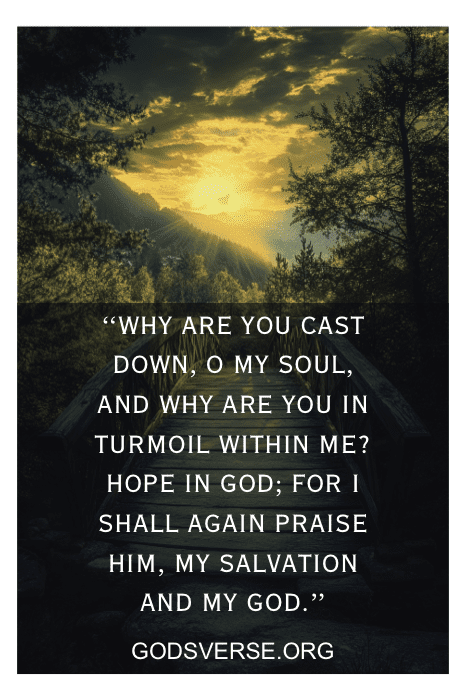
A friend of mine sat in a hospital parking garage for forty minutes after her mother’s diagnosis. She told me later she couldn’t make herself go back inside. She pulled out her phone and typed into Google: biblical quote for hope. She wasn’t looking for a theology lesson. She needed proof that somewhere in Scripture, someone had been exactly where she was — and survived it. That’s what this article is for.
There are 55 biblical quotes for hope in this article — organized by your actual situation, not alphabetically, not by book order. Whether you’re in grief, a long wait, times of uncertainty, shame, or just on the edge of giving up, the following verses go with you there. The ultimate hope Scripture offers is not a feeling. It’s a foundation. Find where you are below and go straight there.
Quick Assessment
Why does your prayer life keep falling flat?
It's usually one of four things — and each one needs a completely different strategy to break through. This 2-minute assessment tells you exactly which pattern is blocking you.
Before we get to the verses, there’s something worth knowing. The English word “hope” has gotten watered down. We use it for the weather: “I hope it doesn’t rain.” That’s a wish — passive, uncertain, could go either way.
Biblical hope is a different animal entirely. In Hebrew and Greek, the words translated “hope” carry meaning that the English word doesn’t. Understanding what those words actually mean will change how you read every verse in this article.
קָוָה
QAVAH (Hebrew)
Usually translated “to hope” or “to wait” — but the root image is a cord being twisted together. To hope in God with qavah means to entwine yourself with Him. It’s not passive waiting. It’s active binding. You are intertwining your life with His.
“Those who wait (qavah) upon the Lord shall renew their strength.” — Isaiah 40:31
Free Resource
Get Your FREE Prayer Guide Now
and join the Daily Way Devotional: Join 25,000+ Subscribers
To trust or lean upon. The physical picture is someone throwing themselves down onto something — full weight, no backup plan. Batach hope is not tentative. It’s the posture of someone who has chosen where they’re leaning and leaned there with everything they have.
“Trust (batach) in the Lord with all your heart.” — Proverbs 3:5
ἐλπίς
ELPIS (Greek)
The New Testament word for hope. It means confident expectation based on certainty — not wishful thinking, not probability. When Paul writes “hope does not disappoint” (Romans 5:5), he’s using elpis. This hope doesn’t depend on your circumstances cooperating. It depends on God’s character.
“Hope (elpis) does not put us to shame.” — Romans 5:5
ὑπομονή
HUPOMONĒ (Greek)
Patient endurance under pressure. Often translated “patience” but it’s closer to “the strength that keeps you standing when everything is pressing down.” Romans 8:25 pairs this with hope: we don’t just wait, we wait with hupomonē — with weight-bearing steadiness.
“If we hope for what we do not yet have, we wait for it patiently (hupomonē).” — Romans 8:25
That changes things, doesn’t it? Biblical hope isn’t a feeling you have on good days. It’s an active, muscle-using choice — and the Bible is full of people who made that choice in the dark.
There’s a fifth word worth knowing. The author of Hebrews gives the tightest definition of true hope in all of Scripture: “Now faith is the assurance of things hoped for, the conviction of things not seen” (Hebrews 11:1, ESV). The Greek word for assurance here is hypostasis — it means underlying substance, the real thing beneath the surface. “Conviction of things not seen” means evidence that makes a case. This is not the ultimate hope of wishful thinking. It’s hope as a legal brief — argued and won on the basis of God’s word alone, not visible circumstances.
When You’re About to Give Up
These are the verses for the person standing at the edge of quitting — on a dream, a relationship, a prayer, a faith. These hopeful Bible verses don’t offer easy answers. They offer a foundation. 9 verses.
The most famous hope verse in the Bible is Jeremiah 29:11. But most people don’t know that God spoke those words to people who had already lost. The Jews were in Babylonian exile. Their temple was rubble. Their city was gone. God’s “plans for hope and a future” weren’t spoken to people standing on mountaintops — they were spoken to people sitting in ruins. That matters.
“For I know the plans I have for you, declares the Lord, plans to prosper you and not to harm you, plans to give you hope and a future.” — Jeremiah 29:11 (NIV)
He knows. Not guesses, not hopes, not estimates. He knows. When your own vision of the future has gone dark, His hasn’t.
“But those who hope in the Lord will renew their strength. They will soar on wings like eagles; they will run and not grow weary, they will walk and not be faint.” — Isaiah 40:31 (NIV)
This was written to Jewish exiles, people who had been in captivity for decades. Isaiah 40 opens with “comfort, comfort my people” — God speaking tenderly to the exhausted. The eagles-wings verse isn’t a performance pep talk. It’s a promise that the God who made eagles made you too, and He’s not done with your story.
The New Testament grounds this hope in something even more concrete. Peter, writing to believers in real times of uncertainty and suffering, gives us the reason the hope of God’s word can be called living:
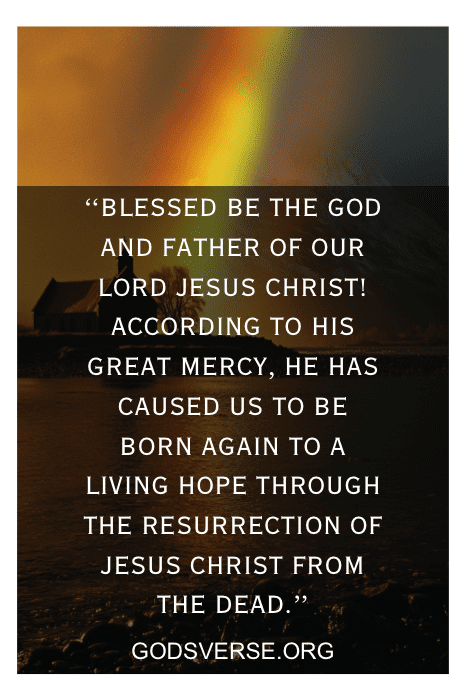
“Praise be to the God and Father of our Lord Jesus Christ! In his great mercy he has given us new birth into a living hope through the resurrection of Jesus Christ from the dead.” — 1 Peter 1:3 (NIV)
A living hope — not a static wish, not a warm memory. A hope that breathes because Christ breathes. The resurrection of Jesus Christ is what separates biblical hope from every other kind of hope. It’s grounded in a historical event that already happened. If God raised His Son from the dead, He can do what He promised in your situation. And the new birth Peter describes isn’t a renovation of your old outlook — it’s a completely new beginning, made possible by great mercy, not by anything you did. In Christ Jesus, you are not disqualified from hoping. You are born into it.
Psalm 31:24 (NIV)
“Be strong and take heart, all you who hope in the Lord.”
The command to be strong comes after the reason: you are hoping in the Lord. The strength follows the anchor.
Romans 8:28 (NIV)
“And we know that in all things God works for the good of those who love him, who have been called according to his purpose.”
“All things” includes the specific thing destroying your hope right now. Not eventually — in all of it, He’s working.
Hebrews 10:23 (NIV)
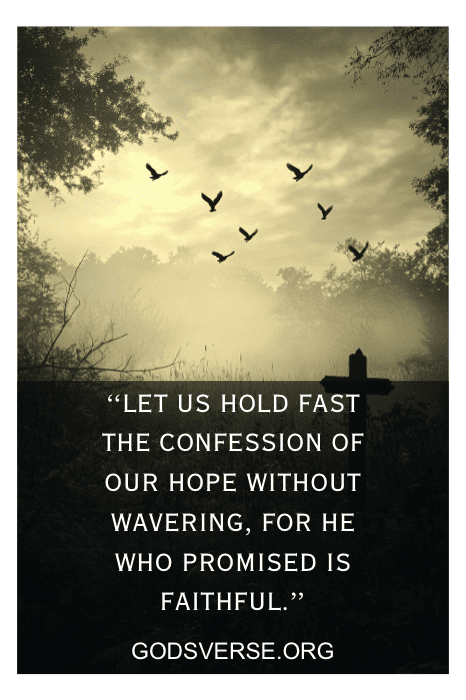
“Let us hold unswervingly to the hope we profess, for he who promised is faithful.”
The basis for holding on isn’t your grip strength — it’s His faithfulness. His track record, not yours.
Proverbs 23:18 (NIV)
“There is surely a future hope for you, and your hope will not be cut off.”
The word “surely” is doing heavy lifting here. This isn’t conditional on your performance. The hope is secure.
Psalm 27:13 (NIV)
“I remain confident of this: I will see the goodness of the Lord in the land of the living.”
David wrote this while being hunted. He chose confidence as an act of will. Not a feeling — a decision.
Romans 15:4 (NIV)
“For everything that was written in the past was written to teach us, so that through the endurance taught in the Scriptures and the encouragement they provide we might have hope.”
Every hard story in the Old Testament — Job, Joseph, Elijah under the broom tree — was kept in Scripture specifically to build your hope right now.
A Real Moment
A guy I know was two days from losing his business. He’d been a Christian for thirty years. He told me hope felt fraudulent — like telling himself a lie to get through the day. I pointed him to Romans 15:4. Those Old Testament stories weren’t included in Scripture as ancient history. They were kept for him. For this specific week. He said later that realizing the Bible was written toward his situation changed something.
When Grief Has Swallowed Your Hope
Grief and hope aren’t opposites. But they’re hard to hold at the same time. These verses don’t ask you to stop grieving — they promise that grief isn’t the end of the story. 7 verses.
Lamentations is the most honest book in the Bible about what hope feels like in the middle of loss. Jeremiah watches Jerusalem burn. He writes about crying until he has no more tears, about bitterness and darkness. And then — right in the middle of that devastation — he lands on this:
“Yet this I call to mind and therefore I have hope: Because of the Lord’s great love we are not consumed, for his compassions never fail. They are new every morning; great is your faithfulness.” — Lamentations 3:21-23 (NIV)
“Yet this I call to mind.” He chose to remember. Hope, in that moment, was a deliberate act of memory — calling to mind the steadfast love of the Lord and God’s unfailing love even when nothing felt true. For more on finding strength in scripture during the darkest times, our collection of Bible verses for hard times covers the territory from loss to despair to survival.
Psalm 34:18 (NIV)
“The Lord is close to the brokenhearted and saves those who are crushed in spirit.”
Not “the Lord will eventually show up” — He is close. Present tense. In the breaking, not after it.
2 Corinthians 1:3-4 (NIV)
“The God of all comfort, who comforts us in all our troubles, so that we can comfort those in any trouble with the comfort we ourselves receive from God.”
Your grief isn’t wasted. Every comfort you receive becomes something you can give. That’s how God turns loss into purpose.
John 16:33 (NIV)
“I have told you these things, so that in me you may have peace. In this world you will have trouble. But take heart! I have overcome the world.”
Jesus doesn’t promise an easy world. He promises He’s already won it. The battle you’re watching unfold — He’s already seen the ending.
Revelation 21:4 (NIV)
“He will wipe every tear from their eyes. There will be no more death or mourning or crying or pain, for the old order of things has passed away.”
Every grief has an expiration date. Not this life, necessarily — but there is a day with no asterisks, no exceptions, no more.
Psalm 30:11 (NIV)
“You turned my wailing into dancing; you removed my sackcloth and clothed me with joy.”
The same God who allowed the mourning is the one who ends it. He doesn’t just observe grief — He actively turns it.
Romans 8:18 (NIV)
“I consider that our present sufferings are not worth comparing with the glory that will be revealed in us.”
Paul wrote this from prison. He wasn’t minimizing pain — he was doing math. And the math comes out on the other side.
When the Wait Is Grinding You Down
Some hope is deferred, not denied. But when you’ve been waiting for years — for healing, for a child to come home, for a marriage to change — the difference starts to feel invisible. These verses are for the long haul. 9 verses.
Nobody in Scripture captures the exhaustion of waiting better than the unknown psalmist of Psalm 130. He uses an image every night-shift worker understands: the watchman waiting for dawn. Not hoping morning comes, not wishing the shift would end — counting on it.
“I wait for the Lord, my whole being waits, and in his word I put my hope. I wait for the Lord more than watchmen wait for the morning, more than watchmen wait for the morning.” — Psalm 130:5-6 (NIV)
The repetition is intentional. The watchman doesn’t wonder if morning is coming. He doesn’t pray it forward. He waits with the certainty of someone who has seen the sun rise before, and knows it will again.
Psalm 27:14 (NIV)
“Wait for the Lord; be strong and take heart and wait for the Lord.”
The instruction to wait comes twice. Once isn’t enough when the wait is long. This verse reads like someone who knows what long waiting costs.
Romans 8:24-25 (NIV)
“For in this hope we were saved. But hope that is seen is no hope at all. Who hopes for what they already have? But if we hope for what we do not yet have, we wait for it patiently.”
The invisible nature of hope isn’t a weakness — it’s the definition. If you could already see it, you wouldn’t need to hope. The waiting is the point.
Isaiah 49:23 (NIV)
“Then you will know that I am the Lord; those who hope in me will not be disappointed.”
Not “might not be” — will not. The confidence here is categorical. Hope placed in God does not ultimately disappoint.
Micah 7:7 (NIV)
“But as for me, I watch in hope for the Lord, I wait for God my Savior; my God will hear me.”
Micah was watching his nation collapse. “But as for me” is a declaration of independence from despair. You can choose this sentence today.
Habakkuk 2:3 (NIV)
“For the revelation awaits an appointed time; it speaks of the end and will not prove false. Though it linger, wait for it; it will certainly come and will not delay.”
“Though it linger, wait for it.” God acknowledges that sometimes His timing feels like delay. He doesn’t deny the ache — He affirms the certainty.
Zephaniah 3:17 (NIV)
“The Lord your God is with you, the Mighty Warrior who saves. He will take great delight in you; in his love he will no longer rebuke you, but will rejoice over you with singing.”
In your waiting, the Lord delights in you. He’s singing over you — not a disappointed supervisor watching a slow project, but a God who takes pure joy in His people. That reframes everything about the season you’re in.
Jesus pointed to the birds of the air as evidence that God notices and provides for what He created — and if He does that for birds, He does it for you in your waiting season too (Matthew 6:26). God of all grace has not forgotten you while you wait. He is at work, even when there’s nothing to see.
“And the God of all grace, who called you to his eternal glory in Christ Jesus, after you have suffered a little while, will himself restore you and make you strong, firm and steadfast.” — 1 Peter 5:10 (NIV)
“A little while.” Peter used that phrase knowing it would sound insufficient to people in real pain. But notice what God does himself: restore, strengthen, make firm, make steadfast. This is not you climbing back to stability on your own. This is God doing the work of restoration while you hold on through the wait.
The hardest thing about a long wait is the story you tell yourself about what it means. If you’re in a season of waiting on God, our collection of Bible verses by topic can help you stay anchored while you do.
A Real Moment
I’ve walked alongside someone who prayed for a prodigal child for eleven years. Not eleven months. Eleven years of unchanged Christmases and unreturned calls. She kept a card in her Bible with Habakkuk 2:3 on it — “though it linger, wait for it.” She told me once that the word “linger” had saved her more times than she could count. God didn’t promise it would be quick. He promised it would come. In year thirteen, her son called.
When Illness or Crisis Has Come
A diagnosis changes the ground under your feet. Crisis rewrites your sense of what’s stable. These verses don’t promise a specific outcome — they anchor you to the One who holds every outcome. 8 verses.
The most important verse in this section might be the least dramatic one. Romans 15:13 isn’t a desperate cry or a battle charge — it’s a prayer. Paul is asking the God of hope to fill them. Not to top them off. To fill them completely, so that hope overflows into peace and joy. You don’t manufacture this. You receive it.
“May the God of hope fill you with all joy and peace as you trust in him, so that you may overflow with hope by the power of the Holy Spirit.” — Romans 15:13 (NIV)
Isaiah 41:10 (NIV)
“So do not fear, for I am with you; do not be dismayed, for I am your God. I will strengthen you and help you; I will uphold you with my righteous right hand.”
“Uphold” — a word for someone being kept from falling. The right hand of God — the position of strength and honor — is already under you in this moment.
Psalm 103:2-3 (NIV)
“Praise the Lord, my soul, and forget not all his benefits — who forgives all your sins and heals all your diseases.”
Healing is listed as a benefit of knowing God. This doesn’t guarantee every physical healing, but it grounds hope in God’s healing nature.
Jeremiah 17:14 (NIV)
“Heal me, Lord, and I will be healed; save me and I will be saved, for you are the one I praise.”
This verse gives you permission to ask directly. No softening, no hedging — “Heal me.” Plain. Specific. That’s a biblical prayer.
2 Corinthians 4:17 (ESV)
“For this light momentary affliction is preparing for us an eternal weight of glory beyond all comparison.”
Paul wrote “momentary affliction” while imprisoned. He wasn’t minimizing — he was doing math. The eternal weight of glory makes the momentary affliction light by comparison. Not easy. Light.
Ephesians 1:18 (NIV)
“I pray that the eyes of your heart may be enlightened in order that you may know the hope to which he has called you, the riches of his glorious inheritance in his holy people.”
Paul doesn’t pray for your circumstances to change — he prays for the eyes of your heart to open. Because the hope and the riches of his glorious inheritance are already there. You just can’t see them yet.
Psalm 23:4 (NIV)
“Even though I walk through the darkest valley, I will fear no evil, for you are with me; your rod and your staff, they comfort me.”
“Through” — not around, not above. He walks with you through the valley. The shepherd doesn’t reroute. He stays close.
Colossians 1:27 (NIV)
“To them God has chosen to make known among the Gentiles the glorious riches of this mystery, which is Christ in you, the hope of glory.”
Hope of glory isn’t a distant concept — it’s a Person, living in you. Your hope has a name.
If depression or hopelessness is part of what you’re facing alongside the crisis, we have a dedicated collection of Bible verses for depression and hopelessness that speaks directly to that specific darkness.
When the Person You Hoped In Failed You
When a spouse walks out, when a friend betrays you, when a parent who was supposed to protect you doesn’t — hope collapses because it was resting on a human. These verses rebuild hope on a foundation that doesn’t move. 7 verses.
Proverbs 13:12 is probably the most honest verse in Scripture about what it feels like when hope in a person fails: “Hope deferred makes the heart sick.” That’s not weakness. That’s accurate. The heart should hurt when hope is deferred. The verse acknowledges the wound before it points to healing.
“Hope deferred makes the heart sick, but a longing fulfilled is a tree of life.” — Proverbs 13:12 (NIV)
The second half of that verse is the promise: a longing fulfilled — when it finally comes — doesn’t just satisfy. It becomes a tree of life. It gives life to others around it. The very thing that made you sick, when fulfilled by God, becomes something you give away.
Psalm 62:5 (NIV)
“Yes, my soul, find rest in God; my hope comes from him.”
David had to talk himself into this — “yes, my soul.” The placement of hope in God rather than people is a decision you repeat, sometimes daily.
Hebrews 6:19 (NIV)
“We have this hope as an anchor for the soul, firm and secure. It enters the inner sanctuary behind the curtain.”
Anchors don’t move ships to calm water — they keep ships from drifting during storms. Hope in God doesn’t stop the storm. It holds you in it.
Isaiah 40:28-29 (NIV)
“Do you not know? Have you not heard? The Lord is the everlasting God, the Creator of the ends of the earth. He will not grow tired or weary… He gives strength to the weary and increases the power of the weak.”
Every person who failed you did so partly because they were limited. God has no such limitation. He does not run out.
Psalm 146:5 (NIV)
“Blessed are those whose help is the God of Jacob, whose hope is in the Lord their God.”
The “God of Jacob” — the God of the man who was a liar and a schemer before he was Israel. The God who works with broken people.
“And hope does not put us to shame, because God’s love has been poured out into our hearts through the Holy Spirit, who has been given to us.” — Romans 5:5 (NIV)
When a person disappoints you deeply, shame often follows — “I should have known better.” Paul cuts directly against this. Hope in God does not end in shame. The love already poured into your heart through the Holy Spirit is the guarantee. That’s the hope that holds when humans can’t.
“Against all hope, Abraham in hope believed and so became the father of many nations, just as it had been said to him.” — Romans 4:18 (NIV)
Against all hope, in hope. Abraham was 100 years old. His body was as good as dead. The promise had been dormant for 25 years. And he chose hope anyway — not because circumstances supported it, but because God said it. That is qavah in action.
When Shame Has Stolen Your Hope
Some people can’t hold on to hope because they don’t feel qualified for it. The past is too loud. The failures are too recent. These verses were written for exactly that person. 10 verses.
Shame and hope are enemies. Shame says: “Look at what you’ve done. Look at who you are. You don’t get to hope.” And the tragedy is how many Christians quietly believe that voice. They read the hopeful verses and think, that’s for other people.
Romans 10:11 exists for this. It’s not vague — it’s categorical:
“As Scripture says, ‘Anyone who believes in him will never be put to shame.'” — Romans 10:11 (NIV)
Anyone. The word is doing everything here. Not “those who haven’t sinned too badly.” Not “those who got their act together in time.” Anyone who believes.
Joel 2:25 (NIV)
“I will repay you for the years the locusts have eaten — the great locust and the young locust, the other locusts and the locust swarm — my great army that I sent among you.”
This is the hope for people who feel like they’ve wasted years — to addiction, to wrong choices, to shame. God is in the business of restoring lost time.
Isaiah 61:3 (NIV)
“To bestow on them a crown of beauty instead of ashes, the oil of joy instead of mourning, and a garment of praise instead of a spirit of despair.”
God takes the specific symbols of shame and replaces them with specific symbols of honor. This isn’t vague restoration — it’s targeted redemption.
Psalm 51:12 (NIV)
“Restore to me the joy of your salvation and grant me a willing spirit, to sustain me.”
David wrote this after the worst thing he ever did. He didn’t ask for new credentials — he asked for the joy he used to have. That’s a prayer God honors.
1 John 1:9 (NIV)
“If we confess our sins, he is faithful and just and will forgive us our sins and purify us from all unrighteousness.”
“Purify us” — not just cover the shame but actually remove the stain. The basis for hope after failure is God’s faithfulness, not your repentance performance.
Ezekiel 36:26 (NIV)
“I will give you a new heart and put a new spirit in you; I will remove from you your heart of stone and give you a heart of flesh.”
The heart that’s gone hard from shame — the stony, defended, closed heart — is precisely what God promises to replace. Not fix. Replace.
Romans 8:1 (NIV)
“Therefore, there is now no condemnation for those who are in Christ Jesus.”
“Now” — present tense. Not “no condemnation once you’ve cleaned yourself up.” Right now, in Christ, the verdict is already in.
Titus 3:7 (NIV)
“So that, having been justified by his grace, we might become heirs having the hope of eternal life.”
The hope of eternal life doesn’t belong to people who earned it — it belongs to heirs. And heirs receive the inheritance because of whose family they’re in, not because of what they achieved.
James 1:2-3 (NIV)
“Consider it pure joy, my brothers and sisters, whenever you face trials of many kinds, because you know that the testing of your faith produces perseverance.”
Pure joy doesn’t mean painless. It means there is something real being built in you — something that can’t be built any other way. The trials of many kinds you’ve been through are not wasted material.
Romans 5:3-5 holds together everything this section is about: suffering produces perseverance, perseverance produces character, character produces hope — and that hope “does not put us to shame.” The path back to hope runs through the very suffering that seemed to kill it. If shame has made financial hope feel impossible too, there are prayers for financial breakthrough with Bible verses specifically for people starting over from nothing.
A Real Moment
I once knew a man who hadn’t been to church in twelve years after a divorce that cost him the respect of his community. He sat across a table from me and said, “I don’t think those verses are for me anymore. I burned up my hope.” I opened to Joel 2:25 — “I will repay you for the years the locusts have eaten.” He read it twice. Then a third time. Finally he said, “That’s specific. That’s not a general promise.” He was right. It’s specific and it was for him. It’s for you too.
The Hope Hall of Fame: People Who Held On
Every verse in this article was lived by someone. Here are four of them — people in Scripture who held hope when there was no reasonable human case for it, and what happened when they did.
Joseph — The Pit to the Palace
Genesis 37–50 | 13 years from pit to throne
Sold by his brothers at seventeen. Enslaved. Falsely accused. Forgotten in prison. Thirteen years of watching every human hope collapse. And then, in one day, Pharaoh called him up and gave him a signet ring. Joseph’s summary of those years: “You intended to harm me, but God intended it for good” (Genesis 50:20). The hope was always there. He just couldn’t see the whole picture while he was in it.
Job — When Everything Gone Was Everything
Job 1–42 | Lost children, health, wealth — in a single day
Job lost his children, his health, and his livelihood in a matter of hours. His friends told him to blame himself. His wife told him to curse God. And Job said: “I know that my redeemer lives, and that in the end he will stand on the earth” (Job 19:25). That is hope in its purest form — not a feeling, not a circumstance, not an evidence. Just a conviction about who God is.
Hannah — The Years of Empty Arms
1 Samuel 1–2 | Barren while a rival had children
Hannah’s rival had children. Hannah had none, and was taunted for it. Year after year, she went to the temple and wept. She didn’t stop going. She didn’t stop praying. She poured herself out to God with “bitterness of soul” (1 Samuel 1:10) — and that raw, honest, desperate prayer is what God answered. Her song in 1 Samuel 2 became the template for Mary’s Magnificat. Her season of emptiness became the source of a song that shaped all of Scripture.
Abraham — Against All Hope, In Hope
Genesis 12–21 | 25-year wait for one promised son
God promised Abraham a son when he was 75. Isaac was born when he was 100. Twenty-five years. His body was, as Paul put it bluntly in Romans 4:19, “as good as dead.” And yet Paul writes that Abraham “against all hope, in hope believed” (Romans 4:18). He didn’t stagger at the promise. He grew stronger in his faith and gave glory to God. Not because he had evidence. Because he knew who made the promise.
7-Day Rekindle Your Hope Scripture Plan
This is the section worth bookmarking. If you’ve been in a long season of depleted hope, this 7-day plan gives you one verse per day matched to where you actually are — with one simple action to go with it. You don’t need to do anything dramatic. Just one verse, one day, one step.
Day
When You Feel…
Verse
One Action
Day 1
Like you’re about to quit
Jeremiah 29:11
Write “He knows the plans” on a sticky note. Put it somewhere you’ll see it before noon.
Day 2
Too weak to keep waiting
Isaiah 40:31
Say this verse out loud, slowly, three times. Not to perform — just to hear it with your own voice.
Day 3
Like God has forgotten you
Psalm 34:18
Tell one person — in person or by text — that you’re struggling. Let someone be close to you today.
Day 4
Like hope is pointless
Romans 5:3-5
Write down three things this season has produced in you that wouldn’t exist otherwise. Patience, empathy, depth — something.
Day 5
Ashamed of your past
Joel 2:25
Pray this verse as a claim: “God, I believe you will repay the years — including the ones I lost myself.” Say it even if you’re not sure you believe it yet.
Day 6
Desperate, running on empty
Lamentations 3:22-23
Read this verse first thing in the morning before you look at your phone. Let it be the first word of the day.
Day 7
Ready to believe again
Romans 15:13
Pray it as a prayer: “God of hope, fill me with joy and peace as I trust in you. Let me overflow.” Pray it daily for the next month.
Share this plan with someone you know who is in a hard season. If you want to go deeper with prayer alongside the verses, the Godsverse Prayer Wall is open — you can post a request and have others praying with you.
What Biblical Hope Is NOT
These distinctions matter — because the wrong version of hope actually makes things worse.
Biblical hope is NOT “name it and claim it”
The prosperity gospel teaches that faith produces specific outcomes — health, wealth, specific answers to prayer. Biblical hope makes no such guarantee. Paul was in chains when he wrote about hope. John was in exile. The hope Scripture offers is not that God will give you exactly what you asked for — it’s that God is faithful, He sees your situation, and He will bring ultimate good from it. That’s a more profound hope than the prosperity version, because it doesn’t collapse when a prayer goes unanswered.
Biblical hope is NOT optimism
Optimism is the feeling that things will probably work out. It’s grounded in personality, circumstance, and track record. Biblical hope is grounded in God’s character — and it can coexist with pain, grief, and complete uncertainty about outcomes. You can be grieving deeply and full of biblical hope at the same time. They are not opposites. Jeremiah wept and hoped. Job screamed and hoped. You’re allowed to do the same.
Biblical hope is NOT passive
Remember qavah — the Hebrew word for hope that means “to twist together like a cord.” Hoping in God means actively entangling your life with His. It means continuing to pray when prayer feels pointless, continuing to show up when showing up is costly, continuing to declare what you believe even when you don’t fully feel it. Biblical hope takes work. The watchman waiting for morning is awake on the wall, eyes on the horizon. That’s not passive.
Biblical hope does NOT ignore mental health
Some seasons of depleted hope are also seasons of clinical depression, anxiety disorders, or trauma responses — and those are medical realities that Scripture verses alone are not designed to treat. Elijah was suicidal under a broom tree (1 Kings 19). God’s response was not a verse — it was food, rest, and an angel who touched him twice and said “the journey is too great for you.” If you’re in a crisis, please reach out to someone who can help: 988 (Suicide & Crisis Lifeline, call or text) or text HOME to 741741 (Crisis Text Line). Getting help is not a failure of faith. It’s what God’s angel offered to Elijah.
A Prayer for Hope
When Hope Has Gone Cold
Heavenly Father, I’ll be honest with You: hope doesn’t feel natural right now. It feels like a discipline, and I’m tired of the effort. I don’t know if my situation is going to change. I don’t know what Your plan looks like from here.
But I know what Scripture says about You. I know that Your compassions are new every morning — even this morning. I know that You are close to the brokenhearted. I know that those who hope in You will not be put to shame. Your love of God is poured into hearts through the Holy Spirit, and that love is the ground of every true hope I can stand on.
I’m choosing to hope in You today — not because I feel it, but because You are faithful. Fill me with all joy and peace as I trust in You. Let me overflow. Even if only a little. Even if it’s just enough for today.
In the name of the Lord Jesus Christ, Amen.
Frequently Asked Questions
What is the most powerful Bible verse about hope?
Romans 15:13 is arguably the most comprehensive — “May the God of hope fill you with all joy and peace as you trust in him, so that you may overflow with hope by the power of the Holy Spirit.” It captures three things at once: the source of hope (God), the experience of hope (joy and peace), and the overflow of hope (the Holy Spirit at work). Jeremiah 29:11 gets the most attention, but Romans 15:13 is the fullest biblical statement of what hope actually looks and feels like.
What does the Bible say hope actually means?
Biblical hope is not wishful thinking — it’s confident expectation based on God’s character. The Hebrew word qavah means to twist together like a cord, implying active entanglement with God rather than passive wishing. The Greek word elpis means confident expectation based on a certainty that already exists. In both Testaments, hope is described as an anchor (Hebrews 6:19) and as something that “does not put us to shame” (Romans 5:5) — meaning it is reliable enough to stake your dignity on.
What’s a good short Bible verse about hope for a card or text?
For a card or text, the most accessible short hope verses are: Jeremiah 29:11 (“plans to give you hope and a future”), Romans 15:13 (the God of hope filling you with joy and peace), Lamentations 3:22-23 (new mercies every morning), and Psalm 31:24 (“Be strong and take heart, all you who hope in the Lord”). Each of these is short enough to write, specific enough to land, and grounded enough to not feel like empty encouragement.
Is it a sin to lose hope?
No. The Bible is full of people who lost hope temporarily — Elijah asked to die under a broom tree (1 Kings 19:4), Jeremiah cursed the day he was born (Jeremiah 20:14), Job begged God for death. None of them were condemned for it. What we see in each case is God meeting them in the loss — with food, with an angel, with a voice from the whirlwind. Losing hope is not a character failure. It is a human experience that God consistently responds to with gentleness, not judgment. The invitation is always to return to hope, not to feel shame for having lost it.
What’s the difference between biblical hope and false hope?
False hope is grounded in an expectation God never made — “if I pray hard enough, I will get exactly what I’m asking for.” Biblical hope is grounded in God’s character and His ultimate purposes, not specific outcomes. The distinction matters when a prayer goes unanswered: false hope collapses, but biblical hope doesn’t, because it was never staked on a specific answer. Paul’s hope was full while he was in chains because it was rooted in who God is, not in whether his circumstances would improve. The book of Romans alone contains more hope passages than almost any other New Testament letter precisely because Paul was writing from situations where false hope would have long since collapsed — and the love of Christ held him anyway (Romans 8:38-39).
What are good Bible verses to give someone who has lost all hope?
The most important thing is to match the verse to their specific situation rather than sending a generic hope passage. For grief: Lamentations 3:21-23. For shame: Joel 2:25 or Romans 10:11. For long waiting: Habakkuk 2:3. For feeling forgotten by God: Zephaniah 3:17 (He rejoices over you with singing). For near-total depletion: Isaiah 40:28-29 (He gives strength to the weary). For someone needing good courage to keep going: Joshua 1:9 (“Be strong and courageous. Do not be afraid… for the Lord your God will be with you wherever you go”). For someone mourning the former things — the life they had before the loss — Isaiah 43:19 speaks directly: “See, I am doing a new thing! Now it springs up; do you not perceive it?” Before you send a verse, ask yourself: does this person need comfort, or do they need a reason to hold on? That answer changes which verse fits. For more on examples of gentleness in the Bible, there’s specific guidance on how Scripture models gentle, non-preachy encouragement — and our deeper study of gentleness in the Bible covers how gentleness and hope work together in pastoral care.
Does the Bible say hope deferred makes the heart sick?
Yes — Proverbs 13:12: “Hope deferred makes the heart sick, but a longing fulfilled is a tree of life.” What’s striking about this verse is that God included it in Scripture — He does not pretend that unfulfilled hope doesn’t hurt. The heart-sickness of waiting is acknowledged before the promise is given. The second half of the verse is the real gift: when the longing is finally fulfilled, it doesn’t just satisfy — it becomes a tree of life that gives to others. The very hope that made you sick, when fulfilled by God, becomes something you pass on.
How do I hold on to hope when nothing is changing?
The people in Scripture who held hope longest did a few concrete things. They chose to remember (Lamentations 3:21 — “yet this I call to mind”). They spoke it aloud (Psalm 62:5 — “yes, my soul, find rest in God”). They kept showing up to the place where they had met God before, even when it hurt (Hannah at the temple year after year). And they accepted help — Elijah didn’t power through; he ate and slept and let the angel touch him. The 7-Day plan in this article is designed specifically for this situation. Start with Day 1 and do only that. One verse, one day, one action. That’s enough to start moving.
Hope is not a feeling you manufacture. It’s a Person you return to. And He is always there when you come back — even if you’ve been gone a long time, even if you come back with nothing but the sentence: I don’t know how to hope anymore, but here I am. That’s enough. It has always been enough.
George Hendricks is the founder and managing editor of Godsverse.org. He has written and published over 200 skit reviews, church resource guides, and Bible study articles. With a background in data-driven content strategy and digital publishing, George built Godsverse into one of the most comprehensive collections of church skit reviews and printable scripts online. When he's not writing, he's researching what churches actually need and figuring out how to deliver it.