Affiliate Disclosure: Godsverse may earn a small commission when you purchase through links on this page — at no extra cost to you. We only recommend gear we’d actually put in front of a worship team.
I’ve sat next to enough sound engineers at Sunday services to know this truth: a bad sound system kills worship. The pastor’s message gets lost. The worship leader’s voice cracks in weird places. People check their phones because they can’t hear. A good sound system? It disappears. People forget it exists because everything just works.
The problem is that churches come in wildly different sizes and budgets. A 60-person congregation in a small chapel needs something totally different from a 400-person church in a renovated warehouse. That’s why we’ve tested and vetted these six options. Whether you’re running a portable PA in a school gym or installing a line array in a sanctuary, we’ve got you covered.
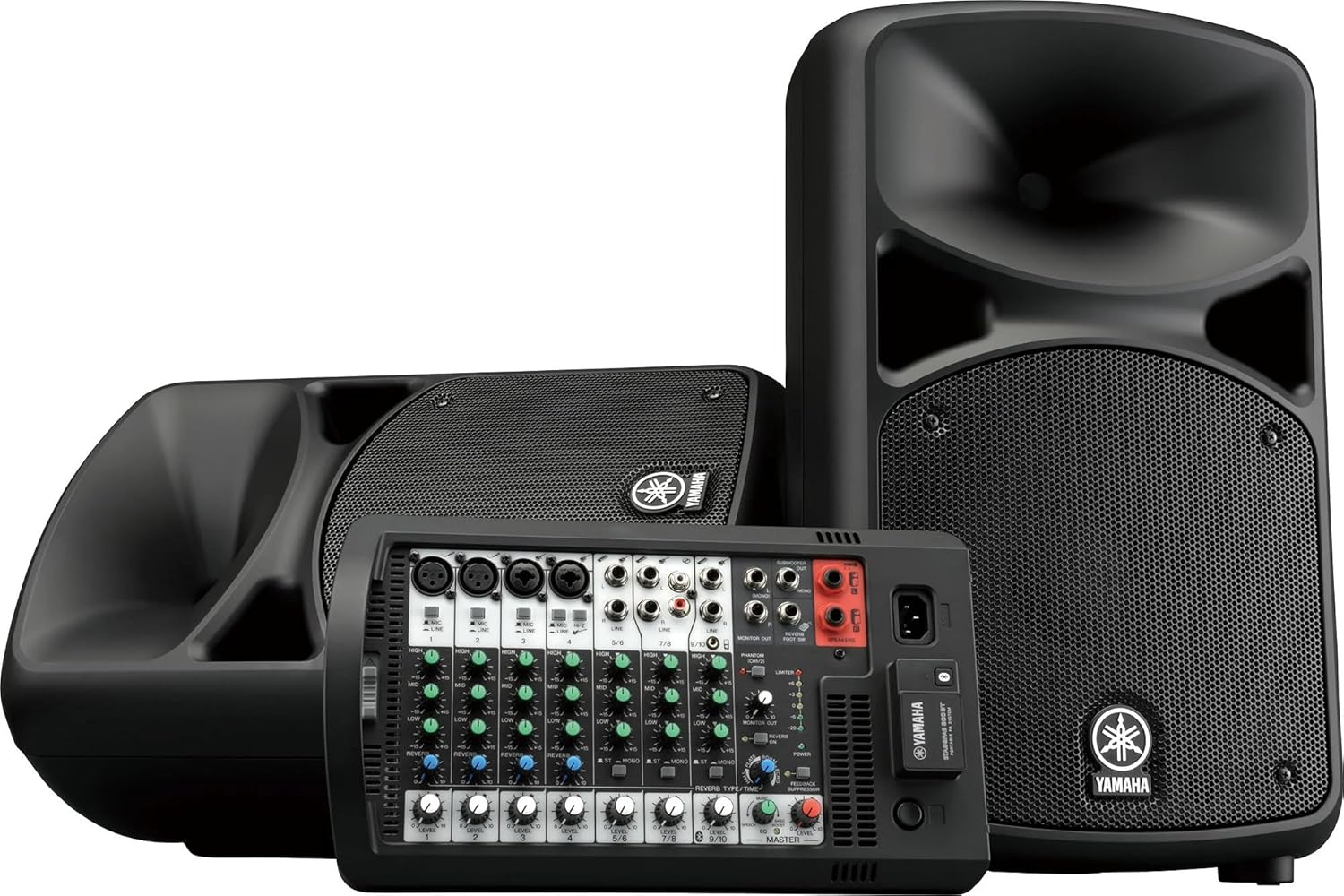
The STAGEPAS 600BT is what we recommend to churches that say “we need something that just works.” There’s no complicated setup. No mixing console to learn. No cables everywhere. You unbox it, plug in your microphone, connect via Bluetooth from someone’s phone, and you’re live in 10 minutes.
I watched a church plant in a community center use this for their first six months. They had zero experience with sound equipment. The built-in 10-channel mixer meant they could blend the worship leader’s mic, a guitar, a keyboard, and backing tracks all from the device itself. The 680 watts fills a 200-person room easily.
The Good
All-in-one system. No extra boxes to buy.
Built-in mixer with reverb and effects. Real mixing capability.
Bluetooth connectivity. Works with any smartphone.
Two 12-inch speakers deliver clear, balanced sound.
Rugged construction. Survives being moved around.
20Hz-20kHz frequency response. You get the full spectrum.
The Not-So-Good
680W is enough for small rooms, but mid-size churches will want more power.
Channel count maxes out at 10. Larger worship bands might feel limited.
No iPad/tablet control. Everything happens on the device itself.
Weight is about 55 lbs—two people can move it, one person struggles.
Who it’s for: Church plants, small chapels, chapels in schools or community spaces. Any church with under 200 people that prioritizes simplicity over features. This is also great for overflow rooms or prayer spaces in larger churches.
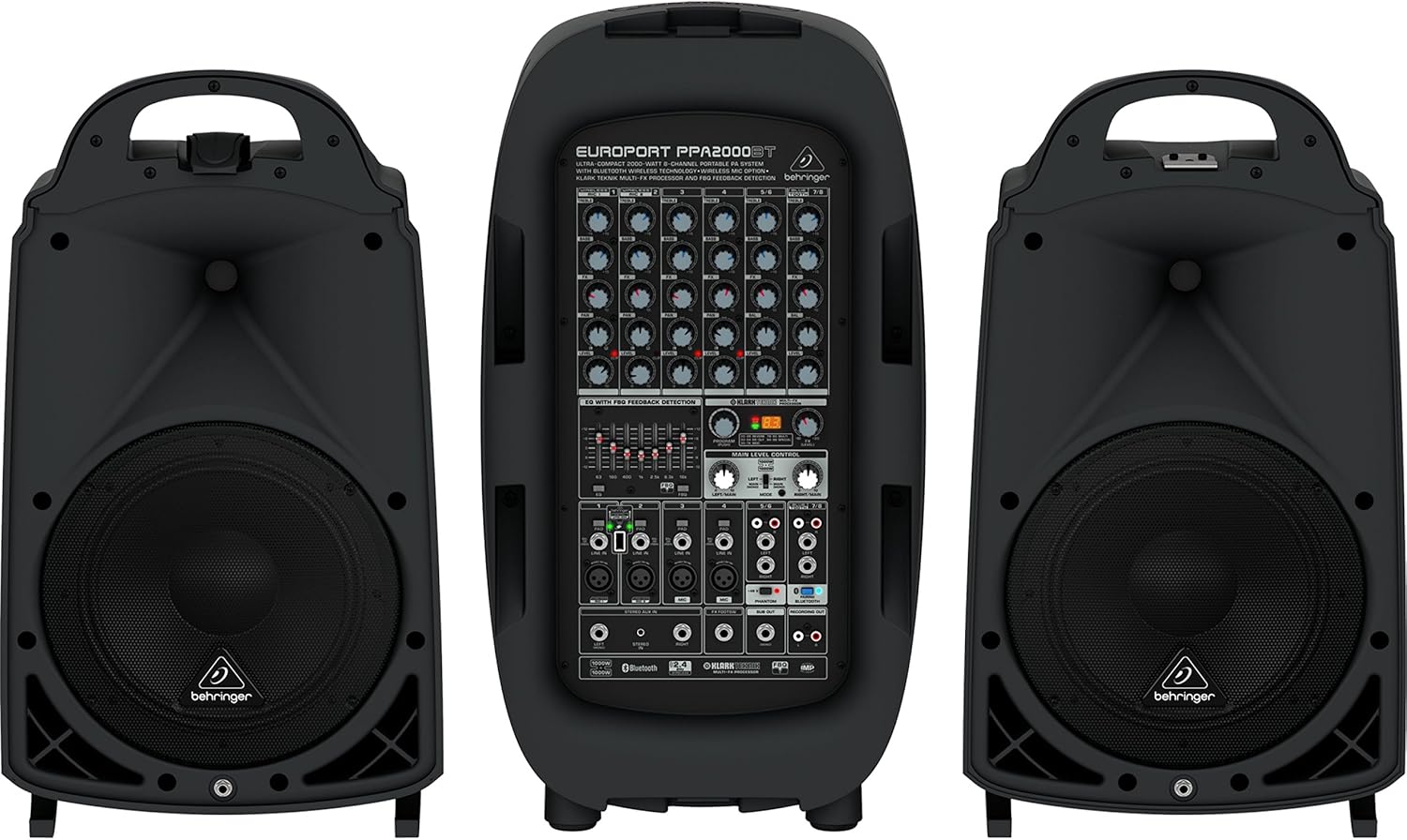
At $249, the Behringer EUROPORT PPA2000BT doesn’t feel real. It’s less than a decent wireless microphone. Yet it delivers serious capability: 2000W peak power, 8-channel mixer, Bluetooth, built-in effects. This is the system we recommend when a church’s budget is tight but their need is real.
A pastor I talked to bought this for their Wednesday night prayer meetings in a smaller chapel space. He said it outperformed a $1,200 system from their main sanctuary because the two 8-inch speakers worked better in a compact room than the larger speakers did in that space.
The Good
Seriously affordable. No question about it.
Compact and lightweight. Easy to move and store.
Bluetooth connectivity built in.
8 channels with EQ and effects. More than enough for worship or speaking.
USB audio input. Connect directly to a laptop if needed.
Two 8-inch speakers. Surprisingly clear highs and mids.
The Not-So-Good
Peak power rating is optimistic. Real sustained output is lower.
Not ideal for rooms larger than 80-100 people.
8-inch woofers don’t deliver deep bass. This is not a music venue system.
Build quality is decent but not professional-grade.
Who it’s for: Small churches with tight budgets. Prayer rooms and chapel spaces. Overflow rooms in larger buildings. Small group meetings that need quality audio without the cost.
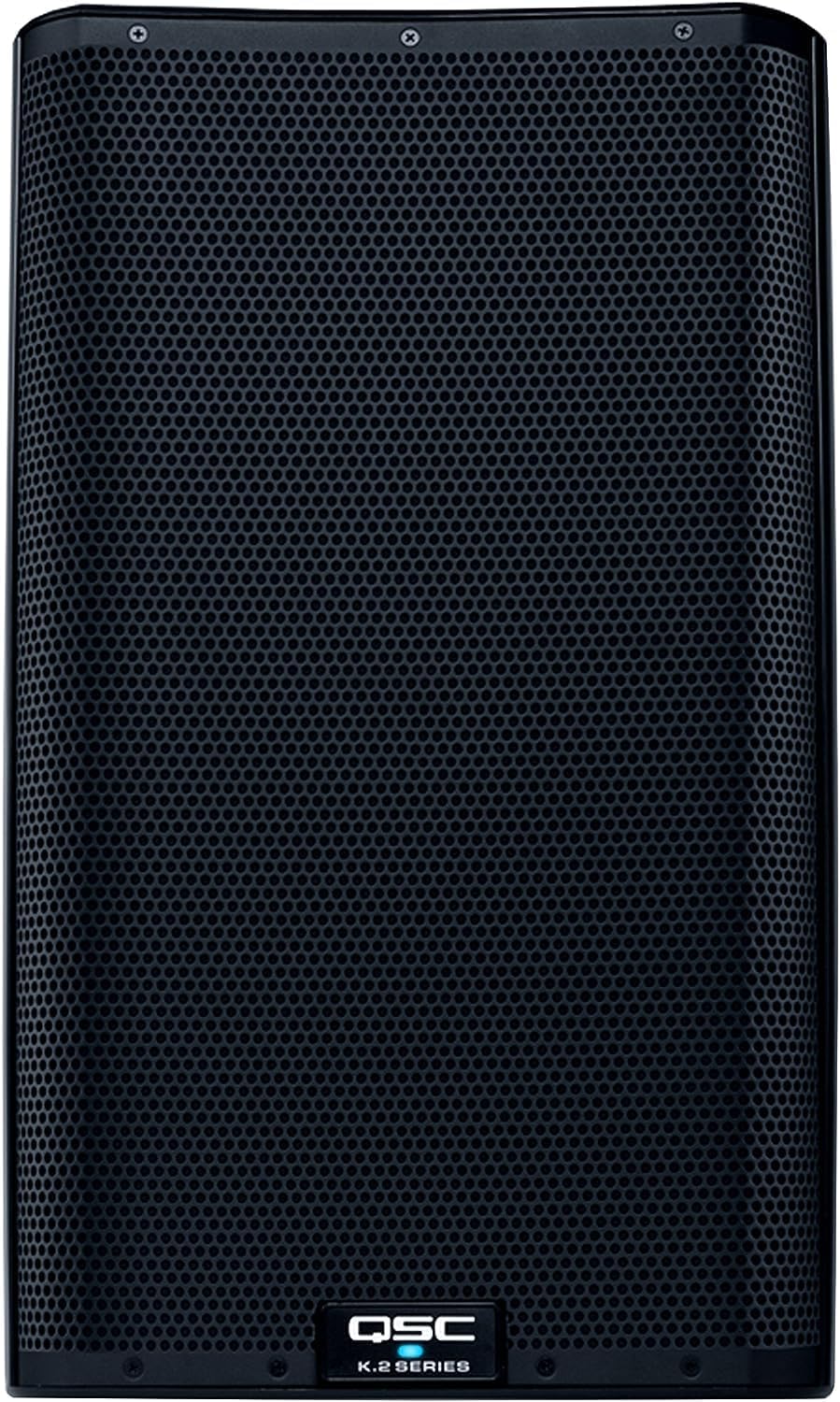
The QSC K12.2 is the powered speaker churches choose when they want zero compromise. This is what professional touring companies use. What broadcast studios choose. It’s not overkill for churches—it’s exactly right for medium and large sanctuaries where audio quality actually matters.
2000W of clean power. A 12-inch woofer that handles everything from the pastor’s spoken word to full-range worship music. A 75-degree waveguide that spreads sound evenly across seating areas instead of creating hot spots. I’ve been in rooms with QSC speakers and you forget they’re there—you just hear the worship band clearly.
The Good
Professional audio quality. Full range, clean, transparent.
2000W continuous power. Handles large rooms easily.
75-degree waveguide provides even coverage across the room.
Built-in DSP. Factory settings are already dialed in.
The Not-So-Good
Cost adds up. You need at least a pair, usually four or six units.
Requires external mixer or digital console. Not a standalone system.
Weight is about 60 lbs per unit. You need stands and rigging support.
Bigger learning curve than a portable all-in-one system.
Who it’s for: Medium to large churches with 250+ people. Worship spaces that need consistent coverage. Any church that’s hired a professional sound engineer. This is also perfect for churches interested in a line array speaker picks approach.
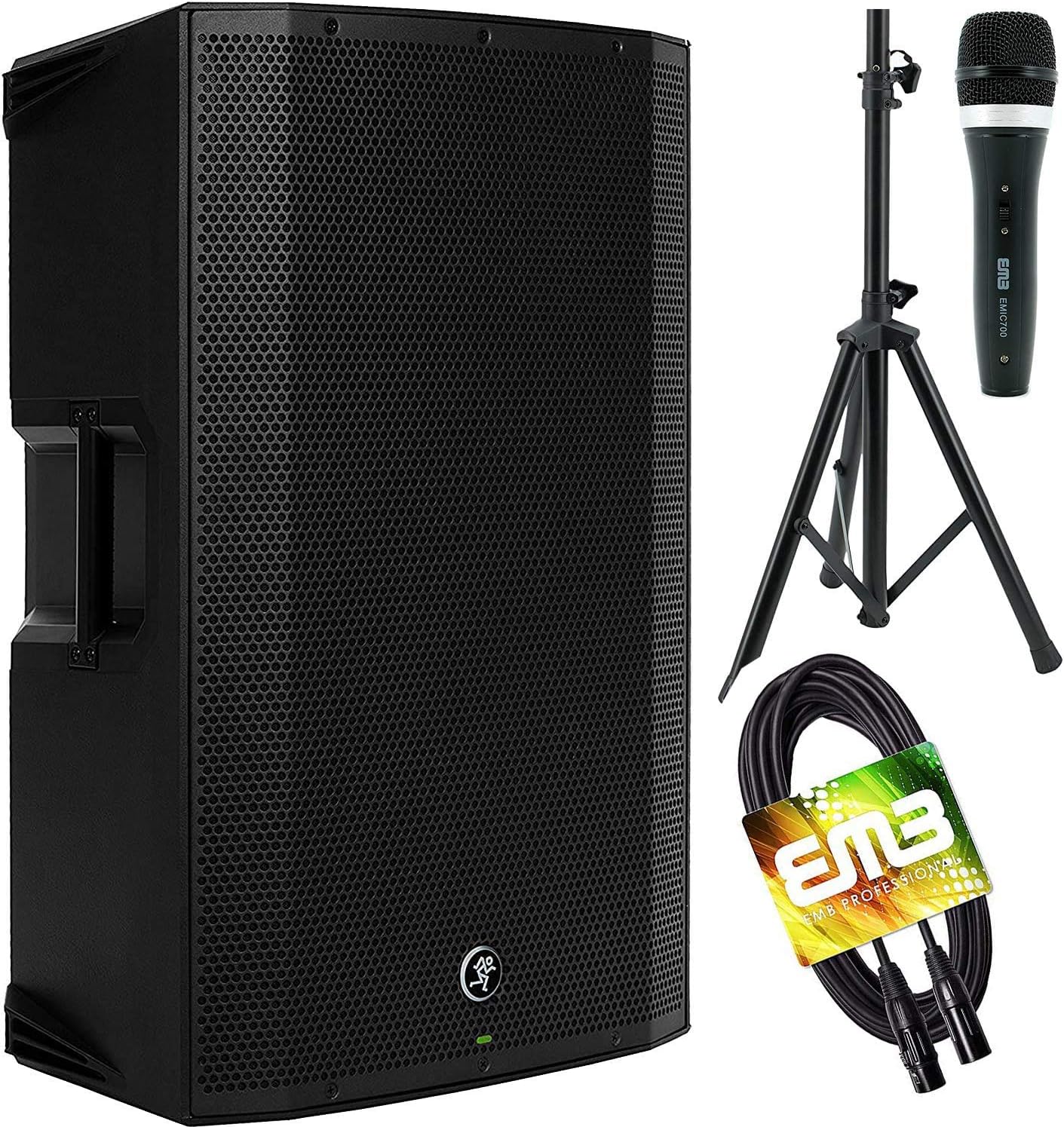
The Mackie THUMP15A is perhaps the most popular powered speaker for worship in the world. It’s the middle ground. More affordable than QSC. Better sound than entry-level systems. A 15-inch woofer, 1300W of power, and real punch in the low end.
Churches buy these in pairs, set them left and right of the stage, and never look back. The THUMP line is trusted because it sounds great, handles the abuse that worship environments dish out, and the price makes sense for what you get.
The Good
15-inch woofer delivers impressive bass response.
1300W of sustained power. Fills large rooms confidently.
Affordable for the quality level. Good value.
Durable construction. Built for touring and churches.
Simple, intuitive controls on the back panel.
Great sound from the factory settings.
The Not-So-Good
Needs an external mixer. Not a standalone solution.
About 50 lbs per unit. Requires two people to move safely.
Takes up floor space. Needs stable stands or wall mounting.
No Bluetooth or wireless input built in.
Who it’s for: Churches wanting worship band capability without premium pricing. Any congregation with 100-400 people. Also ideal for churches upgrading from a portable PA and ready to invest in real speakers.
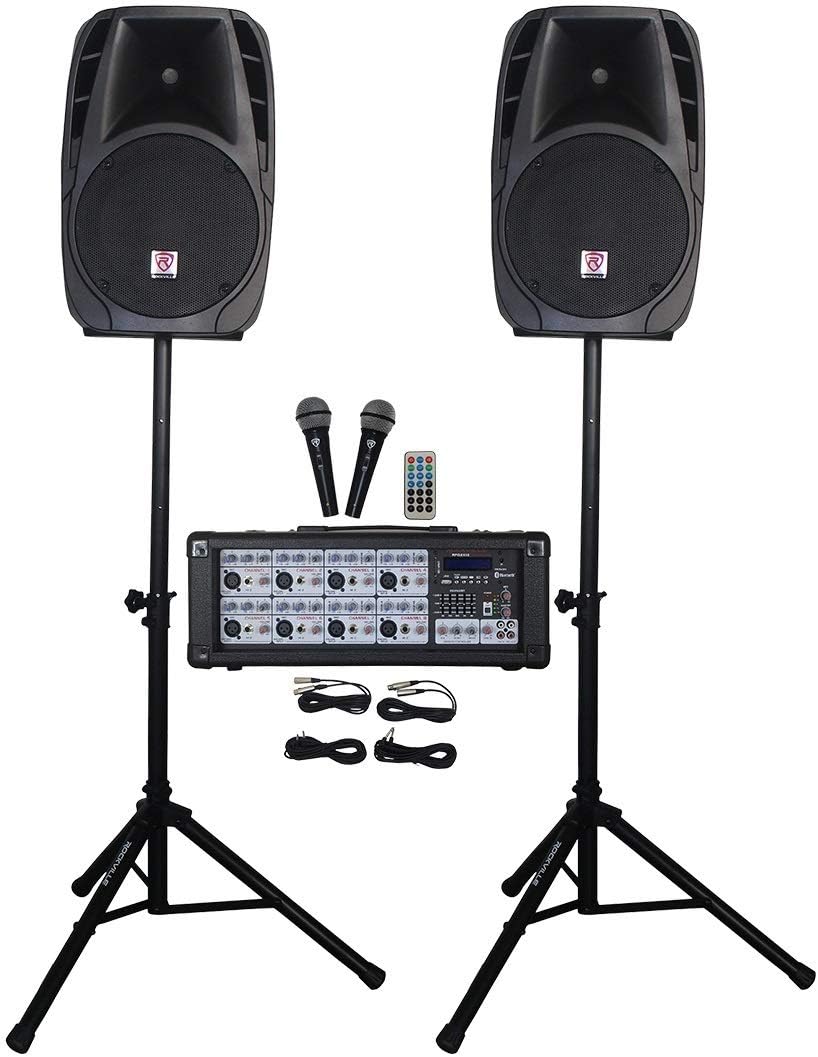
What if you want powered speakers but also want everything included? The Rockville RPG2X12 kit comes with two 12-inch powered speakers, stands, cables, and a small mixer. This is literally everything a church needs to start. No additional purchases required.
It’s not fancy. But it’s honest. You get two 12-inch speakers with decent coverage. A 4-channel mixer to blend inputs. The stands are sturdy. The cables work. For a church that’s starting from zero and needs to be done for under $400, this is the answer.
Two 12-inch speakers provide decent coverage for small-medium rooms.
Portable. Easily fits in a van or storage space.
Setup is straightforward. Plugs together quickly.
The Not-So-Good
Sound quality is functional but not impressive.
Build quality is basic. You get what you pay for.
1200W peak power is modest. Larger rooms will feel underpowered.
Mixer is very simple. Limited features and EQ options.
Who it’s for: Church plants on a shoestring budget. Small chapels and prayer spaces. Churches starting out that need immediate capability without a big investment.
The Bose L1 Pro8 is different. Instead of traditional cone speakers, it uses a cylindrical line array design. Sound projects 180 degrees horizontally, which means you get even coverage without the “dead zone” problem. It’s expensive, but for certain church situations, it’s worth every penny.
A church with bad room acoustics—hard surfaces, irregular shapes, pillars everywhere—will hear a dramatic improvement with the L1. The design defeats many of the room problems that make normal speakers struggle. If your worship space has challenging acoustics, this is worth considering.
The Good
Cylindrical design provides 180-degree coverage.
Minimal phase issues. Works well in challenging rooms.
Incredibly clear for spoken word. Pastors love this system.
Compact footprint. Doesn’t take up much stage space.
700W is sufficient for medium rooms despite appearing underpowered on paper.
Built-in mixer and effects.
The Not-So-Good
Expensive. Nearly double the cost of comparable systems.
Design is different. Some people take time to appreciate it.
No Bluetooth. Limited wireless options.
700W is modest. Not suitable for very large rooms (400+ people).
Requires a stand or floor mounting.
Who it’s for: Churches with difficult acoustics. Spaces where pastors complain about intelligibility. Rooms with irregular shapes or lots of hard surfaces. Any church that wants maximum clarity for spoken ministry.
This is the first decision. How many people typically worship in your space? Under 100 people, you need 300-800W. 100-250 people need 800-1500W. Over 250 people need 1500W or more, or multiple speakers strategically placed. Room size matters more than anything else.
2. Portable or Permanent?
Does your church move locations? Do you need to store the system between services? If you’re a plant or meet in a school, go portable. If you own your building, you can invest in permanent installation with proper rigging and mounting.
3. How Many Input Channels?
Count your typical inputs: worship leader mic, backing band (drums, keys, guitar), maybe a click track, plus the pastor. Most churches need 8-12 channels. If you have a full band with drums mics, you might need more. This determines whether you buy a portable all-in-one or a separate mixer and speakers.
4. Who Operates It?
If a volunteer runs your sound, prioritize ease of use. The Yamaha STAGEPAS or Bose L1 are simple. If you’re hiring a professional engineer or have someone trained, you have more flexibility. A best digital mixer for church opens options, but requires experience.
5. Budget Reality Check
A basic but capable system for a small church: $300-600. A medium church system: $1,000-2,500. A large church system: $5,000-15,000+. Add 20% for cables, stands, mic stands, and accessories.
Three Budget Setup Recommendations
Small Church Setup (Under $400)
Total: $350
Rockville RPG2X12 kit. Done. Everything is included.
Medium Church Setup (Under $1,200)
Total: $1,150
Yamaha STAGEPAS 600BT — $599
Two stands — $200
Cables, adapters, mic stand — $150
Wireless microphone system — $200
This gets you a complete, mobile system ready for 150-250 people.
Large Church Setup (Under $3,000)
Total: $2,900
Pair of QSC K12.2 speakers — $1,200
Behringer X Air XR18 digital mixer — $459
Four speaker stands — $300
Professional cables and accessories — $200
Two wireless microphones — $400
Stage monitors (basic) — $341
This covers a large sanctuary with flexibility and room growth.
A church sound system is really a collection of interdependent components — each serving a specific role in the signal chain. Sound reinforcement in a worship space begins with the microphones and inputs on stage, travels through a digital mixing console or analog board, and ultimately reaches the congregation through a carefully chosen set of speakers. The right speakers for a given space depend on a handful of factors: room dimensions, high ceilings, reflective surfaces, and whether the main speakers are ground-stacked or flown. Understanding these basic components before purchasing any audio equipment prevents the common mistake of over-spending on one part of the system while under-spending on another.
Active speakers — those with built-in amplifiers — are the most common choice for smaller churches and portable church sound systems. They reduce the cabling complexity since there are no separate amplifier racks to manage, and they typically include onboard DSP for EQ and limiting. Passive speakers require a dedicated power amp but offer more flexibility in larger speaker systems where the amplifier needs to drive multiple enclosures. Line arrays are increasingly common in church auditoriums with longer throw distances, while column speakers have become popular for their directional control and clean aesthetic in sanctuary environments. Selecting between these speaker types depends entirely on your specific needs and the acoustic profile of your space.
Portable sound systems serve a different set of churches than fixed-install solutions. Church groups that meet in rented spaces, hold outdoor church events, or run off-site services need a portable church sound system that can be set up in under 30 minutes and deliver enough power for a live music band, a solo vocalist, or a guest speaker without excessive configuration. Portable PA systems from brands like QSC, Bose, and Yamaha have compressed the gap between portable and permanent significantly — today’s in-one PA bluetooth sound system options deliver audiophile-grade performance at an affordable price. The tradeoff is scalability: a portable PA system is rarely the perfect audio solution for a church sanctuary seating 400 or more.
Wireless systems are now an expected part of any complete church sound system. Wireless microphone systems for vocals, a wireless in-ear monitor system for the worship team, and wireless DI boxes for electric guitar and bass guitar form the backbone of a modern stage setup. The key is frequency coordination — ensuring that wireless microphone systems and in-ear monitors operate on clean frequencies without interference. Audio engineers who set up wireless systems for live events know that channel count quickly becomes a concern in larger church worship services where multiple vocalists, the worship director, and individual musicians all need wireless. Floor monitors remain common for smaller budgets or traditional stage configurations, while in-ear monitors are increasingly the standard for churches that prioritize stage volume control and clear communication between musicians.
The mixing layer of a church audio system — whether a digital console or a simpler digital mixer — connects the inputs to the outputs and shapes the overall sound. Digital consoles from Allen & Heath, Yamaha, and PreSonus have largely displaced analog boards in professional church installs due to their scene-recall capabilities and ease of use for tech teams and volunteer operators. Personal monitor mixers, sometimes called personal monitor systems, give individual musicians on stage control over their own monitor feed without going through the front-of-house engineer. Digital snakes replace analog multi-core cables, running audio signals from the stage to the mix position over a single Cat5 or fiber cable. For churches designing a new audio system, sound reinforcement system design typically starts with the signal chain: inputs first, then mixing, then outputs — main speakers, floor monitors, delay speakers if needed for large church auditoriums, and a separate mix for live streaming or recording.
Exceptional audio quality in a house of worship isn’t just about the gear — it’s about matching the right church audio solution to the right space. High-performance sound in a reverberant stone sanctuary requires different treatment than the same gear in a carpeted contemporary worship room. Church members notice when intelligibility is poor; they may not understand why, but they disengage. Tech teams that invest time in acoustic treatment, speaker placement, and proper gain structure before adding more audio equipment consistently achieve better results than those who simply add more channels or more power. The goal of any church sound system is the same: serve the congregation by making worship experiences clear, consistent, and distraction-free — whether for a Sunday morning service or a full live music event.
For houses of worship evaluating church audio solutions, the first step is understanding what your current sound system is actually missing. A public address system designed for a lecture hall or meeting room is not the same as one tuned for a live church service with a full band and vocalists. Church speakers — both the main speakers and supplementary delay speakers — play a vital role in intelligibility. Top brands in the church audio space offer design support to help congregations spec out the right system, but for many smaller churches the starting point is simpler: get the digital mixers, speaker cables, and church speakers working together before worrying about advanced features. A complete sound system for a church service doesn’t have to be expensive — it has to be right for the room. Small bands in a 150-seat room need a very different church sound system solution than a full production team in a 1,500-seat auditorium.
The perfect church sound system is not a fixed configuration — it’s one matched to the specific needs of the congregation and the space. Multi-purpose halls present particular challenges: built-in speakers are often insufficient for live music, even as they work adequately for spoken word. Event planners who oversee conference-style church events alongside worship services need a system flexible enough to handle both. Frequency range of the speaker system matters for musical instrument reproduction — a great addition to any mid-sized church audio solution is a proper subwoofer for bass guitar and kick drum. Church audio solutions that account for the full frequency range — not just vocal clarity — produce noticeably more engaging live performances and worship experiences. The best choice for any church isn’t the most expensive system available; it’s the complete sound system that serves the congregation in their specific space, reliably, week after week.
Frequently Asked Questions
Do I need a mixer separate from the speakers?
Depends. Portable systems like the Yamaha or Behringer have mixers built in. Powered speakers like QSC or Mackie need an external mixer unless you use a simple interface. For most churches, a separate mixer gives you more flexibility and better sound. You can check out our digital mixer guide.
How many speakers do I actually need?
For even coverage, two speakers placed left and right of the stage, or one centrally located above. Larger rooms benefit from four or six speakers placed strategically. Start with two, add more if you have dead zones.
Can I use this system for recording?
Yes, but you’ll want a mixer with USB output or an audio interface. The Yamaha and Behringer portable systems have USB input but aren’t ideal for recording. Better choice: a proper digital sound board with recording capabilities.
What about wireless microphones?
Essential for most churches. You’ll need a separate wireless system unless you’re using Bluetooth. We have a full guide to best wireless microphones for church if this is your next step.
Do I need stage monitors?
Not if you’re small and simple. Once you have a worship band playing, monitors become critical so musicians can hear themselves. See our stage monitors guide for options.
How much will this cost to install professionally?
Portable systems need no installation. Permanent systems with mounting, rigging, and cable runs: expect $1,500-5,000 in labor depending on complexity. Get local quotes. Some churches do the physical setup themselves with a consultant overseeing the technical setup.
Can I expand the system later?
Absolutely. Buy powered speakers and a mixer, and you can add more speakers as budget allows. Avoid cheap all-in-one systems that don’t expand well. Systems built on industry-standard components (QSC, Mackie, Behringer) scale easily.
George Hendricks is the founder and managing editor of Godsverse.org. He has written and published over 200 skit reviews, church resource guides, and Bible study articles. With a background in data-driven content strategy and digital publishing, George built Godsverse into one of the most comprehensive collections of church skit reviews and printable scripts online. When he's not writing, he's researching what churches actually need and figuring out how to deliver it.