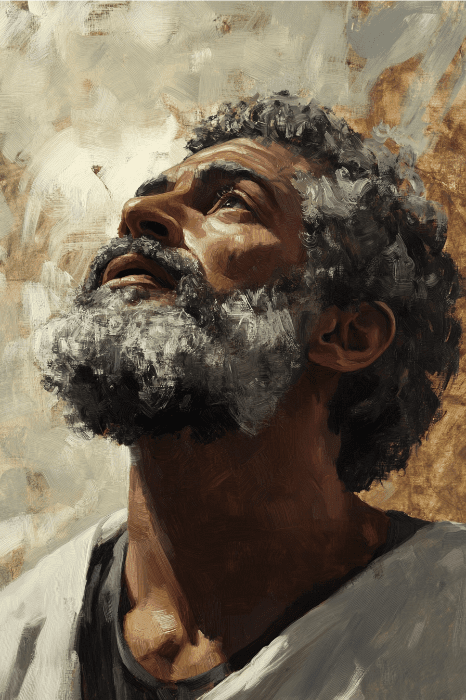
When you think of the word ‘father’, what comes to mind? A male parent? Well, there is more to fatherhood than that. It is a divine calling that comes with great responsibility. In this article, we will look at the examples of 10 fathers in the Bible and the important lessons we can learn from them. These are fathers whose lives are worthy of emulation by any man who desires to be a responsible father today. As we look into these Bible characters together, I hope that we will be able to view fatherhood differently and be better equipped to take up the responsibility that comes with it.
10 Fathers in the Bible Who Set Great Examples
Here are 10 fathers in the Bible who set great examples and the lessons we can learn from their lives:
1. Abraham
Quick Assessment
Why does your prayer life keep falling flat?
It's usually one of four things — and each one needs a completely different strategy to break through. This 2-minute assessment tells you exactly which pattern is blocking you.
Abraham, the father of many nations, is often recognized as one of the greatest examples of a father in the Bible. As the patriarch of Israel, his journey of faith, obedience, and family leadership provides timeless lessons for all fathers today. Throughout his life, Abraham demonstrated faith in God’s promises. Little wonder he was called “the Father of Faith”.
When God called him to leave his homeland and journey to an unknown land, Abraham did not hesitate. His faith was not passive but an active trust in God’s word. Also, despite being childless for many years, Abraham held on to God’s promise that his descendants would be as numerous as the stars (Genesis 15:5-6). He trusted that God would fulfill His promises, even though it seemed impossible.
Abraham is also a model of obedience and a popular example to demonstrate this was when God commanded him to sacrifice his only son, Isaac. He was willing to follow through even though it meant he would lose his son. Fortunately, though, God intervened, sparing Isaac and blessing Abraham for his faithfulness.
Free Resource
Get Your FREE Prayer Guide Now
and join the Daily Way Devotional: Join 25,000+ Subscribers
Although Abraham was human like we are and sometimes doubted God’s promises to him, especially when they were delayed, there are still many lessons for fathers to learn from his life. He teaches us to trust in God’s promises, even when the fulfillment seems far off. He also shows us the importance of obedience and following God’s direction, even when it seems difficult.
2. Isaac
Isaac, the son of Abraham and another patriarch of Israel, was also a significant representation of fatherhood in the Bible. Just like his father, Isaac was a man of faith, patience, and obedience to God. His faith was not personal but something that he shared with his children, ensuring they understood their place in God’s plan. This was how he was able to continue a strong lineage of men who feared the Lord, right from his son Jacob to his descendants.
However, despite his strengths, Isaac also had moments of weakness that I believe hold valuable lessons for fathers today. One of these was his favoritism towards his elder son, Esau. While Rebekah favored Jacob, Isaac’s preference for Esau created a rift within the family. This eventually led to deception, with Jacob tricking his father into giving him Esau’s blessing.
Isaac’s favoritism teaches us that showing unequal love to children can lead to division and hurt. A good father must love and treat all his children with fairness and equality, to avoid making anyone feel unloved or envious.
Jacob was the son of Isaac and father to twelve sons who later became the twelve tribes of Israel. He is perhaps one of the most complex yet significant fathers in the Bible.
One of his key strengths as a father was his devotion to his family. Despite the complexities of his life—being deceived by his uncle Laban and being forced to marry two wives, struggling with his brother Esau, and dealing with family conflicts—Jacob remained dedicated to his children.
But just like his father, Isaac, Jacob showed special affection for the sons that his wife Rachel gave him: Joseph and Benjamin. This resulted in jealousy among the brothers and even led them to sell his beloved son Joseph into slavery.
Jacob’s story is a practical example of how a father showing favoritism to a child can break the family apart. It is nearly impossible to say that a father would not have a child with whom he shares a unique connection out of all his children. Nevertheless, it is the responsibility of a good father to still show his other children that he cares for them and to treat all of them equally with love.
4. Joseph, the earthly father of Jesus Christ
Joseph, Jesus’ earthly father, is another great example of a godly father. His role in Jesus’ birth is not often talked about, but there are profound lessons to learn from him. One of these is his obedience to God. In Matthew 1:19-24, when Joseph learned that Mary was pregnant, he initially planned to quietly divorce her.
However, when an angel appeared to him in a dream, instructing him to take Mary as his wife, Joseph obeyed without hesitation, even though it didn’t make sense to him. Not many men can take the risk of accepting a child that they know for sure is not theirs. But Joseph did, all because an angel of the Lord said so to him. And he didn’t do it grudgingly. He remained a present father figure in Jesus’ life and is still credited as his biological father, even though he really isn’t.
The Bible also shows us how Joseph’s obedience to God protected him and his family during dangerous times, such as when he and his wife Mary fled to Egypt to protect Jesus from King Herod’s wrath.
Fathers are called to be the spiritual heads of their families. Like Joseph, they should seek God’s guidance before making decisions and be open to following his leadings. By doing so, they will be able to effectively guard and nurture their families according to God’s plan for them.
5. Adam
Adam, the first man created by God, was also the very first father in the Bible. He had the unique responsibility of fathering all of humanity. While it is true that Adam had his weaknesses, and one of them led to the fall of man in the Garden of Eden, there are still lessons to learn from his story.
Adam’s disobedience to God in the Garden of Eden affected the whole human race. When tempted by the serpent, Adam, along with Eve, ate the forbidden fruit, leading to the fall of man. His inability to resist temptation and take a stand for what was right affected his whole family. Our fathers can learn from Adam’s story the importance of spiritual leadership.
Adam reminds us that fatherhood is both a privilege and a responsibility. Like Adam, fathers are not perfect, but they can strive to build a relationship with God and make wise decisions that will protect their families.
6. King David
David is often celebrated in the Bible for his leadership, bravery, and deep faith in God. These very traits make him one of the best examples of fathers in the Bible. His life offers a wealth of lessons, from his successes to his failures as a parent, all founded in scripture.
David was a man of strong faith in God, which he sought to instill in his children. In 1 Chronicles 28:9, David advised his son Solomon saying, “acknowledge the God of your father, and serve him with wholehearted devotion and with a willing mind.” This verse shows us how much David wanted his children to have a deep relationship with God. He knew the importance of passing on his spiritual legacy, making sure that his children were rooted in faith. This is one of the greatest gifts that a father can give his children, to know God for themselves.
However, David was far from perfect. His weaknesses are also well-documented in the Bible. Even though he desired to have children who had faith in God and an upright character, his inability to discipline his children properly affected them. This lack of discipline led to several family tragedies, such as the incident with his son Amnon. Amnon’s sin against his sister Tamar and David’s failure to address it eventually led to Absalom’s rebellion in 2 Samuel 13.
The events in the Bible have been recorded for us to encourage us where applicable and to also instruct or correct us in other instances. As fathers, we must learn from David’s mistakes and understand the place of discipline and active involvement in a child’s upbringing. As important as it is to love our children, our fathers must never let that prevent them from guiding and correcting their children when necessary.
7. Jehonadab
Jehonadab is an example of a man who left an enduring legacy of faith and obedience. He was the father of the Rechabites, a family known for their strict adherence to the values and teachings passed down through generations.
Jehonadab instilled in his children a sense of duty to God. Through discipline, he was able to create family rules that were not mere suggestions but commandments that shaped their way of life. These rules were faithfully adhered to for over 200 years, even after Jehonadab had passed. This level of obedience across generations is rare and it shows us what kind of man and father Jehonadab must have been.
As Christian fathers today, we can learn from the example of Jehonadab that strong, faith-based leadership leaves a legacy that lasts far beyond our lifetime. We must understand the importance of instilling faith and values in our children. This is how we can build a legacy that outlives us till the next generation.
8. Job
Many Christians will agree with me when I say that Job stands out as one of the best examples of fathers in the Bible. The Bible describes him as “blameless and upright, one who feared God and shunned evil.” It is also evident that Job’s relationship with God heavily influenced his role as a father. He consistently prayed and offered sacrifices for his children.
Job 1:4-5
“His sons used to hold feasts in their homes on their birthdays, and they would invite their three sisters to eat and drink with them. When a period of feasting had run its course, Job would make arrangements for them to be purified. Early in the morning he would sacrifice a burnt offering for each of them, thinking, “Perhaps my children have sinned and cursed God in their hearts.” This was Job’s regular custom.”
Job understood that his role as a father went beyond simply providing for his family’s material needs. He was proactive in his children’s spiritual lives, offering sacrifices and praying on their behalf. He didn’t assume they were spiritually secure just because they were his children, he acted on their behalf.
Fathers today can learn from the example of Jobby not being concerned only about providing materially for their children. We should also be their spiritual guides, constantly praying and leading them toward God.
Another valuable lesson to learn from Job’s story is his unwavering faith in God, even in tough times. In Job 1:20-22, after losing all he had, his wealth and children, in a single day, Job mourned deeply but still worshiped God regardless. He said:
“Naked I came from my mother’s womb, and naked I will depart. The Lord gave and the Lord has taken away; may the name of the Lord be praised.” (Job 1:21)
Job’s faith in God’s sovereignty remained unmoved, showing that he trusted God’s plan beyond what he could understand. This is instructive to our fathers today and it teaches us about remaining steadfast in faith during trials. We must trust that God’s purpose is always greater than whatever we might be going through temporarily.
9. Jairus
Another one of the fathers in the Bible that our contemporary fathers can learn from is Jarius. Jarius, a synagogue leader, was a man of authority and respect. However, he was willing to set aside his status to seek help from Jesus when his daughter fell ill. He knew that he needed to do whatever it took to save his child, and that meant coming to Jesus in faith.
Jarius also had unwavering faith in God. Even when he was told that his daughter had died, he chose to trust in Jesus’ words. And his daughter received her healing because of his faith.
As fathers, we should learn from Jarius the importance of trusting in God’s power, even in the most hopeless of situations. There might be times when members of the family may be unable to put their faith in God. In those times, we should be able to work our faith to believe in God for our family.
10. God, our heavenly Father
Finally and most importantly, God is the ultimate perfect example of fatherhood that we see in the Bible. A good example to illustrate this can be seen in the parable of the prodigal son in Luke 15:11-32. This parable beautifully portrays God’s boundless love, patience, and forgiveness toward His children. In the story, a father has two sons, and the younger demands his inheritance. His father does not deny , but as soon as the son receives it, he squanders it in reckless living and ends up destitute. Eventually, the son returns home in repentance. But when his father sees him from a distance, he runs to him, and welcomes him back with open arms as though nothing ever happened.
This parable mirrors God’s role as the ideal Father. The prodigal son represents us and his father, God, our heavenly father. Despite our sins and mistakes, God patiently waits for us to return to him. God’s love does not fade away despite our mistakes or rebellion. Similarly, men who desire to be godly fathers are called to embody these qualities of patience, unconditional love, and forgiveness.
Conclusion
Fatherhood is an important role that is irreplaceable in the family structure. The examples of these 10 fathers in the Bible show us that the core values of love, faith, obedience, and integrity are one which every father should strive to embody. At the early stages of a child’s life, his biological parents are his role models. Thus, we should ensure that we exhibit good traits that are worthy of emulation by our kids.
As we have learnt from these godly men in the Bible, let us be reminded of the sacred responsibility placed upon us as fathers. Whether you are just starting your journey as a father or have been leading your family for years, there is always room to grow.
Take time to pray for wisdom and strength in leading your family, spend quality time with your children both emotionally and spiritually. And lastly, surround yourself with a community of like-minded men that encourage you to do better as a father.
Damilola Falayi is a creative writer with a degree in English Language and Literature.
She works with a variety of clients across several niches like mental health, lifestyle, and Christianity.
As a believer and follower of Christ, she is passionate about living purposefully for the Lord. She serves as a Sunday school teacher in the children's department of Foursquare Gospel Church.
Damilola is an advocate for mental health and this has led her to volunteer and work at several mental health organizations, including Psychmoments. She is passionate about showing Christians the intersection between their mental health and faith, and her writing is one way she does that.
An introvert at heart, Damilola enjoys spending time indoors. However, she is big on community and enjoys spending time with her friends and family.
Her journey in her Christian faith has transformed her and brought her closer to the Lord. And she hopes to inspire and strengthen others by sharing the good news of the Gospel to them.
You can follow Damilola on LinkedIn or Instagram.